
How to Ship a Container from China to Port of Los Angeles?
To ship a container from China to Port of Los Angeles, many importers first ask only about ocean freight. That sounds simple, but the real problem starts when port arrival, customs clearance, pickup, and delivery are not clearly arranged. The solution is to define the service scope before comparing prices.
To ship a container from China to the Port of Los Angeles, you need to confirm cargo details, choose FCL or LCL shipping, select the China loading port, arrange export documents, book ocean freight, prepare U.S. customs clearance, and decide whether you need port-to-port, port-to-door, or door-to-door service.
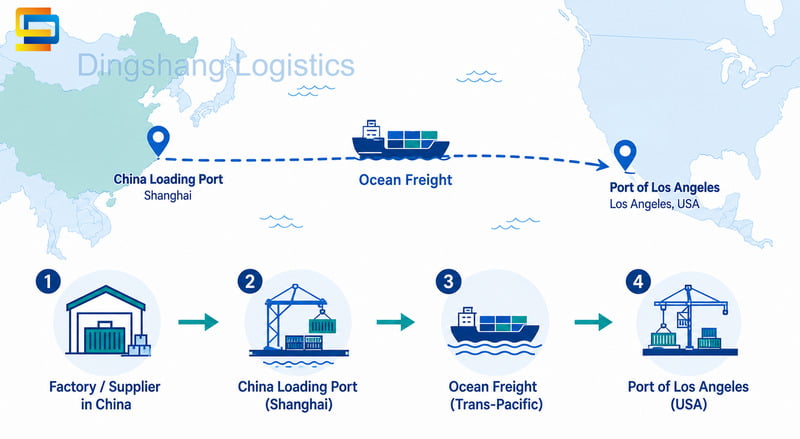
Many buyers say “to Los Angeles” when they really mean different things. Some mean the container only needs to arrive at the port. Others need customs clearance, container pickup, drayage, unloading, and warehouse delivery. I always start there because the answer changes the whole quotation.
What does it really mean to ship a container from China to Port of Los Angeles?
When you plan to ship a container from China to Port of Los Angeles, the phrase can hide several different service levels. That creates confusion fast. If the responsibility split is unclear, the container may arrive at LA before anyone has arranged clearance, payment, pickup, or final delivery.
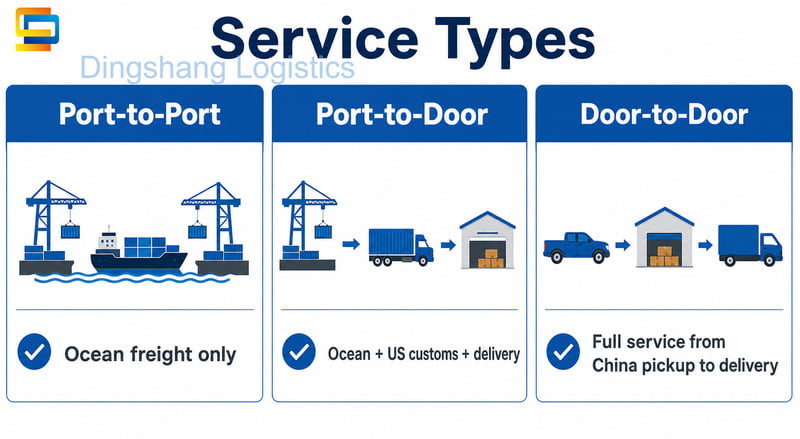
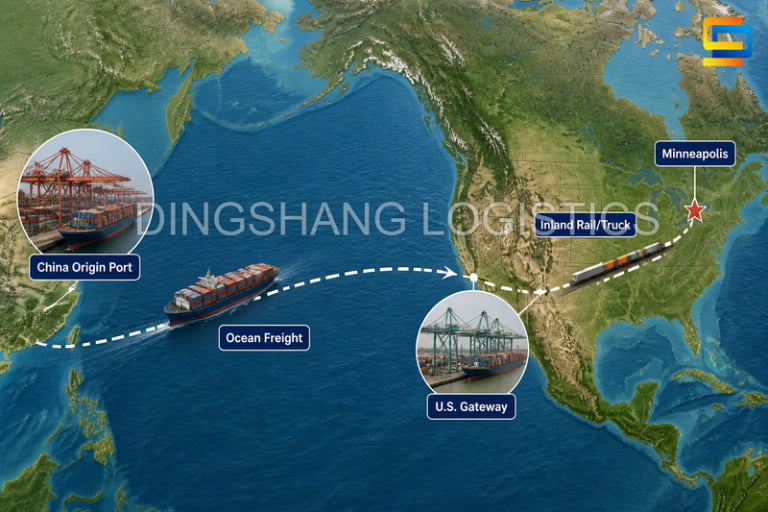
The phrase usually means one of three things: port-to-port, port-to-door, or door-to-door shipping. Port-to-port ends at the Los Angeles terminal. Port-to-door adds U.S. customs and delivery. Door-to-door includes China pickup, export handling, ocean freight, import clearance coordination, and final delivery.
The service scope changes the real cost
In my daily work, many U.S. importers first ask me, “How much is ocean freight to LA?” That is a fair first question. However, it is not enough to make a buying decision. The ocean freight rate may cover only the sailing from a China port to the Port of Los Angeles. It may not include trucking in China, export customs, destination charges, customs brokerage, duty payment, terminal pickup, chassis, drayage, or warehouse delivery.
That is why I like to reframe the question:
“Do you need the container to arrive at the Port of Los Angeles, or do you need it delivered to your warehouse?”
Those two requests are very different.
Common service options
| Service type | What it usually covers | Who it may suit |
|---|---|---|
| Port-to-port | Ocean freight from China port to Los Angeles port | Importers with their own customs broker and trucker |
| Port-to-door | Ocean freight, U.S. clearance coordination, and delivery from LA port | Importers who already manage China-side supplier pickup |
| Door-to-door | China pickup, export process, ocean freight, U.S. clearance coordination, and final delivery | Buyers who want one coordinated logistics plan |
Why “arrival at LA” is not the final step
The Port of Los Angeles is a major U.S. gateway1, but a container does not automatically move after arrival. Someone must handle the next steps. These may include:
- Arrival notice review
- Importer Security Filing status check
- Customs clearance coordination
- Duty and tax handling
- Terminal release
- Container pickup appointment
- Drayage to warehouse
- Unloading or transloading
- Empty container return
If one party assumes another party is handling these steps, delays can happen. Demurrage and detention risks can also increase.2 These charges are subject to carrier, terminal, and current operating rules, so buyers should confirm them before shipment.
My practical recommendation
Before you compare quotes, decide what “to LA” means for your shipment. If your final delivery address is in Los Angeles County, Inland Empire, Las Vegas, Phoenix, Dallas, Chicago, or another inland location, you should say that at the start. A freight forwarder can then quote the correct route and responsibility scope.
For example, at Dingshang Logistics, I handle many China-to-Los Angeles ocean freight inquiries from importers who eventually need delivery beyond the port. Once I know the final address, I can help compare whether FCL, LCL, direct port delivery, or inland trucking makes more sense.
What information do I need before I ship a container from China to Port of Los Angeles?
Before you ship a container from China to Port of Los Angeles, missing shipment details can slow down the quote and create wrong assumptions. If the cargo data is incomplete, the freight forwarder may quote the wrong container type, route, pickup scope, or destination service.
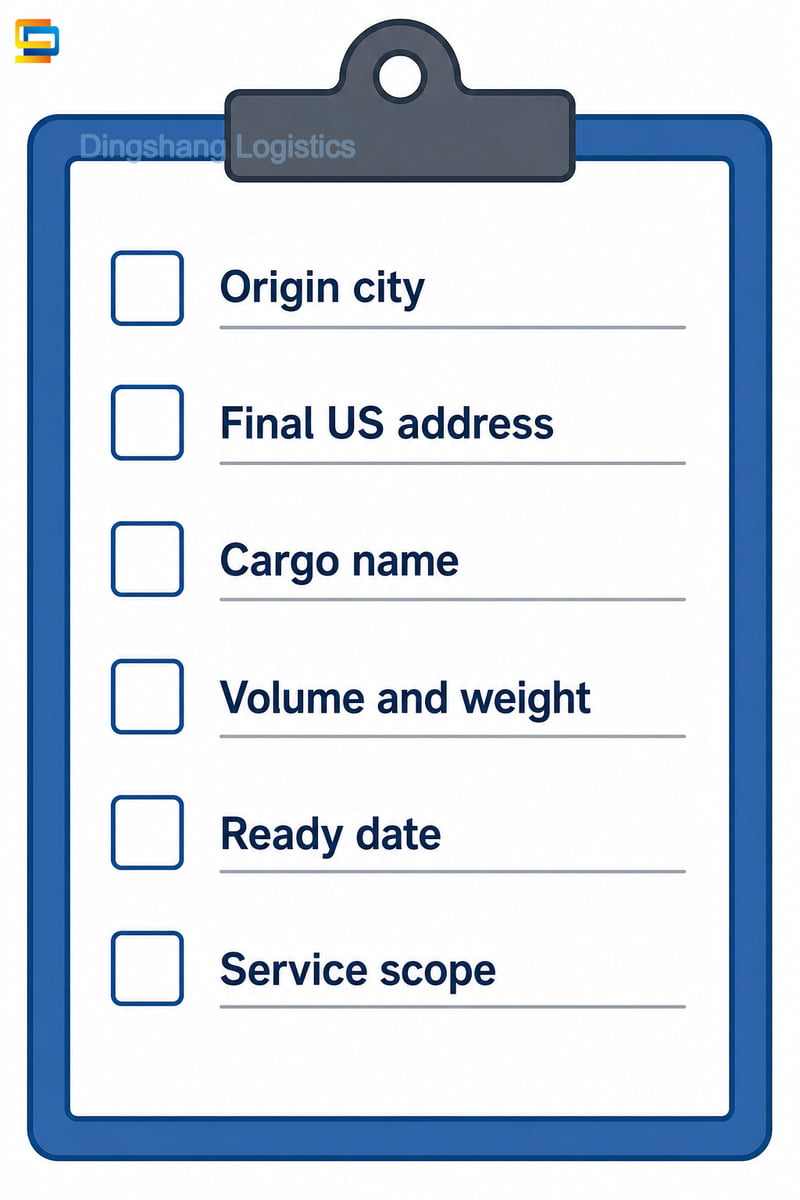
You should prepare the origin city or China port, final U.S. delivery address, cargo name, package count, volume, gross weight, supplier contact, ready date, shipment terms, and whether you need export customs, U.S. customs clearance, duty handling, or final delivery.
A good quote starts with good shipment data
A freight quotation is not only a number. It is a logistics plan. If one detail is wrong, the price may not reflect the real shipment. I have seen many importers send only “1x40HQ to LA” and ask for the lowest rate. I can reply with a rough direction, but I cannot build a reliable all-in quotation without more context.
A practical quote request should answer these questions:
-
Where is the cargo located in China?
The supplier may be near Ningbo, Shanghai, Shenzhen, Qingdao, or another inland city. -
Where does the cargo need to go in the U.S.?
“Los Angeles” may mean the port, a warehouse in Ontario, a 3PL in City of Industry, or an inland destination. -
What is the cargo?
The cargo name affects documentation, customs classification review, and possible handling restrictions. -
How much cargo is there?
Volume, weight, cartons, pallets, and package dimensions decide whether FCL or LCL is better. -
When is the cargo ready?
Sailing schedule options depend on supplier readiness and booking space. -
Who handles customs and duties?
The importer remains responsible for compliance, product regulations, and accurate customs information.3
Minimum information for a freight quote
| Information needed | Why it matters |
|---|---|
| Origin city and supplier address | Determines pickup cost and best loading port |
| China port preference | Helps compare Ningbo, Shanghai, Shenzhen, Qingdao, or other ports |
| Final U.S. address | Determines whether port-to-door or inland delivery is needed |
| Cargo name | Supports routing, documentation, and customs review |
| HS code if available4 | Helps customs broker estimate duty and requirements |
| Volume and weight | Determines FCL, LCL, and handling method |
| Package count and dimensions | Helps avoid loading and warehouse surprises |
| Ready date | Affects booking availability and schedule choice |
| Incoterms | Clarifies buyer and seller responsibility |
| Service scope | Prevents hidden gaps after port arrival |
FCL or LCL: which one should you choose?
For container shipping from China to Los Angeles, the main options are FCL and LCL.
FCL, or Full Container Load, means your cargo uses a full container. Common choices include:
- 20GP for heavier or smaller-volume cargo
- 40HQ for larger-volume cargo
- 40GP in some routing situations
LCL, or Less than Container Load, means your cargo shares container space with other shipments. This can work when your volume is not enough for a full container.
Here is a simple comparison:
| Option | Best for | Key consideration |
|---|---|---|
| 20GP FCL | Dense cargo, machinery parts, tiles, hardware | Weight limit and loading plan matter |
| 40HQ FCL | Furniture, consumer goods, packaging, lighter bulky goods | Volume efficiency is often better |
| LCL | Smaller orders, samples, first shipments | Destination charges and handling time should be checked |
My practical recommendation
When you request a quotation, send one clear message with all important details. This saves time and reduces misunderstandings. If you do not know every detail yet, state what is confirmed and what is still pending.
A simple message can look like this:
“We need to ship from Ningbo supplier to our warehouse in Ontario, CA. Cargo is plastic storage boxes, about 58 CBM, 8,500 kg, ready around May 15. Please quote 40HQ door-to-door including China export, ocean freight, U.S. customs clearance coordination, and delivery. Duties can be listed separately.”
This type of request helps me respond with a more useful quotation and fewer follow-up questions.
Which costs matter when shipping a container from China to Los Angeles?
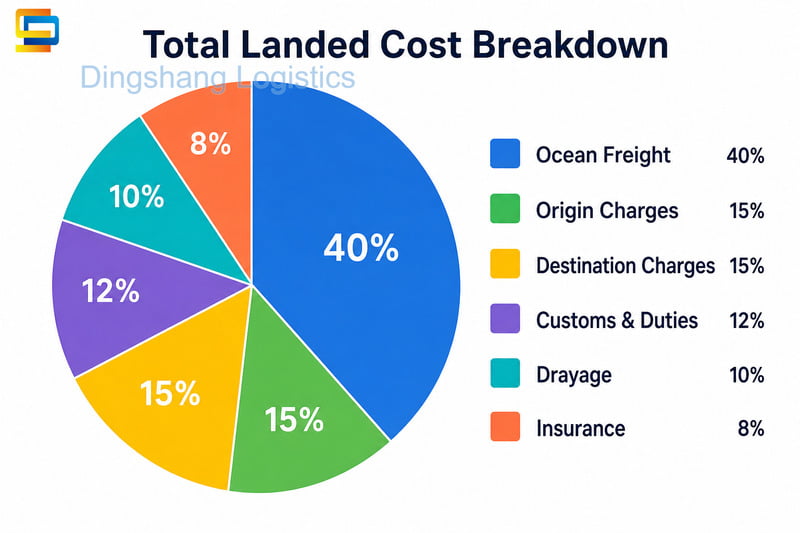
When shipping a container from China to Los Angeles, ocean freight is only one part of the total landed logistics cost5. A low ocean rate can look attractive, but it may exclude origin charges, customs clearance, destination fees, trucking, duty, and possible delay-related costs.
The main cost categories include China pickup, origin port charges, export documentation, ocean freight, U.S. customs clearance, duties and taxes, destination port charges, terminal handling, drayage, final delivery, and possible demurrage or detention if pickup and return are delayed.
Do not judge a quote by ocean freight alone
I understand why buyers focus on ocean freight first. It is the most visible line item. It also changes often based on market space, carrier pricing, seasonality, and demand. However, I usually tell customers that the better question is:
“What is included, what is excluded, and who pays each charge?”
A quote with a low ocean freight number may still be more expensive if it excludes important destination services. A higher quote may be more predictable if it includes customs coordination, delivery planning, and clear responsibility boundaries.
Typical cost categories to review
| Cost category | Common meaning | Buyer action |
|---|---|---|
| China pickup | Trucking from supplier to warehouse or port | Confirm supplier location and Incoterms |
| Origin charges | Export handling, documents, port fees | Ask what is included |
| Ocean freight | Main sea transport to Los Angeles | Compare by schedule, carrier, and validity |
| Documentation | Bill of lading and export paperwork | Check supplier document readiness |
| U.S. customs clearance | Broker entry process | Use a qualified customs broker |
| Duties and taxes | Government charges based on classification and value6 | Verify HS code and compliance |
| Destination charges | Terminal and local handling items | Ask for itemized scope |
| Drayage | Trucking from port to delivery point | Confirm appointment, chassis, and distance |
| Demurrage/detention | Delay-related storage or equipment charges | Plan documents and pickup early |
| Final delivery | Warehouse or Amazon/3PL delivery | Confirm delivery requirements |
Landed logistics cost is a decision tool
I do not recommend that importers treat freight cost as a simple rate list. The better approach is to use the cost structure as a decision tool.
For example:
- If your cargo is ready near Shanghai, Shanghai may be the logical loading port.
- If your supplier is near Ningbo, trucking to Ningbo may reduce China-side cost.
- If the final destination is near Los Angeles, port drayage may be straightforward.
- If the final destination is Chicago, Dallas, Atlanta, Memphis, or Kansas City, you may need to compare port delivery, rail, or inland trucking options.
- If the shipment is urgent, the sailing schedule and document readiness may matter more than a small rate difference.
At Dingshang Logistics, my team usually works with China loading ports such as Ningbo, Shanghai, Shenzhen, and Qingdao. For U.S. importers, we also discuss whether the shipment ends at Los Angeles port or moves onward to inland warehouses. That distinction affects the quotation more than many first-time importers expect.
Why all-in quotations are easier to compare
A transparent all-in quotation helps buyers compare real logistics cost. It should show:
- Included service scope
- Excluded charges
- Rate validity
- Sailing estimate or schedule option
- Container type
- Cargo assumptions
- Customs and duty responsibility
- Delivery address and delivery conditions
- Possible extra charges that depend on actual events
No freight forwarder should promise that every variable is fixed forever. Ocean freight rates, port operations, customs exams, weather, carrier changes, and terminal conditions can affect real outcomes. Still, a clear quote reduces uncertainty.
My practical recommendation
When you compare freight quotations, do not only ask, “Which one is cheaper?” Ask these questions:
- Does this quote cover the same route and service scope?
- Does it include destination handling and delivery?
- Who arranges customs clearance?
- Are duties and taxes included, estimated, or excluded?
- What happens if customs inspection or pickup delay occurs?
- Is cargo insurance included or optional?
For our door-to-door shipments at Dingshang Logistics, we often provide free cargo insurance as part of the service scope. Still, I always recommend that buyers review the insured value, coverage terms, and claim conditions before shipment. Insurance is useful, but it is not a substitute for proper packaging, accurate documents, and good planning.
How can I reduce delays when I ship a container from China to Port of Los Angeles?
When you ship a container from China to Port of Los Angeles, delays often come from preventable issues. These include incomplete documents, unclear Incoterms, late supplier readiness, customs data errors, no pickup plan, or assuming the port will hold the container without cost.
You can reduce delays by confirming service scope early, preparing commercial documents correctly, choosing a realistic sailing schedule, filing required customs information on time, arranging pickup before arrival, and working with qualified logistics and customs professionals for shipment-specific decisions.
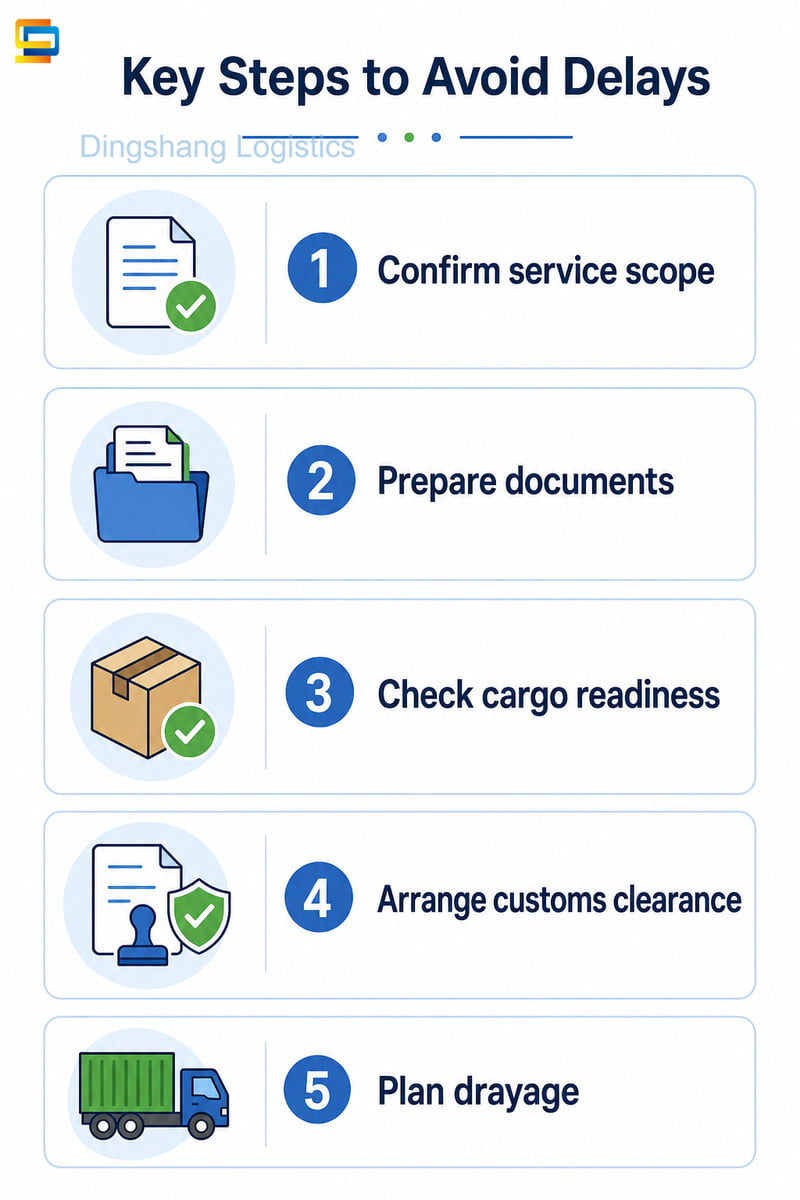
Most delays start before the vessel arrives
The Port of Los Angeles is a busy gateway for transpacific trade. However, many delays are not caused only by the port. They begin with incomplete planning before the vessel departs China.
In my experience, common communication gaps include:
- The supplier says the cargo is ready, but packaging is not complete.
- The buyer asks for port-to-port, but later needs warehouse delivery.
- The commercial invoice does not match the packing list.
- The importer has not confirmed the customs broker.
- The final delivery warehouse requires an appointment.
- The container arrives before the buyer has arranged drayage.
- The importer does not know who will pay duties or destination charges.
Each issue may look small. Together, they can create extra cost and stress.
Key documents to prepare
Most standard ocean shipments need these documents:
| Document | Purpose |
|---|---|
| Commercial invoice | Shows seller, buyer, cargo value, and transaction details |
| Packing list | Shows package count, weight, volume, and cargo description |
| Bill of lading | Transport document issued by carrier or forwarder |
| Arrival notice | Alerts consignee or broker of cargo arrival details |
| Customs entry data | Used by customs broker for import declaration |
| ISF information | Required before vessel departure for U.S.-bound ocean cargo |
The importer should work with a qualified customs broker or trade professional for classification, duty rate, product compliance, and government agency requirements. A freight forwarder can coordinate logistics, but the importer should not assume that logistics coordination replaces importer compliance responsibility.
Practical ways to control risk
Here are steps I recommend before each China-to-LA shipment:
-
Confirm Incoterms with the supplier
FOB, EXW, CIF, and DDP can create very different responsibility splits.7 You should understand what your supplier is actually providing. -
Check cargo readiness before booking
A booking is useful only if the cargo, documents, and packaging are ready on time. -
Use accurate cargo descriptions
Vague descriptions such as “goods” or “parts” can create customs and document issues. -
Review the delivery address early
A warehouse with limited hours, dock restrictions, appointment rules, or liftgate needs may change delivery planning. -
Plan for customs clearance before arrival
Do not wait until the vessel arrives to find a broker or prepare documents. -
Ask about free time and delay risks
Demurrage, detention, storage, and chassis-related charges depend on the carrier, terminal, and actual pickup timing. -
Avoid chasing only the lowest quote
A quote that omits key services may become expensive later.
Schedule expectations should be realistic
Transit time from China to Los Angeles depends on the loading port, carrier, service string, transshipment situation, weather, vessel schedule, port operations, and current market conditions.8 A freight forwarder can share estimated schedules, but no responsible provider should guarantee an exact arrival date for ordinary ocean freight.
Buyers should plan with a buffer, especially before seasonal peaks. These periods may include:
- Pre-Chinese New Year shipping rush
- Post-holiday factory restart periods
- Back-to-school inventory season
- Pre-holiday retail replenishment
- Periods of vessel blank sailings or space pressure
My practical recommendation
If your shipment is important, start planning before the cargo is fully packed. Ask your supplier for estimated completion, carton details, packing list draft, and cargo photos if needed. Then confirm whether you want port-to-port, port-to-door, or door-to-door service.
At Dingshang Logistics, I prefer to clarify responsibility before quoting. This reduces disputes and helps buyers understand the full logistics chain. A clear plan cannot remove every risk, but it can prevent many avoidable delays and surprise charges.
Frequently Asked Questions
Is shipping to the Port of Los Angeles the same as door-to-door delivery?
No. Shipping to the Port of Los Angeles usually means the container arrives at the port terminal. Door-to-door delivery includes more steps, such as China pickup, export handling, ocean freight, U.S. customs clearance coordination, port pickup, drayage, and delivery to your warehouse.
Should I choose FCL or LCL from China to Los Angeles?
You should choose FCL when your cargo volume is large enough for a 20GP or 40HQ container, or when you want more control over handling. You should consider LCL for smaller shipments. Always compare total cost, destination charges, handling time, and cargo risk.
What does a freight forwarder need to quote China to Los Angeles shipping?
A freight forwarder needs the China origin, final U.S. destination, cargo name, volume, weight, package count, ready date, container type if known, supplier contact, Incoterms, and required service scope. Customs clearance and delivery needs should also be confirmed before quoting.
Can a freight forwarder handle U.S. customs duties for me?
A freight forwarder can coordinate with a customs broker and help arrange the logistics process, but the importer remains responsible for accurate product information, classification, compliance, duties, and taxes. You should use a qualified customs broker or trade professional for shipment-specific customs decisions.
How can I avoid unexpected charges at Los Angeles port?
You can reduce unexpected charges by confirming what your quote includes, preparing documents early, arranging customs clearance before arrival, planning drayage in advance, checking free time, and understanding demurrage and detention risk. You should also confirm current terminal and carrier rules before shipment.
Conclusion
To ship a container from China to Port of Los Angeles, you need more than an ocean freight rate. You need a clear service scope, accurate cargo details, reliable documents, realistic timing, and a plan for customs clearance and post-port delivery. If you import from China and need FCL, LCL, port-to-door, or door-to-door service to the U.S., contact Dingshang Logistics for a transparent China-to-USA freight quotation.
Related Shipping Guides
"Latest Supply Chain and Freight Indicators", https://www.bts.gov/freight-indicators. Official Port of Los Angeles statistics identify the port as one of the largest U.S. container gateways by annual TEU volume, supporting its characterization as a major entry point for transpacific cargo. Evidence role: statistic; source type: institution. Supports: An official port or government source should support the Port of Los Angeles' role as a leading U.S. container gateway by cargo volume or TEU throughput.. ↩
"Detention and Demurrage", https://www.fmc.gov/detention-and-demurrage/. The Federal Maritime Commission describes demurrage and detention as charges associated with delayed cargo retrieval or equipment return, supporting the article's warning that poor post-arrival planning can increase such risks. Evidence role: mechanism; source type: government. Supports: A government source should explain that demurrage and detention are charges connected to container storage, equipment use, and delays beyond allowed free time.. ↩
"Reasonable Care", https://www.cbp.gov/document/publications/reasonable-care. U.S. Customs and Border Protection guidance on reasonable care states that importers are responsible for accurate entry information, classification, valuation, and compliance with applicable import requirements. Evidence role: expert_consensus; source type: government. Supports: U.S. Customs and Border Protection should support that importers are responsible for exercising reasonable care and providing accurate entry information.. ↩
"Harmonized Tariff Schedule", https://hts.usitc.gov/. U.S. tariff and customs guidance explains that Harmonized Tariff Schedule classification is used to determine applicable duty rates and may identify related import requirements, supporting the article's request for an HS or HTS code during quotation. Evidence role: mechanism; source type: government. Supports: A customs or tariff authority should support that tariff classification is used to identify duty rates and relevant import requirements.. ↩
"Import Tariffs & Fees Overview and Resources", https://www.trade.gov/import-tariffs-fees-overview-and-resources. Government trade guidance defines landed cost as the full cost of imported goods after adding freight, duties, taxes, insurance, and related fees, supporting the article's statement that ocean freight is only one component. Evidence role: definition; source type: government. Supports: A government trade source should explain that landed cost includes freight plus duties, taxes, insurance, fees, and other import-related costs.. ↩
"Determining Duty Rates", https://www.cbp.gov/trade/programs-administration/determining-duty-rates. U.S. Customs and Border Protection explains that import duty assessment depends on tariff classification and customs value, supporting the article's summary that government charges are based on classification and value. Evidence role: mechanism; source type: government. Supports: A customs authority should support that duty calculation depends on tariff classification and customs value.. ↩
"Know Your Incoterms", https://www.trade.gov/know-your-incoterms. The International Chamber of Commerce describes Incoterms rules as standardized terms that allocate delivery obligations, costs, and risks between buyer and seller, supporting the article's statement that EXW, FOB, CIF, and DDP produce different responsibility splits. Evidence role: definition; source type: institution. Supports: An International Chamber of Commerce or trade institution source should support that Incoterms allocate buyer and seller obligations, costs, and risks differently.. ↩
"Review of Maritime Transport 2025: Staying the course in ...", https://unctad.org/publication/review-maritime-transport-2025. Maritime logistics research identifies route structure, transshipment, port congestion, weather, and carrier schedule reliability as factors affecting container transit times, supporting the article's explanation of why China-to-Los Angeles arrival estimates vary; the evidence is general to container shipping rather than specific to every sailing on this trade lane. Evidence role: mechanism; source type: paper. Supports: A maritime logistics paper or institutional review should support that container shipping transit time and schedule reliability are influenced by routing, port congestion, transshipment, weather, and operational conditions.. Scope note: The support is contextual because actual transit time still depends on the specific carrier service, vessel, terminal, and shipment date. ↩
Leave a Comment