
Sea Freight from China to USA: Rates, Transit Time, Routes, and Quote Guide
Sea freight from China to USA is not priced or planned from the ocean rate alone. An accurate shipping plan depends on the China origin, U.S. destination, container or shipment size, cargo details, cargo-ready date, Incoterms, customs requirements, and inland delivery scope.
For a useful China-to-USA sea freight quote, compare the complete shipment scope—not just the headline ocean freight. The quote should make clear which origin charges, ocean freight, destination charges, customs services, import duties and government fees, rail or trucking, and cargo insurance are included or excluded.
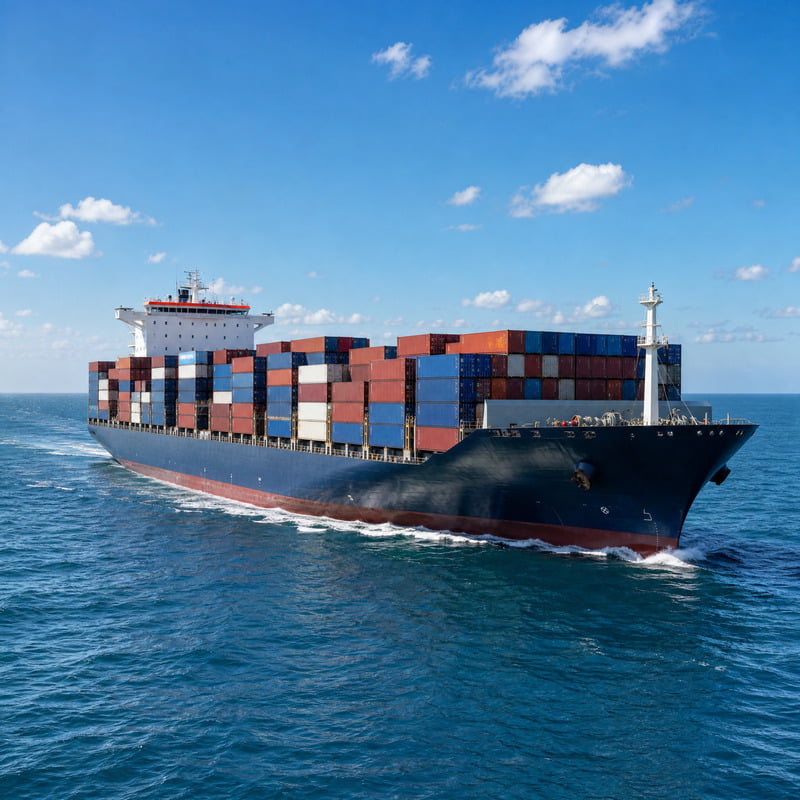
For a first-time importer, the most important distinction is this:
Ocean freight ≠ total delivered logistics cost.
A low port-to-port rate may still produce a higher total cost if the shipment requires expensive inland transportation, destination handling, storage, chassis use, or additional customs work.
If you are new to the process, this step-by-step guide to importing products from China to the USA explains the broader import workflow.
How Are Sea Freight Rates from China to USA Calculated?
A sea freight rate from China to the USA depends on the cargo, equipment or shipment size, China origin, U.S. gateway, final destination, shipping date, Incoterms, and required inland services. There is no single meaningful "China-to-USA rate" without defining the shipment scope.
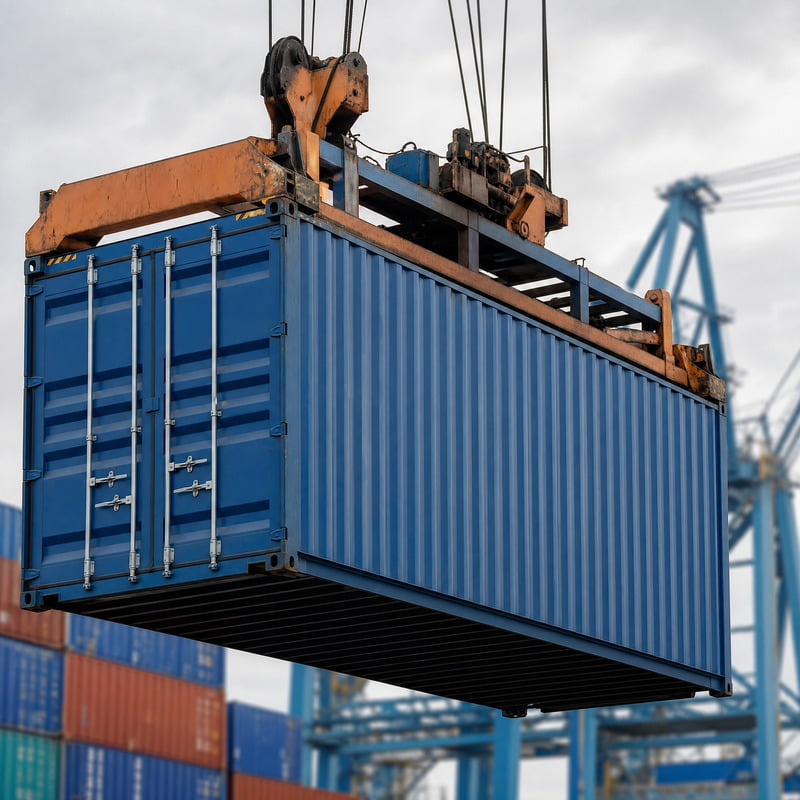
The ocean rate is only one part of the cost
A quote for a 40HQ container from Ningbo to the Port of Los Angeles is not the same service as a quote for a 40HQ container from Ningbo to a warehouse near Chicago.
The first may end at the U.S. ocean terminal. The second may require additional inland transportation, customs coordination, terminal or rail handling, drayage, chassis use, delivery scheduling, and final delivery.
A practical quote should identify the following cost components:
| Cost Item | What It May Cover | Why It Matters |
|---|---|---|
| China origin charges | Pickup, export handling, documentation, and origin terminal-related costs | Responsibility depends partly on the agreed sales and shipping terms |
| Ocean freight | Main ocean carriage between the agreed ports | This is often the headline number buyers compare |
| U.S. destination charges | Terminal, documentation, handling, or other destination charges | These can materially affect total cost |
| Customs brokerage | Entry preparation and customs business performed by a licensed customs broker | Confirm whether brokerage is included or separately billed |
| Import duties and government fees | Government-assessed amounts that may depend on HTS classification, customs value, country of origin, and applicable tariff measures | These should not be assumed to be part of the freight rate |
| Inland transportation | Rail, drayage, chassis, truck delivery, or related inland services | The final ZIP code can change the most practical route |
| Cargo insurance | Coverage arranged for specified cargo risks | Confirm whether insurance is included, optional, or excluded |
| Potential exception charges | Exams, storage, demurrage, detention, waiting time, or special handling | These are conditional and may arise depending on the shipment and circumstances |
For a deeper cost breakdown, see what you are really paying to ship a container from China.
For current FCL planning, the separate guide to container shipping rates from China to the USA covers container-rate considerations in more detail.
Incoterms change the responsibility split
Incoterms® define important delivery, cost, and risk responsibilities between the buyer and seller. They do not, by themselves, tell you the complete freight-forwarding price.
For example:
- EXW (Ex Works): The seller makes the goods available at the agreed location. The buyer takes on extensive transportation and clearance responsibilities. ICC guidance notes that EXW is primarily suitable for domestic trade.
- FOB (Free On Board): For qualifying sea shipments, the seller handles export clearance and delivers the goods on board the vessel at the named port of shipment.
- CFR (Cost and Freight): The seller arranges and pays the freight to the named destination port, while the buyer bears the cargo risk after delivery on board at origin and handles import clearance.
- CIF (Cost, Insurance and Freight): Similar to CFR, but the seller must also arrange the insurance required by the CIF rule.
- DDP (Delivered Duty Paid): DDP is an Incoterms® rule involving broader seller obligations, including import clearance and duties. The parties still need to make sure the proposed arrangement can be implemented legally and operationally for the actual U.S. import transaction.1
Door-to-door describes the logistics service scope, while DDP defines commercial responsibility under Incoterms®. They are not the same thing.
For containerized cargo, the exact Incoterm should be reviewed carefully rather than chosen simply because a supplier routinely uses it.
If a charge or responsibility is not clearly stated in the quotation or sales agreement, do not assume it is included.
How Long Does Sea Freight from China to USA Take?
Sea freight from China to USA does not have one reliable transit-time number. Timing depends on the origin port, U.S. gateway, carrier schedule, routing, transshipment if applicable, terminal conditions, customs status, inland transportation, and final delivery requirements.
Ocean transit is not the same as total door-to-door lead time. A useful estimate should separate the ocean movement from origin handling, customs and terminal release, inland rail or trucking, and final delivery.
| Route | Practical Planning Range After Vessel Departure |
|---|---|
| China → Southern California | About 14–25 days port-to-port depending on service |
| China → New York / New Jersey | About 29–40 days |
| China → Houston | About 29–45 days |
| China → Savannah | About 30–50 days depending on origin and service |
These are planning ranges, not guaranteed transit times. Actual schedules depend on the origin, carrier, routing, transshipment, port conditions, booking date, and operating conditions.
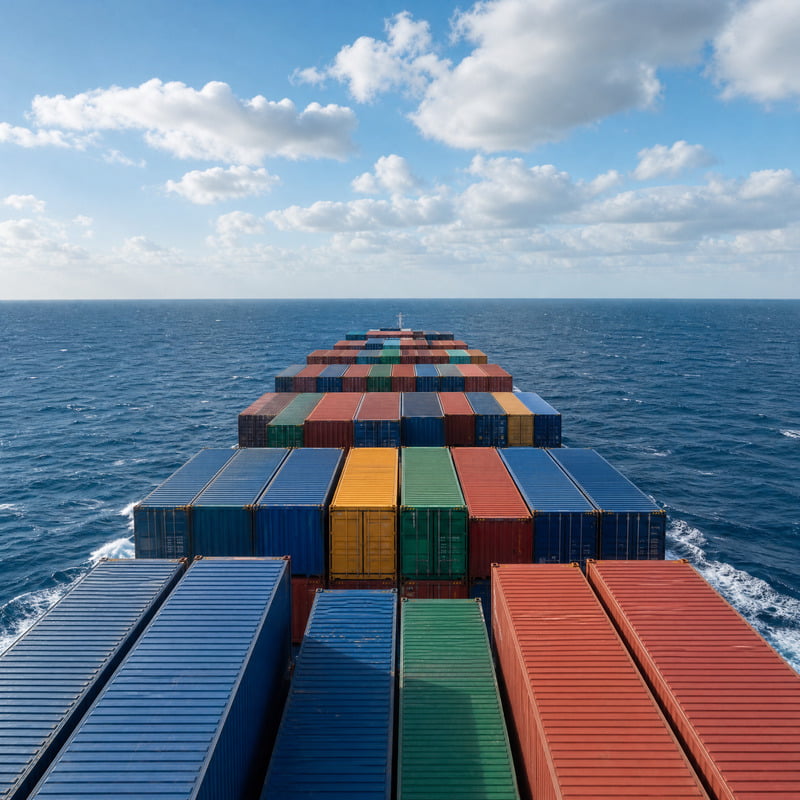
Port-to-port transit is not door-to-door transit
A complete shipment timeline may include:
- Cargo becomes ready at the factory.
- Space and equipment are confirmed.
- The container is positioned and loaded, or LCL cargo is delivered to the consolidation facility.
- Cargo is delivered to the China export terminal or facility.
- Export and carrier documentation is completed.
- The vessel departs.
- Ocean transportation takes place.
- The shipment arrives at the U.S. gateway.
- Customs and any applicable government-agency requirements are completed.
- The container or cargo becomes available for pickup.
- Inland rail or trucking is arranged when required.
- Final delivery is scheduled with the receiving facility.
Weather, schedule changes, transshipment, port congestion, customs exams, documentation problems, rail connections, trucking capacity, and warehouse appointments can all affect the final delivery date.
For more detail on the timing components, see our guide to sea freight transit time from China to the USA.
Route type changes the planning logic
| Route Type | Example Market | Planning Consideration |
|---|---|---|
| China to West Coast gateway | Los Angeles / Long Beach | Useful to evaluate for West Coast delivery or inland connections |
| China to East Coast gateway | New York | May reduce cross-country inland movement for some eastern destinations |
| China to Gulf Coast gateway | Houston | May be practical for Texas and some surrounding markets |
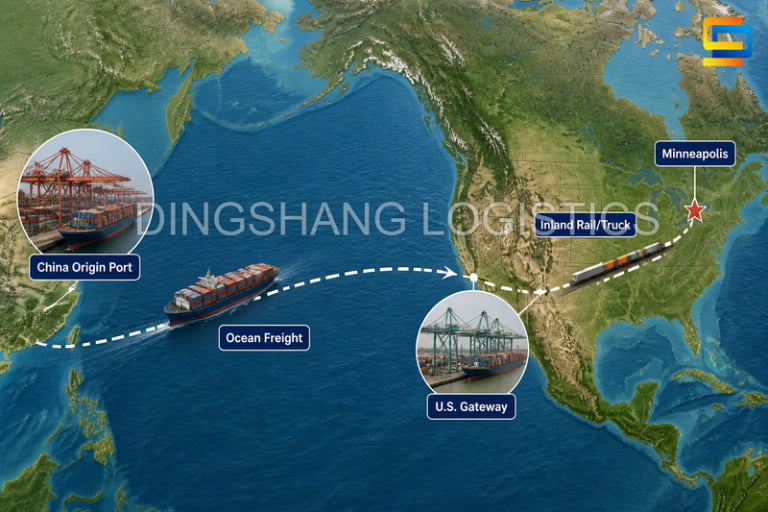
| Ocean plus inland rail/truck | Chicago, Dallas, Memphis, Kansas City | Requires evaluation of both the ocean gateway and inland connection |
The shortest ocean leg is not automatically the shortest or cheapest door-to-door solution.
For example, a shipment destined for an inland warehouse should be evaluated based on the complete route to that warehouse—not simply which U.S. port has the shortest sailing from China.
Documentation can affect the shipment before the vessel sails
For U.S.-bound vessel cargo subject to Importer Security Filing requirements, the ISF importer or its agent must electronically submit required advance cargo information. For standard ISF shipments, CBP requires eight of the data elements no later than 24 hours before cargo is laden aboard the vessel bound for the United States, with the remaining two provided according to the applicable timing rules.2
Importers should therefore prepare shipment and customs information early rather than waiting for U.S. arrival.
Documents and information commonly needed during the shipping and import process may include:
- Commercial invoice
- Packing list
- Bill of lading information
- ISF data
- Importer information
- Customs bond information where applicable
- HTS classification information
- Country of origin
- Product-specific documents required by CBP or another U.S. government agency
Exact requirements depend on the product and entry.
Which Route Should You Choose for Sea Freight from China to USA?
The best China-to-USA sea freight route depends primarily on the final delivery location, required delivery date, cargo characteristics, container or shipment size, and available ocean and inland services. Importers should compare the complete route rather than choosing a gateway only because its ocean rate is lower.
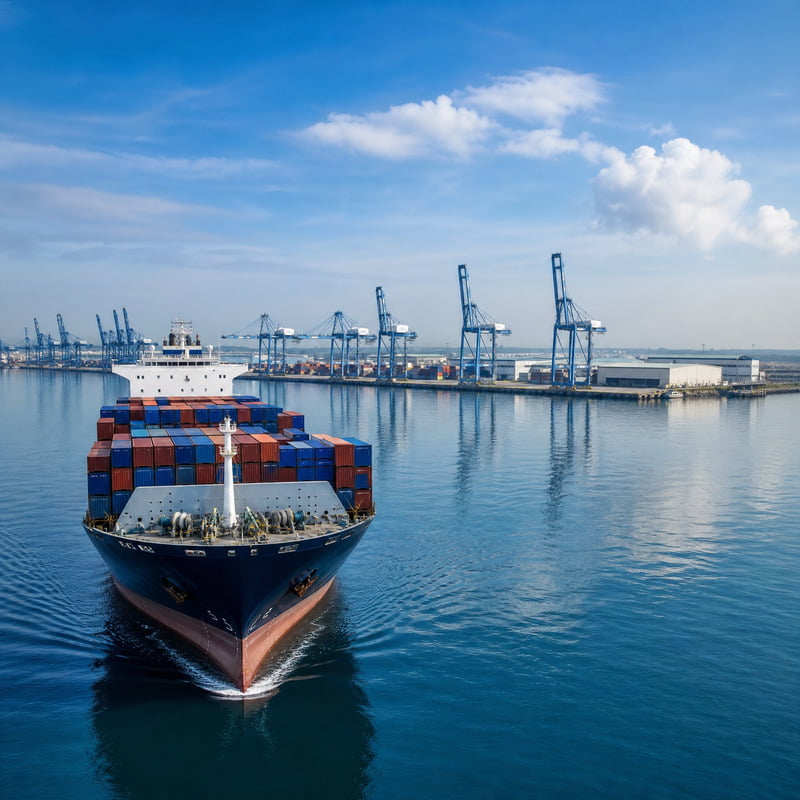
Start with the final U.S. ZIP code
The final ZIP code should be provided before comparing routes because the ocean gateway is only one part of the transportation plan.
In practice, the final ZIP code often changes the routing decision more than importers expect. A lower ocean rate to Los Angeles may no longer be the better option after inland rail, drayage, chassis, and delivery requirements are added.
Common China origins handled in China-to-USA shipping include:
- Ningbo
- Shanghai
- Shenzhen
- Qingdao
Depending on actual carrier service and booking availability, U.S. shipment planning may involve ocean gateways such as Los Angeles/Long Beach, Tacoma, New York-area terminals, Miami-area gateways, or Houston, followed by local or inland transportation where required.
Inland markets such as Chicago, Dallas, Memphis, Kansas City, Cleveland, Atlanta, Detroit, Nashville, St. Louis, and Minneapolis should not be confused with the ocean gateway used to enter the United States.
An inland destination is not necessarily a seaport, and an inland rail ramp is not the same as final warehouse delivery.
For example, an importer shipping to Chicago may need to compare the ocean gateway, inland rail or truck arrangement, destination drayage, and warehouse receiving requirements. Our guide to shipping a container from China to Chicago explains that inland planning in more detail.
Compare the entire route
| Delivery Task | Route to Evaluate | What to Confirm |
|---|---|---|
| Southern California delivery | China → Los Angeles/Long Beach area → truck delivery | Terminal availability, drayage, chassis, receiving appointment |
| Chicago-area delivery | China → suitable U.S. gateway → inland rail/truck → Chicago-area delivery | Actual intermodal routing, rail availability, ramp and drayage scope |
| New York-area delivery | China → New York-area gateway → local delivery | Carrier schedule, terminal, customs and final-mile requirements |
| Dallas-area delivery | China → suitable gateway → rail or truck → Dallas-area delivery | Total inland cost, available routing, final delivery requirements |
| South Florida delivery | China → suitable Southeast/Florida gateway → truck delivery | Carrier service, gateway choice, final truck distance |
Any specific rail routing or through-service should be confirmed against the actual booking. The existence of a rail terminal does not mean every carrier or shipment can use the same intermodal route.
Importers evaluating Southern California can also review our China-to-Los Angeles container shipping guide.
Required delivery date can change the best route
For seasonal inventory, production components, promotional products, or launch-related cargo, the lowest quoted ocean rate may not be the best business decision.
Compare:
- cargo-ready date
- carrier cutoff
- expected departure
- transshipment requirements
- U.S. gateway
- inland connection
- customs readiness
- receiving appointment requirements
- buffer time before the inventory is actually needed
A route should be evaluated against the required delivery task, not just the ocean freight line item.
What Should a Complete Sea Freight from China to USA Quote Include?
A complete sea freight quote should define where the service starts and ends, what transportation is included, which charges are included or excluded, how customs services are handled, and which costs remain conditional. It should also identify the cargo, equipment or shipment size, route assumptions, and quote validity.
Minimum details for an initial FCL quote
For an initial FCL quote, provide:
- Product name
- HS code, if available
- Product material or composition where relevant
- Supplier or pickup location in China
- Final U.S. delivery ZIP code
- Container type, such as 20GP or 40HQ
- Gross cargo weight
- Cargo-ready date
- Supplier Incoterm, such as FOB or EXW
For door-to-door or customs-inclusive service, additional details may be required, such as Importer of Record information, customs bond status, special unloading requirements, and other customs or compliance information.
If you are evaluating container size and current cost structure, the dedicated guides to 20GP container cost from China to the USA and 40HQ container cost from China to the USA provide more detailed planning information.
For LCL shipments, package count, package dimensions, total CBM, and gross weight are also essential.
The quote should define responsibility boundaries
Before accepting a quote, confirm:
- Does the service start at the factory, a China warehouse, or the export port?
- Does it end at the U.S. port, an inland ramp, or the final delivery address?
- Are China origin charges included?
- Are U.S. destination charges included?
- Is customs brokerage included, or is the forwarder only coordinating with a licensed broker?
- Are duties, taxes, and government fees included, estimated, advanced, or excluded?
- Is inland rail or trucking included?
- Is chassis use included where required?
- Is delivery appointment coordination included?
- Are potential storage, demurrage, detention, exam, and waiting-time charges excluded?
- Is cargo insurance included or optional?
- What is the quote validity period?
- What schedule or routing assumptions apply?
In practice, one of the most common comparison errors is placing a port-to-port rate beside a door-delivery rate and treating them as equivalent.
Customs exams, storage, demurrage, detention, waiting time, and special handling are conditional charges that may arise depending on the shipment and circumstances. A conditional charge is not necessarily a hidden fee; the important point is whether its trigger, scope, and exclusion are explained clearly before shipment.
The Federal Maritime Commission regulates important aspects of U.S. international ocean transportation, including requirements relating to demurrage and detention billing. Because these charges and billing rules can change and depend on the circumstances, importers should review the actual carrier, terminal, and forwarder terms applying to the shipment.3
Base rate vs. complete shipment scope
| Quote Type | What It Generally Covers | What the Importer Still Needs to Check |
|---|---|---|
| Base ocean rate | Main ocean transportation | Origin, destination, customs, inland and conditional charges |
| Port-to-port | Agreed China port to agreed U.S. port | Customs, destination handling and inland delivery |
| Inland-ramp service | Ocean plus specified inland movement | Ramp handling, drayage and final delivery |
| Door-to-door | Agreed origin to final delivery location | Customs, duties/taxes, exceptions and exact responsibility boundaries |
| DDP quotation | Broad seller-arranged delivered scope under DDP terms | Import structure, customs responsibilities, compliance and exclusions |
The service name alone is not enough. Always review what the written quotation actually includes.
How Should First-Time Importers Compare China-to-USA Sea Freight Quotes?
First-time importers should compare quotes line by line using the same shipment scope. A port-to-port quote cannot be fairly compared with a door-to-door quote, and an ocean rate that excludes destination charges should not be compared directly with an all-in transportation scope.

Ask every forwarder the same questions
Before choosing a quote, ask:
- What exact origin and destination does the quotation cover?
- What China port and U.S. gateway are assumed?
- Is the service port-to-port, ramp delivery, or door-to-door?
- Are origin charges included?
- Are destination charges included?
- Is customs brokerage included?
- Who will act as the licensed customs broker?
- Are duties, taxes, bond charges, and government fees included or excluded?
- Is inland rail or truck transportation included?
- What conditional charges are excluded?
- What is the quote validity?
- What schedule or routing assumptions were used?
- How are customs exams, storage, demurrage, detention, or waiting time handled?
These questions make it easier to identify whether two quotations are actually pricing the same transportation task.
If you are comparing logistics providers as well as rates, see our guide on how to choose a freight forwarder in China.
Use a side-by-side comparison table
| Item | Forwarder A | Forwarder B | Forwarder C |
|---|---|---|---|
| Origin charges | Included / Excluded | Included / Excluded | Included / Excluded |
| Ocean freight | Included / Excluded | Included / Excluded | Included / Excluded |
| Destination charges | Included / Excluded | Included / Excluded | Included / Excluded |
| Customs brokerage | Included / Excluded | Included / Excluded | Included / Excluded |
| Duties/taxes | Explain | Explain | Explain |
| Inland delivery | Included / Excluded | Included / Excluded | Included / Excluded |
| Insurance | Included / Optional / Excluded | Included / Optional / Excluded | Included / Optional / Excluded |
| Conditional charges | List exclusions | List exclusions | List exclusions |
| Quote validity | Date | Date | Date |
| Routing assumption | Explain | Explain | Explain |
The goal is not necessarily to select the lowest number. It is to identify the lowest acceptable total-risk option for the same shipping task.
Do You Need a Customs Broker for Sea Freight from China to USA?
U.S. law does not generally require an importer to hire a customs broker to clear its own goods, but many importers use a CBP-licensed customs broker because U.S. entry procedures can be complex. CBP states that the importer remains ultimately responsible for compliance even when a broker is used.4
A freight forwarder can coordinate transportation and may help connect the importer with a licensed customs broker, but unlicensed parties should not be presented as independently performing regulated customs business.
For commercial imports, the importer should confirm:
- who is the Importer of Record
- who will file the customs entry
- whether an appropriate customs bond is in place
- the HTS classification
- declared value
- country of origin
- applicable duties, taxes, and fees
- whether another U.S. government agency regulates the product
Import duties and government fees can often be estimated or evaluated based on factors such as HTS classification, customs value, country of origin, and applicable tariff measures, but the actual amount remains subject to the applicable rules and assessment by U.S. Customs and Border Protection.
CBP places responsibility on the Importer of Record to use reasonable care in entering, classifying, and valuing imported merchandise.5
FCL or LCL: Which Is Better for Shipping from China to USA?
FCL and LCL solve different shipping problems. FCL gives one shipper use of a container, while LCL consolidates cargo from multiple shippers. The better choice depends on cargo volume, weight, handling requirements, schedule, origin and destination costs, and the actual quotation.
| Factor | FCL | LCL |
|---|---|---|
| Shipment structure | One shipper uses the container | Multiple shipments are consolidated |
| Common equipment | 20GP, 40GP, 40HQ and other container types as available | Cargo moves within a consolidated container |
| Pricing basis | Typically container-based plus applicable charges | Often based on chargeable volume/weight and local charges |
| Handling | Fewer consolidation/deconsolidation steps | Requires consolidation and deconsolidation |
| Best comparison | Total container shipping cost | Total LCL cost including origin and destination handling |
A smaller shipment is not automatically cheaper by LCL once all local and handling charges are considered.
There is no universal CBM threshold for switching from LCL to FCL. Compare the all-in LCL cost with the current FCL cost for the same route, cargo weight, destination, handling requirements, and cargo-ready date.
Dense cargo, destination CFS charges, inland delivery, stackability, and current container rates can materially change the break-even point.
For a more detailed decision framework, see when to choose FCL instead of LCL.
If you are planning a consolidated shipment, the guide to LCL shipping from China to the USA covers LCL-specific planning in more detail.
Frequently Asked Questions
What is the cheapest way to ship a container from China to the USA?
There is no single cheapest route for every shipment. The lowest ocean rate may not produce the lowest delivered cost after origin charges, destination handling, customs, inland transportation, chassis, storage, and other conditional charges. Compare itemized quotes using the same origin and final destination.
How long does sea freight from China to USA usually take?
Timing varies by origin, U.S. gateway, carrier schedule, routing, customs status, terminal conditions, inland transportation, and final delivery appointment. The planning ranges earlier in this guide are not guaranteed schedules. Do not use port-to-port ocean transit as the promised warehouse delivery time.
Do I need a customs broker to import from China to the USA?
Not necessarily. CBP states that there is no general legal requirement for an importer to hire a customs broker to clear its own goods, although many importers use licensed brokers for convenience and expertise. The importer remains responsible for compliance even when a broker is used.4
Is door-to-door sea freight better than port-to-port shipping?
Door-to-door service can reduce the number of transportation arrangements the importer must coordinate, but it is not automatically better. Importers with their own broker, drayage provider, warehouse network, or transportation contracts may prefer port-to-port or another defined scope. Door-to-door service should not be confused with DDP Incoterms® responsibility.
Can I get a fixed sea freight rate from China to USA?
You can receive a quotation with a defined validity period and shipment scope, but ocean freight and related transportation costs change over time. The quote should identify the route, cargo, equipment, validity, included charges, exclusions, and service assumptions.
Are duties and taxes included in a sea freight quote?
Not automatically. Import duties and government fees are separate from ocean freight unless the quotation expressly states how they will be handled. They may be estimated based on factors such as HTS classification, customs value, country of origin, and applicable tariff measures, with the actual amount subject to applicable CBP rules and assessment.
Is an inland rail ramp the same as door delivery?
No. An inland rail ramp is a transfer or pickup point within an intermodal transportation chain. If the consignee's warehouse is elsewhere, the shipment may still require drayage or trucking from the ramp to the final delivery address.
Get an Accurate China-to-USA Sea Freight Quote
A useful freight quote starts with a clearly defined shipment. Dingshang Logistics coordinates China-to-USA FCL and LCL ocean freight, inland transportation, and related customs-clearance arrangements through appropriate service partners.
For an initial FCL quote, provide:
- Product name
- HS code, if available
- Product material or composition where relevant
- Supplier or pickup location in China
- U.S. delivery ZIP code
- 20GP or 40HQ requirement
- Gross cargo weight
- Cargo-ready date
- FOB, EXW, or other agreed Incoterm
For door-to-door or customs-inclusive service, additional information may be required, including Importer of Record details, customs bond status, customs-clearance requirements, and special loading or unloading requirements.
For an LCL quote, also provide the package quantity, dimensions, total CBM, and gross weight.
The more precisely the origin, cargo, destination, and service scope are defined, the easier it is to compare routing and cost on the same basis.
Send your cargo details and U.S. delivery ZIP code to receive a route and cost review based on the actual shipment scope.
Request a Sea Freight Quote
References
[International Chamber of Commerce — Incoterms® 2020 Checklist and Flowcharts](https://library.iccwbo.org/content/clp/Others/incoterms_2020_checklist_2024-update.pdf) ↩
[U.S. Customs and Border Protection — Importer Security Filing Guidance](https://www.cbp.gov/sites/default/files/documents/import_sf_carry_3.pdf) ↩
[Federal Maritime Commission — Detention and Demurrage Billing Practices](https://www.fmc.gov/articles/fmc-publishes-final-rule-on-detention-and-demurrage-billing-practices/) ↩
[U.S. Customs and Border Protection — Do I Need a Customs Broker to Clear My Goods?](https://www.help.cbp.gov/s/article/Article-1169?language=en_US) ↩
[U.S. Customs and Border Protection — Customs Broker Guidance](https://www.cbp.gov/sites/default/files/2025-08/Version%202.0%20-%20Customs%20Broker%20Guidance.pdf) ↩
Leave a Comment