
How to Import Products from China to USA Step by Step?
To import products from China to the USA, you need to confirm the product, supplier terms, customs requirements, shipping method, documents, duties, and final delivery plan before the cargo leaves China. The objective is not simply to move goods across the ocean. It is to know who is responsible at each stage and understand the likely landed cost before you commit to the shipment.
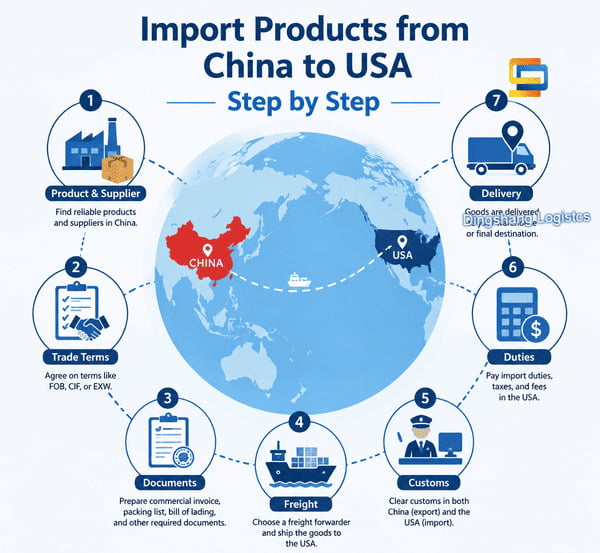
The basic process is:
- Confirm the product and U.S. import requirements.
- Define the supplier's Incoterm and your logistics responsibilities.
- Collect accurate cargo and commercial information.
- Choose LCL or FCL and define the delivery scope.
- Book transportation and complete China export procedures.
- Submit required U.S. advance cargo information, including ISF for applicable vessel shipments.
- Prepare the U.S. customs entry and duties.
- Arrange destination release and inland transportation.
- Deliver the cargo to the final U.S. warehouse and close out the shipment.
For a U.S. importer, three questions should remain clear throughout the process:
- Who pays each cost?
- Who is responsible for each logistics step?
- What documents and compliance information must be ready before the next handoff?
If you keep those boundaries clear, freight quotes become easier to compare and unexpected destination costs become easier to control.
What Should You Confirm Before You Import Products from China to USA?
Before you import products from China to the USA, confirm the product details, cargo measurements, supplier location, Incoterm, U.S. destination, customs requirements, and receiving conditions. These details affect freight cost, container selection, customs planning, inland transportation, and whether a quote actually covers the service you need.
Start With the Product, Not the Freight Rate
A forwarder cannot responsibly price a shipment from only a product name and the words “China to USA.”
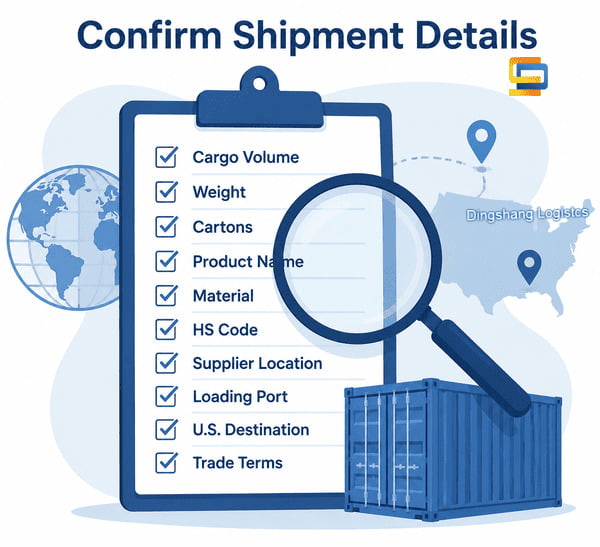
For an initial quotation, provide:
- Product name
- Material or composition
- Product use
- HS/HTS code, if available
- Cargo value
- Total CBM
- Gross weight
- Carton or pallet quantity
- Package dimensions
- Supplier address or China origin city
- Cargo-ready date
- U.S. delivery ZIP code
- Incoterm
- Special loading or delivery requirements
Some commodities need additional attention before booking. Batteries, chemicals, food, machinery, wood products, regulated consumer goods, and other specialized cargo may involve additional carrier, customs, or partner-government-agency requirements.
CBP provides import guidance for merchandise regulated by partner government agencies, including agencies such as FDA, USDA, CPSC, EPA, and others.1
Why Shipment Details Control Your Freight Cost
International freight is not one charge.
Depending on your service scope, the shipment can involve:
- China factory pickup
- Origin handling
- Export customs procedures
- Container loading or LCL consolidation
- Ocean freight
- U.S. destination charges
- Customs brokerage
- Government duties and fees
- CFS handling for LCL
- Port or rail drayage
- Inland rail
- Long-haul trucking
- Final delivery
- Delivery appointments
- Conditional storage, demurrage, or detention charges
That is why a quotation to a U.S. port is not the same as a quotation to your warehouse.
For a broader overview of the transportation chain, see how container shipping works from China to the USA.
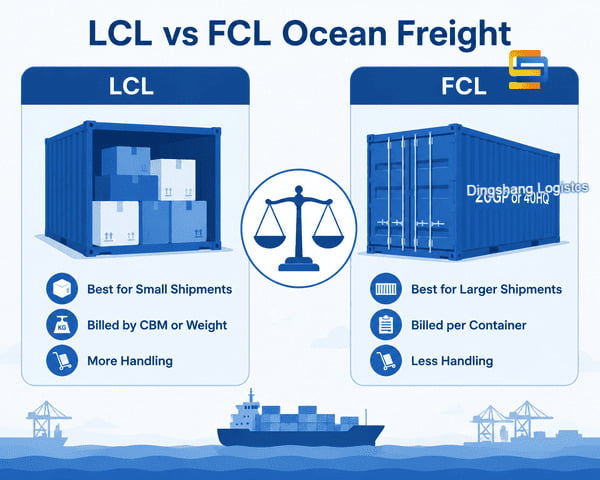
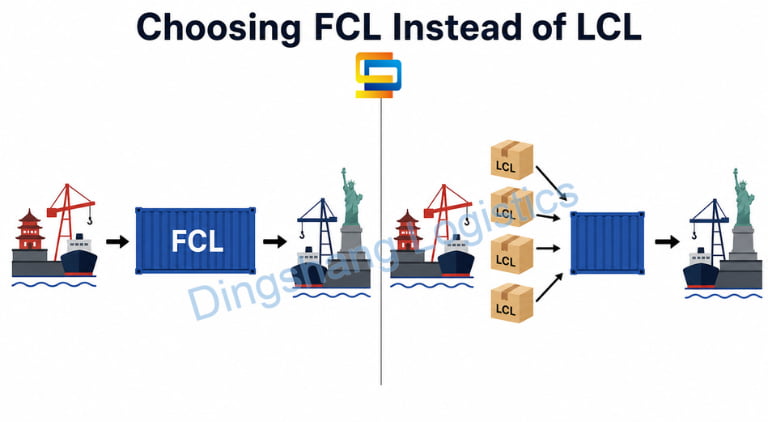
Choose FCL or LCL Based on the Full Shipment
LCL and FCL should be compared using total cost, cargo characteristics, destination, and handling requirements—not a fixed CBM cutoff.
| Factor | LCL | FCL |
|---|---|---|
| Cargo capacity | Shared container space | Dedicated container |
| Pricing basis | Typically weight/measurement under the quote | Per container |
| Cargo handling | More consolidation/deconsolidation handling | Fewer cargo-level consolidation steps |
| Destination process | CFS release normally required | Container release and inland movement |
| Best use | Smaller shipments | Shipments that justify dedicated equipment |
| Main decision | Is all-in LCL still economical? | Does dedicated capacity provide better overall value? |
There is no universal CBM point where LCL automatically becomes FCL. The break-even point changes with route, gross weight, LCL W/M pricing, destination handling, inland delivery, current FCL pricing, and the cargo's handling requirements.
For a more detailed comparison of cost, handling, and shipment size, see when you should choose FCL instead of LCL.
How Do Incoterms Affect Importing Products from China to USA?
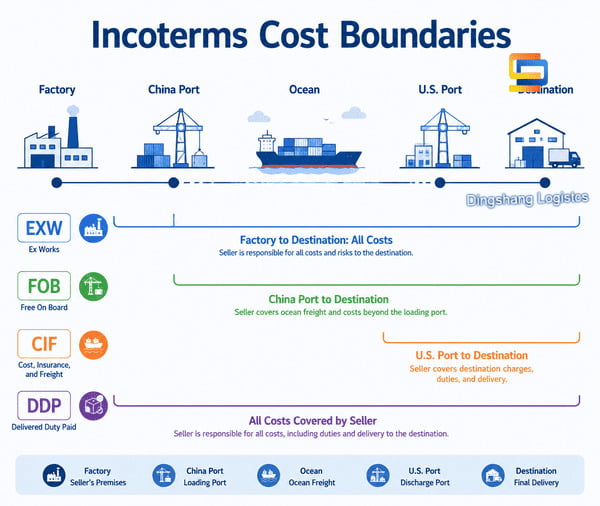
Incoterms affect China-to-USA imports because they allocate important transportation tasks, costs, and risks between the seller and buyer. They do not replace a freight quotation, customs plan, or sales contract, so you should match the Incoterm with the actual logistics scope before comparing shipping prices.
The International Trade Administration explains that Incoterms® identify which party is responsible for specified transportation tasks, costs, and risks. It also notes that Incoterms do not cover every condition of the sale.2
Incoterms Are Responsibility Boundaries
A practical high-level comparison is:
| Trade Term | Practical Importer Consideration |
|---|---|
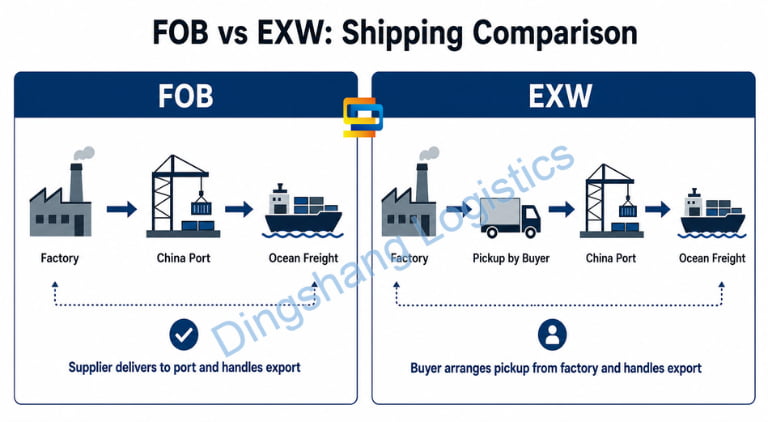
| EXW | Buyer assumes extensive responsibility from the seller's named premises; China pickup and export-side arrangements require careful coordination |
| FOB | Seller handles responsibilities through delivery on board at the named port of shipment; buyer controls the main carriage and U.S. side |
| CIF | Seller arranges cost, insurance, and freight to the named destination port; this does not mean U.S. customs clearance or warehouse delivery is included |
| DDP | Seller assumes extensive responsibilities through the named destination, including import-related obligations under the agreed term |
Always specify the named place or port and the Incoterms version in the commercial agreement.
Why FOB Can Give Importers More Freight Visibility
FOB is common in international ocean transactions because the seller handles the agreed export-side responsibilities while the buyer controls the main carriage and destination-side logistics.
That can make it easier to compare:
- Ocean freight
- U.S. destination charges
- Customs brokerage
- Inland transportation
- Final delivery
A supplier-arranged CIF rate may also be workable, but do not assume “freight prepaid to the U.S. port” means the shipment is paid through to your warehouse.
Why EXW Requires More Origin Planning
Under EXW, the buyer assumes substantial origin-side responsibility from the named place.
Your transportation plan may therefore need to address:
- Factory pickup
- Loading arrangements
- China-side documentation
- Export procedures
- Origin warehouse or terminal movement
- Ocean booking
The precise execution should be confirmed with the supplier and forwarder because the commercial Incoterm and the forwarder's service scope are related but not identical.
Do not compare freight quotes until their origin and destination boundaries match.
What Documents Do You Need to Import Products from China to USA?
A China-to-USA commercial import normally requires accurate commercial, transportation, and customs information. Core documents commonly include a commercial invoice, packing list, bill of lading, and customs-entry information. Ocean shipments may also require Importer Security Filing data, while regulated commodities can require additional agency documentation.
Core Commercial and Shipping Documents
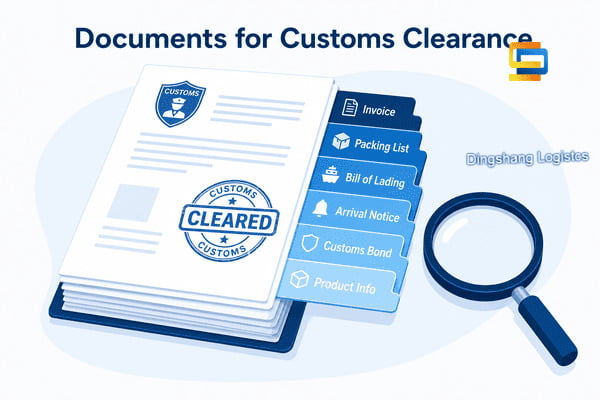
Typical documentation includes:
-
Commercial Invoice
Identifies the buyer, seller, merchandise, quantity, value, currency, and other transaction details required for the shipment and import process. -
Packing List
Shows package quantity, weights, dimensions, and packing information. -
Bill of Lading
The ocean transportation document issued for the shipment. -
Arrival Notice
Usually issued around destination arrival to communicate shipment and release information. -
Importer and Bond Information
Your customs broker will determine the entry and bond requirements applicable to the shipment. -
Product and Classification Information
This can include product descriptions, material, function, composition, images, model information, and HTS references. -
Commodity-Specific Documents
Additional certificates, permits, declarations, licenses, or agency filings may apply depending on the product.
Do Not Forget Importer Security Filing
For U.S.-bound cargo arriving by vessel, Importer Security Filing (ISF), commonly called “10+2,” is an advance filing requirement.
CBP states that the ISF Importer or its agent must electronically provide advance cargo information. For standard U.S.-bound cargo, eight importer data elements generally must be filed no later than 24 hours before the cargo is laden aboard the vessel destined for the United States; two additional elements have later timing provisions.3
This means ISF should be prepared before vessel loading, not after the container reaches the United States.
Coordinate early with your customs broker or filing agent and provide accurate information such as:
- Seller
- Buyer
- Importer of record number
- Consignee number
- Manufacturer or supplier
- Ship-to party
- Country of origin
- HTSUS information
- Container stuffing location
- Consolidator
The exact filing obligations depend on the shipment type, so the responsible filing party should confirm the applicable requirements.
Why Document Consistency Matters
Your invoice, packing list, transportation documents, and customs data should describe the same commercial shipment.
Common avoidable problems include:
- Different carton counts across documents
- Incorrect consignee information
- Vague product descriptions
- Inconsistent values
- Missing manufacturer information
- Incorrect or unsupported HTS assumptions
A freight forwarder can coordinate transportation documents, while a licensed customs broker can assist with customs business. The importer should still maintain control of product, valuation, origin, and compliance information.
How Should You Calculate Landed Cost When Importing Products from China to USA?
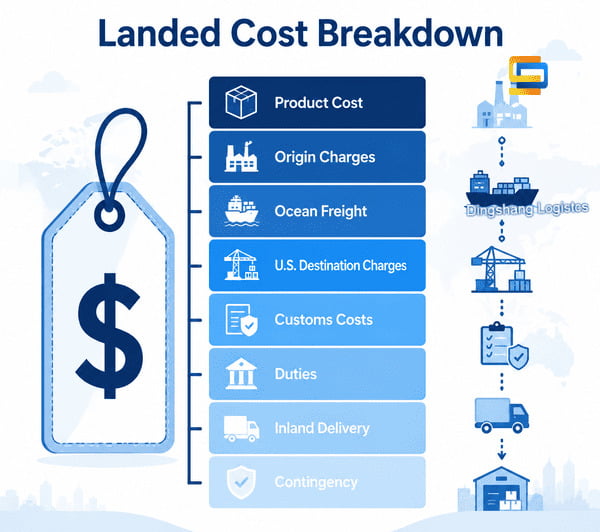
Calculate landed cost by combining the product cost with the logistics and import costs required to bring the merchandise to its intended destination. Do not use the ocean-freight line alone as your import budget because destination charges, brokerage, duties, inland transportation, and conditional costs may materially change the result.
A useful planning formula is:
Product cost + origin logistics + ocean freight + destination charges + customs/brokerage costs + applicable duties and government fees + inland transportation + other applicable shipment costs = estimated landed cost
A Practical Landed Cost Framework
| Cost Category | Examples | Planning Question |
|---|---|---|
| Product | Purchase value | What does the supplier price include? |
| China origin | Pickup, handling, export services | Is the purchase EXW, FOB, or another term? |
| Ocean freight | FCL or LCL transportation | What route and service is quoted? |
| U.S. destination | Terminal, CFS, documentation | Which charges are included? |
| Customs | Brokerage, bond, filing-related services | What does the broker quote cover? |
| Duties/government fees | Duty and applicable trade measures | What applies to this HTS classification and origin? |
| Inland transportation | Rail, drayage, truck, delivery | Where does the cargo actually need to go? |
| Conditional costs | Exams, storage, demurrage, detention | What could apply if the shipment is delayed or examined? |
For more detail, see what you are really paying to ship a container from China.
Ocean Freight Is Not Landed Cost
This distinction is important:
Ocean freight ≠ port-to-port cost ≠ inland-ramp cost ≠ door-to-door cost ≠ total landed cost.
If your warehouse is in Chicago, Dallas, Memphis, Detroit, Cleveland, or another inland market, U.S. port arrival is only one stage.
The shipment may still require:
- Customs release
- Carrier or terminal release
- Rail or truck movement
- Drayage
- Warehouse appointment
- Unloading
- Empty-container return for FCL
A low port rate does not tell you what the cargo will cost to reach your warehouse.
Verify Duties Before Shipping
CBP explains that duty treatment depends on tariff classification and other relevant import factors. Additional duties or trade measures can also apply to certain merchandise.4
The supplier's suggested HS code can be useful background, but it should not be accepted automatically. CBP's reasonable-care guidance places responsibility on the importer for providing accurate classification, valuation, origin, and other entry information.5
When classification is uncertain, work with a qualified customs broker or other appropriate trade professional before relying on a duty estimate.
How Do You Choose the Best Shipping Method to Import Products from China to USA?
Choose the shipping method by comparing shipment size, cargo characteristics, total delivered cost, handling exposure, timing requirements, and final U.S. destination. LCL can work well for smaller shipments, while FCL provides dedicated container capacity. Inland shipments may use rail and truck combinations where suitable service is available.
Common China-to-USA Ocean Freight Options
| Method | Often Suitable For | Main Benefit | Main Issue to Check |
|---|---|---|---|
| LCL | Smaller cargo lots | Avoid paying for an entire container | Consolidation, deconsolidation, and destination charges |
| 20GP FCL | Cargo suited to a smaller dedicated container | Dedicated equipment and loading control | Cargo weight and usable capacity |
| 40HQ FCL | Higher-volume or bulky cargo | Greater cubic capacity | Total inventory and delivery requirements |
| Sea-rail intermodal | Suitable inland routings | Can connect ocean gateways with inland markets | Actual service availability and final drayage |
| Door-to-door ocean service | Importers wanting coordinated origin-to-destination service | Fewer coordination gaps | Exact inclusions and exclusions |
If you are evaluating a smaller full-container shipment, compare the 20GP container cost from China to the USA against the complete LCL alternative. For higher-volume or bulky cargo, compare how much a 40HQ container costs from China to the USA on the same route and service scope.
Do Not Use a Fixed LCL/FCL CBM Rule
A fixed statement such as “switch to FCL at 15 CBM” can be misleading.
The better approach is to compare:
- Current LCL W/M pricing
- Current FCL rates
- Route
- Origin charges
- Destination CFS charges
- Inland delivery
- Gross weight
- Stackability
- Cargo handling requirements
- Inventory timing
There is no universal CBM point where LCL automatically becomes FCL. The lowest ocean-freight number is not necessarily the lowest delivered cost.
Gateway and Final Destination Are Different Decisions
The U.S. arrival port is not automatically the final destination.
For inland markets, the routing can involve:
Ocean gateway → rail ramp → drayage → warehouse
or:
Ocean gateway → long-haul truck → warehouse
depending on the booked service.
An inland rail ramp is also not the same as door delivery. The container still needs a practical final-mile plan.
If your destination is Chicago or Dallas, the approved guides to shipping a container from China to Chicago and shipping a container from China to Dallas provide more destination-specific planning detail.
What Happens After Cargo Arrives in the United States?
After cargo arrives in the United States, the shipment still needs customs and operational release, destination handling, inland transportation, and final delivery. Port arrival is not the same as warehouse delivery. An importer should coordinate these steps before the vessel arrives.
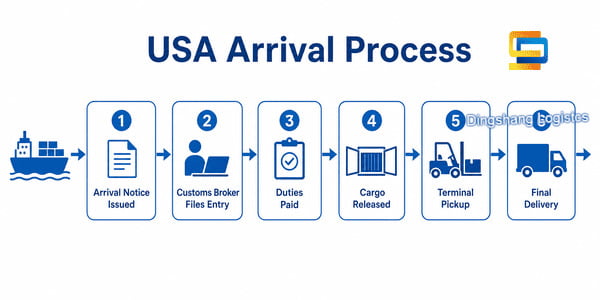
Typical U.S. Arrival Workflow
-
Arrival information becomes available
The carrier or forwarder communicates shipment and destination information. -
Customs entry is processed
The customs broker uses the commercial and shipment data provided by the importer. -
Applicable duties and fees are handled
Payment arrangements depend on the customs and commercial setup. -
CBP and any applicable agencies determine release status
Some shipments may be selected for additional review or examination. -
Carrier, terminal, or CFS release requirements are completed
Customs release alone does not necessarily complete every operational release requirement. -
Inland transportation is dispatched
FCL may move by drayage, rail, long-haul truck, or a combination. LCL cargo normally requires deconsolidation before individual shipment delivery. -
The warehouse receives the cargo
Delivery appointments, unloading capability, and receiving hours should already be confirmed. -
FCL equipment is returned as required
Empty-container return should be part of the delivery plan.
Demurrage, Detention, and Storage
Demurrage and detention are potential time-related charges associated with terminal use and carrier equipment beyond applicable free time. They are not charges that every shipment automatically incurs.
The Federal Maritime Commission describes free time as the period during which applicable demurrage or detention charges do not accrue under the relevant arrangements.6
Operational problems that can increase exposure include:
- Late customs or operational release
- Delayed payment
- Missed pickup appointments
- Warehouse receiving delays
- Failure to unload or return equipment on time
The actual free-time terms and charges depend on the carrier, terminal, contract, tariff, and shipment circumstances.
Door-to-Door Does Not Mean Every Charge Is Included
Door-to-door describes a logistics service boundary. It does not automatically mean every possible charge is prepaid or fixed.
Before booking, confirm whether the quote includes or excludes:
- Customs brokerage
- Duties and government fees
- Customs exams
- Destination charges
- Chassis
- Drayage
- Rail
- Delivery appointments
- Driver waiting
- Storage
- Demurrage
- Detention
- Special delivery services
Door-to-door should also not be confused with DDP, which is an Incoterm defining responsibilities under the sales transaction.
How Long Does Importing Products from China to USA Take?
There is no single China-to-USA import lead time because the total schedule includes more than the ocean voyage. Origin preparation, vessel schedules, transshipment where applicable, customs processing, inland transportation, and warehouse appointments can all affect the final delivery date.
The critical distinction is:
Ocean transit ≠ total door-to-door lead time.
A complete timeline can include:
- Production completion
- Cargo pickup
- Origin handling
- Booking cutoff
- Vessel departure
- Ocean transit
- Transshipment, if applicable
- U.S. discharge
- Customs processing
- Terminal or CFS availability
- Rail or trucking
- Warehouse appointment
- Final delivery
For inventory planning, use the actual booked routing and service rather than a generic online transit-time number. See the China-to-USA sea freight transit time guide for a more detailed explanation.
Frequently Asked Questions
What Is the First Step to Import Products from China to USA?
Start by confirming the product and shipment details before requesting freight or placing the final shipping order. You need the product description, material, cargo value, package information, gross weight, supplier location, Incoterm, U.S. destination, and any regulatory requirements that could affect entry.
Is FOB or CIF Better When Importing from China?
Neither term is automatically better, but FOB can give a U.S. importer more control over the main carriage and U.S. logistics. CIF means the seller arranges cost, insurance, and freight to the named destination port; it does not mean destination charges, customs clearance, duties, or warehouse delivery are automatically included.
How Much Does It Cost to Ship Products from China to USA?
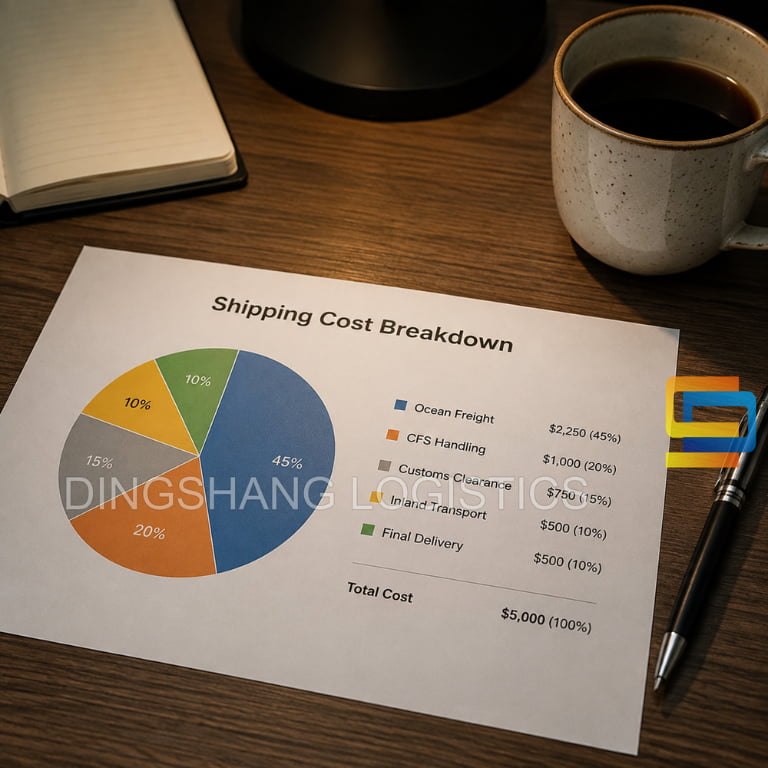
There is no single China-to-USA freight price. Cost depends on cargo volume and weight, FCL or LCL, China origin, U.S. destination, cargo-ready date, commodity, Incoterm, current rates, customs requirements, and delivery scope.
For useful budgeting, compare the total origin-to-destination logistics cost rather than ocean freight alone.
Do I Need an ISF When Importing from China by Ocean?
Applicable U.S.-bound vessel shipments require Importer Security Filing information before arrival, with key ISF data generally due before the cargo is laden aboard the vessel. The ISF Importer or its agent is responsible for submitting the required data to CBP.3
Coordinate ISF before departure rather than waiting until the container reaches the United States.
Do I Need a Customs Broker to Import from China?
You can use a licensed customs broker to transact customs business on your behalf, and commercial importers commonly do so. Using a broker does not remove the importer's responsibility for accurate product, classification, valuation, origin, and compliance information.
Is LCL or FCL Better for Importing from China?
LCL is often practical for smaller shipments, while FCL can become more attractive when dedicated container capacity, handling control, or all-in economics justify it. There is no universal CBM switch point.
Compare the actual route, gross weight, LCL W/M pricing, destination handling, inland delivery, current FCL pricing, and cargo handling requirements.
Does Door-to-Door Shipping Include Duties?
Not automatically. Door-to-door describes transportation scope. Duties and other government charges should be confirmed separately unless the quotation specifically states how they are handled.
What Happens After My Container Reaches a U.S. Port?
Port arrival is only the end of the ocean leg. The shipment may still require customs and operational release, terminal pickup, inland rail or trucking, a warehouse appointment, unloading, and empty-container return.
Get a China-to-USA Import Shipping Quote
For a useful freight quotation, provide Dingshang Logistics with enough information to price the actual shipment and final destination.
For FCL, send:
- Product name
- HS/HTS code, if available
- Material
- Supplier/pickup location
- U.S. delivery ZIP code
- 20GP or 40HQ requirement, if known
- Gross weight
- Cargo-ready date
- FOB, EXW, or other agreed Incoterm
- Customs-clearance requirements
- Special loading or unloading requirements
For LCL, send:
- Product name
- HS/HTS code, if available
- Material
- Pickup location
- U.S. delivery ZIP code
- Package quantity
- Package dimensions
- Total CBM
- Gross weight
- Cargo-ready date
- Stackable/non-stackable status
- Customs-clearance requirements
The more accurately the shipment is defined before booking, the easier it is to compare freight options, estimate landed cost, and build a workable China-to-USA delivery plan.
References
[U.S. Customs and Border Protection — Partner Government Agencies Import Guides](https://www.cbp.gov/trade/basic-import-export/e-commerce/partner-government-agencies-import-guides) ↩
[International Trade Administration — Know Your Incoterms](https://www.trade.gov/know-your-incoterms) ↩
[U.S. Customs and Border Protection — Importer Security Filing (10+2)](https://www.cbp.gov/sites/default/files/documents/import_sf_carry_3.pdf) ↩
[U.S. Customs and Border Protection — Determining Duty Rates](https://www.cbp.gov/trade/programs-administration/determining-duty-rates) ↩
[U.S. Customs and Border Protection — Reasonable Care](https://www.cbp.gov/document/publications/reasonable-care) ↩
[Federal Maritime Commission — Rules, Rates, and Practices Relating to Detention, Demurrage, and Free Time](https://www.fmc.gov/wp-content/uploads/2019/04/reportdemurrage.pdf) ↩
Leave a Comment