
What Is Included in the Real All-In Container Shipping Cost?
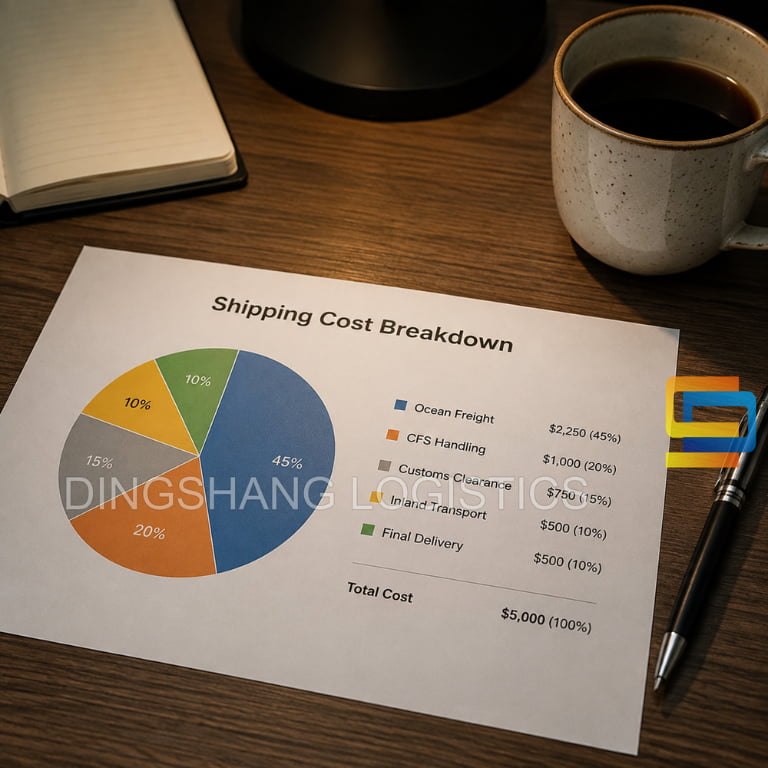
An all-in container shipping quote should clearly cover the agreed logistics services, such as origin pickup when applicable, China origin charges, export procedures, ocean freight, customs-clearance coordination or brokerage service, U.S. destination handling, inland transportation, and final delivery. Import duty can often be calculated or estimated in advance when the HTS classification, customs value, country of origin, and applicable U.S. tariff measures are known.1 Customs examinations and other exceptional charges should be identified separately as potential conditional costs.
The goal is not to pretend that every possible cost can be fixed in advance. The goal is to define the normal shipping cost clearly, estimate duty where sufficient information is available, and identify potential exception charges before booking.
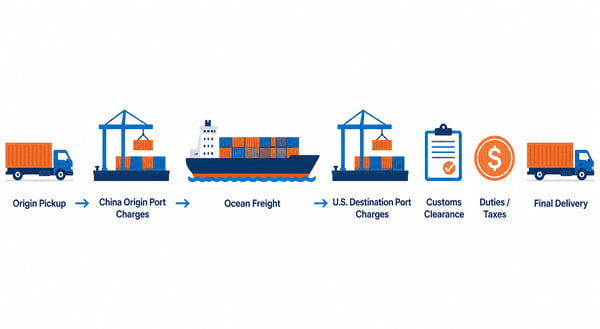
Break the Quote Into the Full Shipping Route
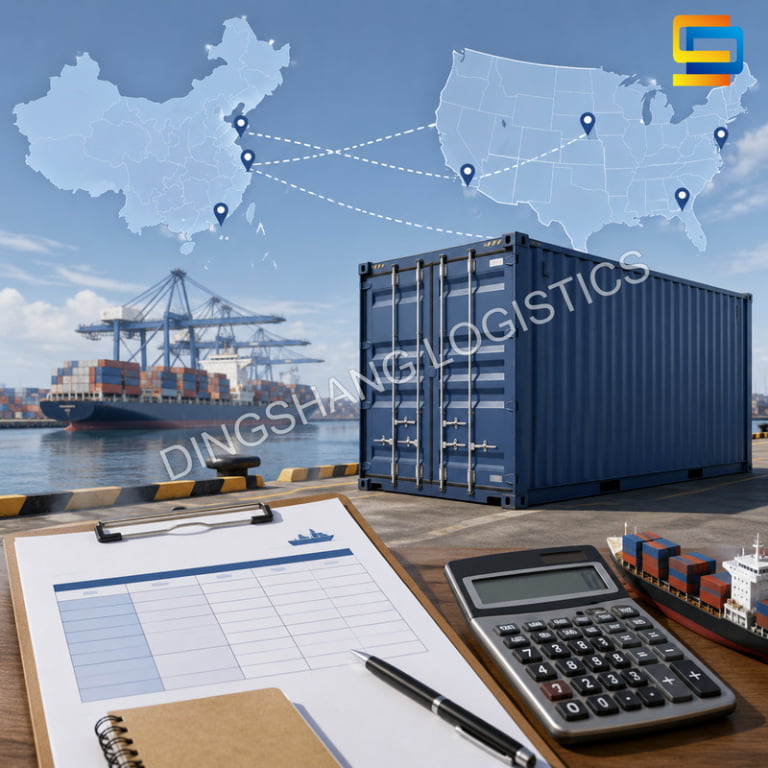
A container quote makes more sense when you break it into the complete transportation route rather than looking only at ocean freight. For a typical China-to-USA shipment, that may mean China pickup, origin handling, export procedures, ocean transportation, U.S. destination handling, customs-clearance service, inland rail or truck transportation, and final delivery.
If you are new to the process, understanding how container shipping works from China to the USA helps you see where each cost occurs.
| Cost Part | What It Means | What You Should Confirm |
|---|---|---|
| Origin pickup and trucking | Moving cargo from the supplier to the agreed loading point | Whether pickup is included under FOB, EXW, or the quoted scope |
| China origin charges | Applicable documentation, terminal, export, and local handling costs | Which origin charges are included |
| Ocean freight | Carrier charge for international ocean transportation | Rate validity, routing, equipment, and included surcharges |
| U.S. destination charges | Applicable terminal, release, handling, and local destination costs | Which destination charges are included |
| Customs-clearance service | Service for preparing and coordinating the U.S. import entry | Whether brokerage/clearance service is included |
| Import duty | Government charge based on classification, customs value, origin, and applicable tariff measures | Estimated duty and the assumptions used |
| Inland transportation | Rail, drayage, or trucking after the U.S. gateway | Delivery point, route, equipment, and service scope |
| Final delivery | Movement to the consignee's agreed delivery point | Appointments, unloading conditions, and accessorial requirements |
Ocean freight is only one part of the total delivered logistics cost. A meaningful comparison is possible only when quotations use the same origin, destination, container size, Incoterm, customs scope, inland transportation requirements, and final-delivery conditions.
An all-in quote should therefore mean clearly defined included charges, clearly stated exclusions, estimated duty when sufficient information is available, and conditional charges identified in advance when reasonably foreseeable.
What Is the Difference Between Logistics Cost and Landed Cost?
The total delivered logistics cost covers the transportation and logistics services required to move the shipment through the agreed delivery scope. Depending on the quote, it may include origin services, ocean freight, destination handling, customs-clearance service, inland transportation, and final delivery.
Landed cost is broader. It may include the purchase cost of the goods, international logistics, import duty, government fees, and other import-related costs. For that reason, this article uses total delivered logistics cost when discussing freight-forwarding and transportation costs.
Can Import Duty Be Calculated Before Shipping?
Yes. Import duty can often be estimated before shipment when the HTS classification, customs value, country of origin, and applicable U.S. tariff measures are known. CBP explains that duty rates depend on factors including tariff classification, and additional duties or special tariff treatment may also affect the amount ultimately owed.1
For basic planning, an importer may start with:
Estimated Duty = Applicable Duty Rate × Customs Value
That is a planning formula, not a complete rule for every import. Actual duty calculations can depend on HTS classification, country of origin, additional tariffs, special trade measures, product-specific duties, and other applicable requirements.
The important distinction is:
Estimated duty ≠ final customs assessment.
A freight quote can show an estimated duty based on the information available before shipment, but the final amount remains subject to U.S. Customs assessment. If you are still organizing the import process, this step-by-step guide to importing products from China to the USA provides useful context for the broader shipment workflow.
Which Costs Can Usually Be Quoted Before Shipping?
Normal logistics charges, estimated government charges, and conditional charges should not be mixed into one unexplained number.
| Cost Type | Can It Usually Be Known Before Shipping? | How It Should Be Quoted |
|---|---|---|
| Ocean freight | Usually yes | Quoted before booking, subject to rate validity and booking conditions |
| China origin charges | Usually yes | Quoted based on FOB/EXW and agreed origin scope |
| Customs-clearance service | Usually yes | Quoted as a service fee |
| Inland rail/truck delivery | Usually yes | Quoted based on route, ZIP code, cargo, and delivery requirements |
| Import duty | Often estimable | Estimated from HTS classification, customs value, origin, and applicable tariff measures |
| Customs examination | Not known if no exam has been triggered | Conditional |
| Demurrage/detention | Not normally part of the planned movement | Conditional if applicable free time is exceeded |
| Storage | Depends on the operation | Conditional |
| Waiting/redelivery | Depends on delivery conditions | Conditional |
| Special handling | Depends on cargo and delivery requirements | Quoted if known; otherwise conditional |
This distinction makes a quote more useful for budgeting:
Quoted logistics cost ≠ estimated duty ≠ conditional charge.
Why Does Your Service Choice Change the Container Price?
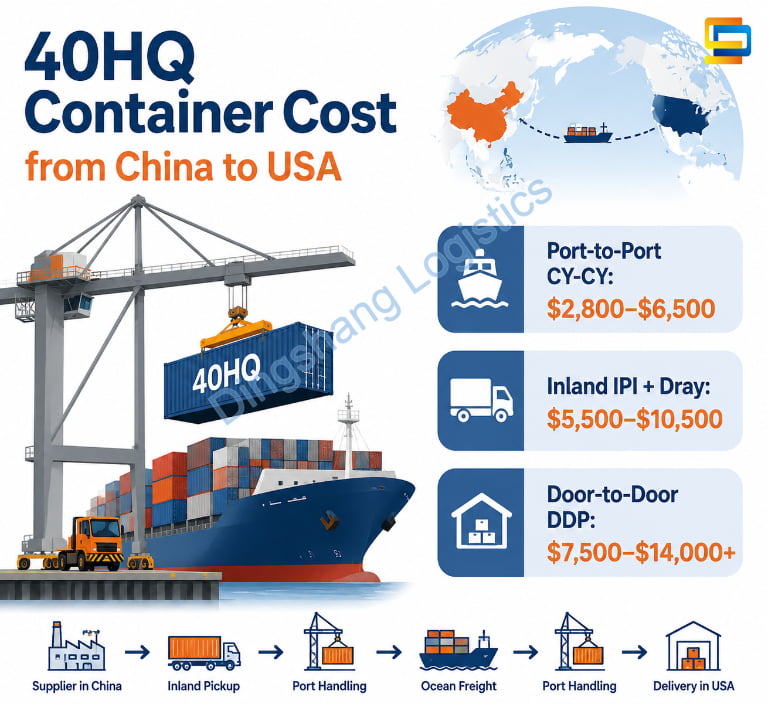
Container shipping costs change with equipment type, cargo volume and weight, routing, delivery address, carrier service, and service scope. A 20GP, 40HQ, port-to-port movement, inland rail shipment, or door-to-door service can create a different cost structure.
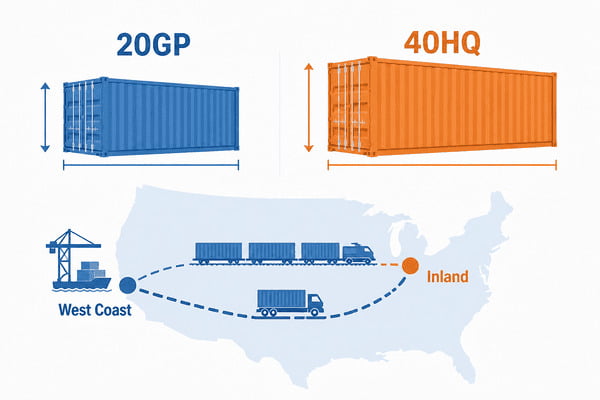
Choose the Container and Service Scope Around the Cargo
A 20GP is not simply half the price of a 40HQ. Container selection should reflect cargo volume, gross weight, packaging, loading plan, cargo value, and final-delivery requirements rather than container size alone. For a route-specific cost breakdown, see how much a 20GP container costs from China to the USA.
| Choice | Simple Meaning | Main Cost Consideration |
|---|---|---|
| 20GP | Standard 20-foot container | Often considered for smaller-volume or dense cargo, subject to weight and loading requirements |
| 40HQ | High-cube 40-foot container | Provides substantially more cubic capacity for volume-driven cargo |
| Port-to-port | Transportation between agreed port points | Importer manages more of the destination process |
| Door-to-door | Coordinated transportation from the agreed China origin to the agreed U.S. delivery point | Exact inclusions and exclusions must be defined in the quote |
| Coastal U.S. destination | Shipment ends at or near a U.S. gateway | Inland transportation may be limited |
| Inland U.S. destination | Shipment continues beyond the ocean gateway | Rail, drayage, or long-haul trucking can become major cost components |
If you are evaluating a 20-foot container, compare the cargo profile and complete service scope rather than assuming the smaller container will automatically produce the lowest delivered cost. The same principle applies when deciding when FCL makes more sense than LCL.
Door-to-Door Does Not Mean Every Possible Charge Is Included
Door-to-door describes a logistics service scope in which transportation is coordinated from the agreed China origin to the agreed U.S. delivery point. The exact included charges and responsibilities must still be defined in the quotation.
Door-to-door does not automatically mean that import duty, customs examinations, storage, demurrage, detention, waiting time, or every other possible charge is included.
It is also not the same as DDP. Door-to-door describes the transportation scope, while Incoterms define responsibilities, costs, and risks between the buyer and seller under the sales transaction.2
How Does Inland Rail Affect the Quote?
IPI (Interior Point Intermodal) generally refers to containerized cargo moving from a U.S. gateway inland by rail before final truck delivery.
For an inland destination such as Chicago, Dallas, Memphis, or another interior market, the quote may therefore need to account for the ocean gateway, inland rail movement, rail-ramp handling, drayage, and final delivery. An inland rail ramp is not the same as the final warehouse delivery point.
The actual routing depends on the carrier service, gateway, inland destination, equipment, rail availability, and shipment date. Transit planning should therefore be reviewed against the actual booking rather than treated as a fixed route. The same principle applies when comparing China-to-USA sea freight transit time: ocean transit is not the same as total door-to-door lead time.
What Costs May Fall Outside a Normal All-In Logistics Quote?
Customs examinations, demurrage, detention, delay-related storage, truck waiting time, redelivery, and other exception-related charges may fall outside a normal all-in logistics quote unless specifically included. These charges depend on events or operating conditions that may not be known when the shipment is booked.
Import duty should be treated differently. It can often be estimated in advance when sufficient classification, customs-value, origin, and tariff information is available, although the final amount remains subject to customs assessment.1
Common conditional charges include:
- Customs examination: applies if the shipment is selected for examination; examination-related movement, handling, or storage may create additional costs depending on the circumstances.3
- Demurrage: may apply when cargo or a container remains at a marine terminal beyond applicable free time.
- Detention: may apply to extended use of carrier equipment outside the terminal beyond applicable free time.
- Storage: can arise when cargo or equipment remains at a terminal, rail ramp, warehouse, or other facility longer than planned.
- Truck waiting time: may apply when a driver or equipment is held beyond the agreed operating conditions.
- Redelivery: may arise when a planned delivery cannot be completed and another delivery attempt is required.
- Special equipment or handling: may apply when the cargo or receiving location requires equipment or handling outside the original scope.
- Overweight arrangements: may require additional planning or cost depending on cargo weight, equipment, route, and applicable requirements.
A charge is not necessarily a hidden fee simply because it is conditional. The real problem is when the service scope, exclusions, or triggering conditions are not explained before booking.
Where Do Additional Shipping Charges Usually Appear?
Additional shipping charges often appear at handoff points: China origin, the U.S. terminal, customs examination, inland rail or drayage, and final warehouse delivery. The best protection is to separate normal quoted charges from estimated government charges and conditional operational charges before booking.
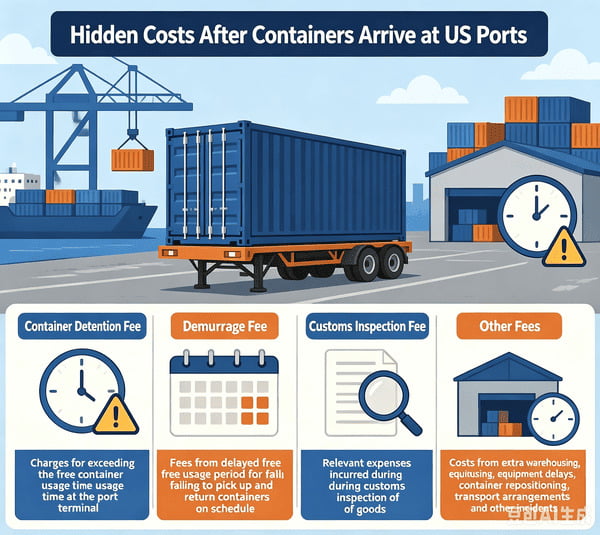
Treat Arrival Planning as Cost Protection
Destination-side costs deserve the same attention as ocean freight. Documents, customs status, terminal availability, free time, truck scheduling, warehouse appointments, unloading, and equipment return can all affect the final logistics cost.
| Charge or Risk | Category | What to Check |
|---|---|---|
| Destination handling | Normal/predictable | Confirm whether it is included in the quote |
| Customs-clearance service | Normal/predictable | Confirm brokerage/clearance scope |
| Import duty | Calculable/estimable | Review HTS classification, customs value, origin, and applicable tariff measures |
| Customs examination | Conditional | Understand potential exam-related handling and delay exposure |
| Demurrage | Conditional | Monitor terminal free time and pickup |
| Detention | Conditional | Plan delivery, unloading, and equipment return |
| Chassis or equipment requirement | Quoted or conditional | Confirm what equipment is included or required |
| Warehouse delay/waiting | Conditional | Confirm receiving hours and appointments |
| Rail-ramp storage | Conditional | Coordinate release and pickup |
| Redelivery/accessorials | Conditional | Confirm delivery conditions before dispatch |
What Are Demurrage and Detention?
Demurrage generally refers to charges associated with cargo or containers remaining at the terminal beyond the applicable free time. Detention generally relates to the extended use of carrier equipment outside the terminal beyond the applicable free time. The Federal Maritime Commission distinguishes detention as extended use of intermodal equipment and demurrage as accruing when a container exceeds free time on a marine terminal.4
Exact terminology and billing conditions can vary by carrier, terminal, contract, and shipment circumstances.
Demurrage and detention are not automatic charges on every shipment. They can result from delayed customs clearance, late pickup, missed warehouse appointments, slow unloading, poor delivery planning, or delayed equipment return.
Customs examinations are also conditional. If CBP selects cargo for examination, the shipment may require additional handling, movement, storage, or scheduling depending on the examination process and location.3
Why Is a Freight Forwarder More Than a Price List?
A freight forwarder should help you define the quote scope, compare routing, coordinate bookings and customs, monitor the shipment, arrange inland transportation and final delivery, explain conditional charges, and manage exceptions. The value is in coordinating the full transportation plan—not simply presenting an ocean freight number.
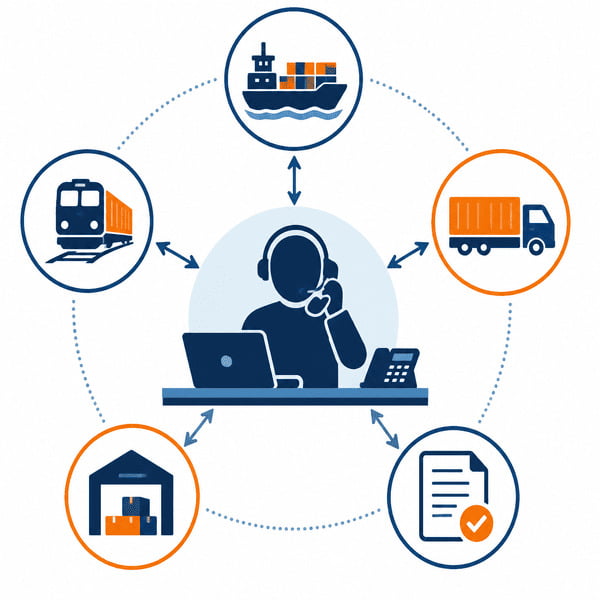
A useful forwarding plan connects the supplier, ocean carrier, customs process, rail or drayage provider, warehouse, and final delivery requirements. It should also make clear which party is responsible at each stage.
| Forwarder Work | Why It Matters to You |
|---|---|
| Route planning | Compare cost, service scope, transit considerations, and delivery location |
| Carrier comparison | Review schedules, routing, equipment, space, and operational considerations |
| Quote structure | Separate included charges, estimated duty, exclusions, and conditional costs |
| Customs coordination | Coordinate documentation and clearance requirements |
| Shipment monitoring | Track milestones, release status, and arrival planning |
| Inland planning | Coordinate rail, drayage, trucking, and warehouse appointments |
| Exception handling | Respond to exams, delays, missed appointments, or equipment issues |
When evaluating providers, focus on whether they can explain the entire transportation scope and the assumptions behind the quote. This guide to choosing a freight forwarder in China covers the operational questions worth asking before you book.
A freight forwarder does not control vessels, railroads, terminals, U.S. Customs, or every truck and warehouse condition. Good forwarding is coordination: building a workable transportation plan, communicating responsibilities, and identifying cost exposure before problems become invoices.
How Should You Compare Container Quotes Without Getting Misled?
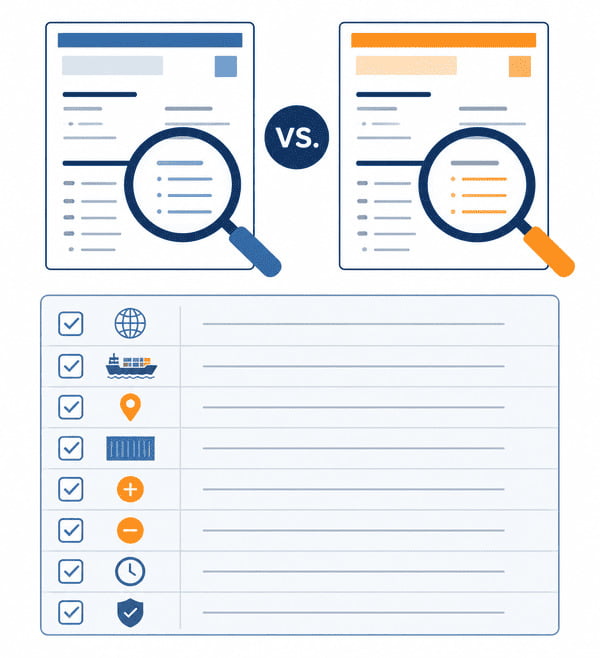
To compare container quotes fairly, put every quotation into the same format and verify that each one uses the same origin, destination, container size, Incoterm, customs scope, delivery requirements, and exclusions. A lower ocean freight line does not necessarily mean a lower total delivered logistics cost.
Compare Every Quote on the Same Service Scope
The first question should be:
What exactly is included?
In practice, I normalize each quote before comparing prices. The most misleading comparisons happen when two quotations represent different transportation scopes.
For example, an FOB port-to-port quote is not equivalent to a door-to-door quote.
Under FOB terms, the seller is generally responsible for export clearance and delivery of the goods on board the vessel at the named port of shipment, while the buyer assumes the main-carriage responsibilities from that point under the agreed Incoterms.2
| Quote Checkpoint | What You Should Ask |
|---|---|
| Incoterm | Who is responsible for each stage and cost? |
| China origin | Factory, pickup point, or named port? |
| U.S. destination | Port, rail ramp, warehouse, or final address? |
| Container type | 20GP, 40GP, 40HQ, or LCL? |
| Origin charges | Which China-side services are included? |
| Ocean freight | What routing, equipment, and rate validity apply? |
| Destination charges | Which U.S. terminal/local charges are included? |
| Customs scope | Is customs-clearance service included? |
| Duty | Is an estimate shown separately, and what assumptions were used? |
| Conditional charges | How are exams, D&D, storage, waiting, and redelivery handled? |
| Free time | What free-time terms apply to the actual booking? |
| Final delivery | What address, appointment, unloading, and equipment conditions apply? |
| Insurance | Is cargo insurance included, optional, or excluded? |
Cargo insurance is another separate decision. Marine cargo insurance can protect against covered physical loss or damage subject to the policy's terms, conditions, and exclusions.5 It should not be confused with protection against customs delays, schedule disruption, or every operational cost.
A professional quotation should answer questions rather than create them. You should be able to identify the normal logistics cost, estimated duty, exclusions, and major conditional-charge triggers before booking.
What Does a Real Door-to-Door Container Quote Look Like?
A useful door-to-door quote shows the transportation scope line by line and separates normal logistics charges, estimated duty, and conditional costs. It does not need to pretend that every possible exception can be priced in advance.
| Cost Item | Example Quote Structure |
|---|---|
| China Pickup | USD XXX, if applicable |
| China Origin Charges | USD XXX |
| Ocean Freight | USD X,XXX |
| Customs Clearance | Quoted service fee |
| Rail/Truck Delivery | USD X,XXX |
| Estimated Customs Duty | Calculated separately from available customs information |
| Customs Examination | If applicable |
| Total Logistics Cost | USD X,XXX |
| Estimated Duty | Shown separately or clearly identified |
The placeholders above illustrate quote structure only; they are not market rates or actual customer prices. The exact amount changes by route, container size, commodity, cargo weight, delivery ZIP code, Incoterm, cargo-ready date, and current market conditions.
The important point is that the normal logistics charges, estimated duty, and conditional charges are clearly separated before booking.
What Information Should You Prepare Before Asking for a Container Price?
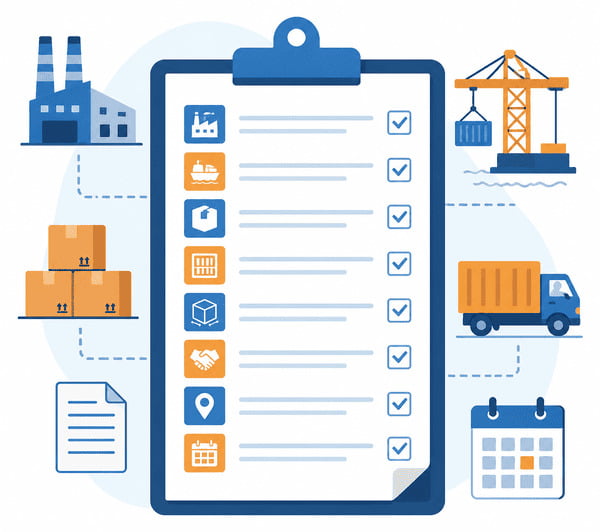
For an accurate container quote, provide the cargo description, origin, U.S. destination, equipment or shipment size, gross weight, cargo-ready date, Incoterm, and cargo value. HTS information, packaging details, and delivery requirements help the forwarder define customs, equipment, and final-delivery assumptions more accurately.
Use Complete Shipment Details to Remove Guesswork
The supplier location affects pickup and origin planning, while the U.S. delivery ZIP code affects inland routing and final delivery. Cargo description, package count, dimensions, and gross weight are also standard pieces of information used in commercial shipping documentation such as a packing list.6
Cargo value is particularly important when duty estimation or cargo-insurance planning is required.
For FCL shipments, prepare:
- Product name
- HS/HTS code, if available
- Material/product description
- Factory or pickup location
- U.S. delivery ZIP code
- Container type: 20GP or 40HQ
- Gross weight
- Cargo-ready date
- Incoterm, such as FOB or EXW
- Cargo value
- Loading requirements
- Unloading or receiving requirements
For LCL shipments, prepare:
- Product name
- HS/HTS code, if available
- Material/product description
- Pickup location
- U.S. delivery ZIP code
- Package quantity
- Package dimensions
- Total CBM
- Gross weight
- Cargo-ready date
- Cargo value
- Stackable/non-stackable status, if relevant
- Special handling or delivery requirements
A packing list can be provided if these details are already available there.
| Information | Why It Matters |
|---|---|
| Pickup location | Defines origin pickup and local transportation scope |
| Product description | Supports cargo planning and customs preparation |
| HS/HTS code | Supports classification and duty estimation |
| Country of origin | Relevant to applicable tariff treatment |
| Cargo value | Supports duty estimation, customs planning, and insurance planning |
| Dimensions/CBM | Helps determine FCL/LCL and equipment requirements |
| Gross weight | Affects container, trucking, and handling planning |
| Incoterm | Defines buyer/seller responsibilities |
| U.S. ZIP code | Defines inland route and final-delivery pricing |
| Cargo-ready date | Defines the shipment window for rate and service planning |
| Delivery requirements | Identifies appointments, unloading conditions, or special equipment needs |
There is no reliable single answer to “How much does it cost to ship a container from China to the USA?” without these shipment details. Origin, cargo profile, container type, routing, customs information, cargo-ready date, and final delivery requirements can materially change the quotation.
Get an All-In Container Shipping Quote from China to the USA
An accurate all-in quote starts with a clearly defined shipment scope. Once the cargo details, Incoterm, origin, destination, container size, and cargo value are available, normal logistics charges can be quoted and import duty can be estimated where sufficient classification, customs-value, origin, and tariff information is available.
For an FCL quote, send:
- Product name and description
- HS/HTS code, if available
- Material
- Factory/pickup location
- U.S. delivery ZIP code
- 20GP or 40HQ
- Gross weight
- Cargo-ready date
- FOB or EXW
- Cargo value
- Loading and unloading requirements
For an LCL quote, send:
- Product name and description
- HS/HTS code, if available
- Material
- Pickup location
- U.S. delivery ZIP code
- Package quantity
- Package dimensions
- Total CBM
- Gross weight
- Cargo-ready date
- Cargo value
- Stackable/non-stackable status, if relevant
Dingshang Logistics can use these details to define the transportation scope, quote the applicable logistics services, estimate duty where sufficient information is available, and identify foreseeable conditional charges that should be considered before booking.
References
U.S. Customs and Border Protection — [Determining Duty Rates](https://www.cbp.gov/trade/programs-administration/determining-duty-rates) ↩
International Trade Administration, U.S. Department of Commerce — [Know Your Incoterms](https://www.trade.gov/know-your-incoterms) ↩
U.S. Customs and Border Protection — [Cargo Examination](https://www.cbp.gov/border-security/ports-entry/cargo-security/examination) ↩
Federal Maritime Commission — [Detention and Demurrage](https://www.fmc.gov/detention-and-demurrage/) ↩
International Union of Marine Insurance — [Guide to Marine Cargo Insurance](https://iumi.com/wp-content/uploads/2025/01/Guide_to_Marine_Cargo_Insurance.pdf) ↩
International Trade Administration, U.S. Department of Commerce — [Packing List](https://www.trade.gov/packing-list) ↩
Leave a Comment