
How to Ship a Container from China to Port of Dallas?
To ship a container from China to Port of Dallas, I first need to correct a costly misunderstanding: Dallas is not a normal ocean port where container vessels arrive directly. If I treat it like Los Angeles or Houston, I may compare the wrong prices, miss inland costs, and face surprise charges. The better solution is to quote the full route from the China supplier to the Dallas-area destination.
To ship a container from China to Port of Dallas, your cargo normally moves by ocean freight from a China port to a U.S. seaport, then continues inland by rail and/or truck to the Dallas area. You should compare the full logistics cost, including ocean freight, destination charges, customs clearance, inland transport, and final delivery.
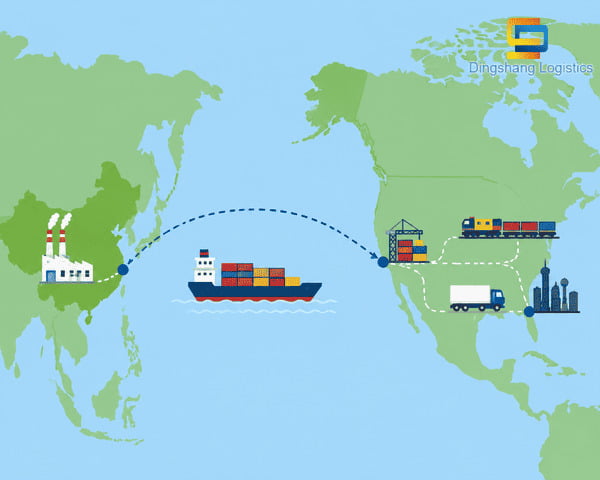
When I handle Dallas-related inquiries, I often see importers ask only for the “ocean freight to Dallas.” That question is understandable, but it is incomplete. The real decision is about route, responsibility, total cost, and who controls the shipment until it reaches the final warehouse or delivery address.
What Does It Really Mean to Ship a Container from China to Port of Dallas?
A common problem starts with the word “port.” I have seen buyers treat Dallas as if a vessel can discharge containers there directly. That creates confusion when quotes look different. It also makes low rates look attractive, even when they exclude the inland leg that matters most.
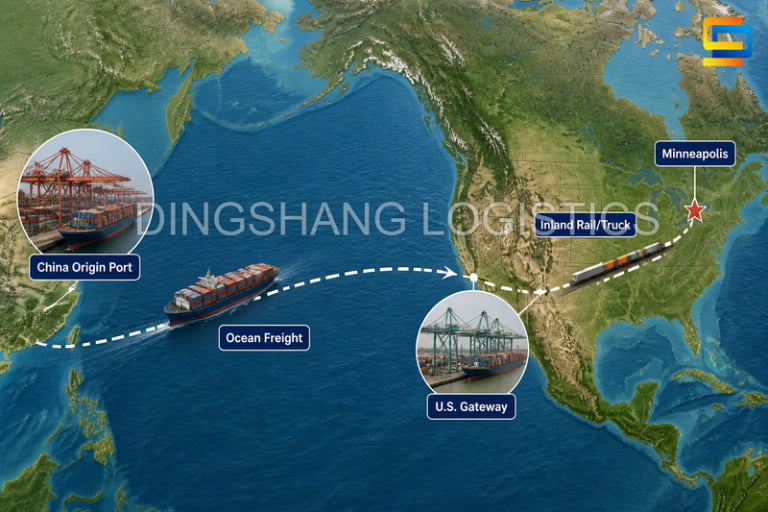
To ship a container from China to Port of Dallas means arranging an international container move to an inland Dallas-area destination, not a direct ocean vessel arrival. The container usually enters the U.S. through a seaport such as Los Angeles/Long Beach, Houston, Savannah, or another port, then moves inland by rail and/or truck.1
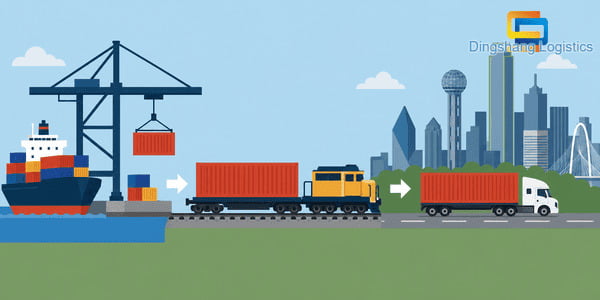
Dallas Is an Inland Market, Not a Direct Ocean Vessel Port
When I explain this to importers, I usually use a simple route map:
- Factory or supplier in China
- China loading port such as Ningbo, Shanghai, Shenzhen, or Qingdao
- Ocean freight to a U.S. seaport
- Customs clearance and destination handling
- Rail and/or truck inland transportation
- Dallas-area rail terminal, warehouse, or final delivery address
This matters because each point can affect the cost, timeline, and responsibility. A quote that only covers the ocean portion is not the same as a quote that covers delivery to a warehouse in Dallas, Fort Worth, Arlington, Plano, Irving, Garland, or another nearby city.
I often tell buyers that “China to Dallas” is not one service unless the quotation clearly says what is included.
Why the Misunderstanding Creates Bad Comparisons
The biggest mistake is comparing a port-only quote with a door-to-door quote. These are not equal. A low ocean freight number may exclude:
- U.S. destination terminal charges
- Customs clearance coordination
- Customs bond or importer compliance work
- Import duty and tax handling
- Rail ramp or inland terminal charges
- Chassis, drayage, fuel, and appointment fees
- Final truck delivery to the consignee
- Possible demurrage, detention, or storage
Here is a simple comparison I use when reviewing Dallas container quotes:
| Quote Type | What It May Include | What It May Exclude | Best For |
|---|---|---|---|
| Port-to-port | China port to U.S. seaport | Inland Dallas transport, customs, final delivery | Importers with their own U.S. broker and trucker |
| Port-to-ramp | China port to inland rail terminal | Final truck delivery, warehouse appointment, unloading | Importers who can manage local drayage |
| Door-to-door | China supplier or port to Dallas address | Sometimes duties/taxes, depending on quote terms | Importers who want one coordinated solution |
| DDP-style service | Freight, customs, duty handling, final delivery | Not suitable for all cargo or all importer setups | Buyers who need simplified landed cost control |
The Real Question I Want Importers to Ask
Instead of asking, “What is the ocean freight to Dallas?” I prefer this question:
“What is the full-route, full-cost solution from my supplier in China to my final Dallas-area delivery address?”
That question forces the freight partner to clarify:
- Where the cargo is picked up in China
- Which China port is used
- Which U.S. entry port is selected
- Whether the inland leg uses rail, truck, or both
- Whether customs clearance is included
- Whether final delivery is included
- Which party is responsible at each handover point
In my experience, mature importers do not always choose the cheapest headline rate. They choose the route and service scope that gives them predictable cost, clear responsibility, and fewer surprises.
Which Route Should I Use to Ship a Container from China to Port of Dallas?
The route problem can feel frustrating because there is no single “best” route for every shipment. If I choose only by ocean freight rate, I may save money on one line item and lose it on inland charges or delays. The better approach is to match the route to the cargo, schedule, and final Dallas delivery requirement.
To ship a container from China to Port of Dallas, I usually compare multiple routing options: ocean to a West Coast port with inland rail, ocean to a Gulf port such as Houston with truck or rail, or another U.S. port depending on sailing schedules and capacity. The right route depends on cost, timing, origin port, and final address.
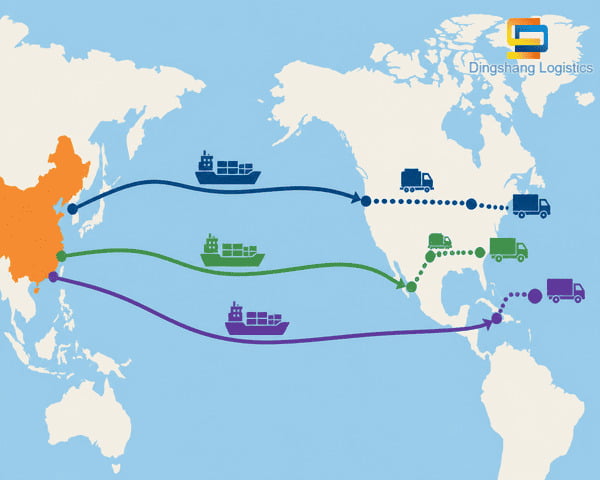
Common Route Patterns From China to Dallas
In Dallas-related inquiries, I often see these route patterns:
| Route Pattern | Typical Flow | Possible Advantage | Possible Tradeoff |
|---|---|---|---|
| West Coast + rail | China → Los Angeles/Long Beach → inland rail → Dallas area | Frequent sailings, strong capacity | Inland rail timing can vary |
| Gulf route | China → Houston → truck/rail to Dallas area | Regional proximity to Texas | Ocean transit or sailing frequency may differ |
| East/Southeast route | China → Savannah or another port → inland move | Useful during congestion or rate shifts | Longer inland planning may be needed |
| Sea-rail intermodal | Ocean + rail + truck combination | Balanced cost and coverage | More handover points to manage |
I do not recommend choosing a route only because it sounds geographically close. For example, Houston is in Texas, but that does not automatically make it the cheapest or fastest choice for every container from China. Sailing schedules, carrier space, port congestion, chassis availability, and inland capacity all change the result.
Origin Port in China Matters
A container from Ningbo, Shanghai, Shenzhen, or Qingdao may have different sailing options. If the supplier is located near Yiwu, Suzhou, Guangzhou, Foshan, Xiamen, or inland China, I also need to consider the China-side trucking cost.
For example:
- A supplier near Ningbo or Shanghai may have strong options to the U.S. West Coast and Gulf region.
- A supplier near Shenzhen or Guangzhou may benefit from South China sailings.
- A supplier near Qingdao may use North China services with different schedules.
- A supplier located far from a port may need domestic trucking before export.
FCL Versus LCL for Dallas Shipments
Most buyers asking how to ship a container from China to Port of Dallas are asking about FCL, or full container load. FCL means one importer uses the container space. Common container choices include:
- 20GP: Often used for heavy cargo with lower volume
- 40GP: Standard larger container
- 40HQ: High-cube container with more volume, often used for light but bulky goods
If the shipment is smaller, LCL may be better. LCL means less-than-container-load cargo is consolidated with other shipments. It can reduce cost for smaller volumes, but it adds consolidation, deconsolidation, and handling points.
What I Check Before Recommending a Route
I usually ask for a few details before I suggest a routing option:
- Supplier city and pickup address in China
- Cargo name and HS code if available
- Pieces, cartons, pallets, weight, and CBM
- Container type needed: 20GP, 40GP, or 40HQ
- Ready date at the factory
- Dallas-area delivery address or warehouse ZIP code
- Trade terms such as EXW, FOB, CIF, or DDP
- Whether the importer has a customs broker
- Whether appointment delivery or liftgate service is needed
These details prevent guesswork. A container going to a large distribution center in Dallas may need appointment scheduling and strict receiving rules. A container going to a smaller warehouse may need different unloading support. A shipment going to a rail ramp only is not the same as one going door-to-door.
How Much Does It Cost to Ship a Container from China to Port of Dallas?
Cost uncertainty creates the most stress for importers. I have seen buyers receive a very low ocean freight quote and assume it covers everything. Later, they discover destination charges, customs coordination, inland rail, truck delivery, and accessorial fees. That turns a “cheap” quote into an expensive lesson.
To ship a container from China to Port of Dallas, you should compare the total logistics cost, not only the ocean freight rate. The full cost can include China pickup, export handling, ocean freight, U.S. destination charges, customs clearance, duties, rail or truck inland transport, and final Dallas delivery.2
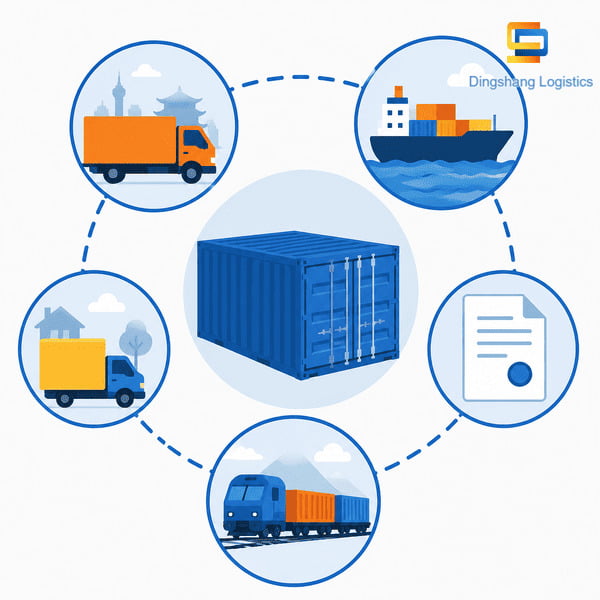
Main Cost Components
A practical Dallas quote should show what is included and what is excluded. I prefer clear all-in quotations because they reduce arguments later.
| Cost Item | What It Means | Why It Matters | ||
|---|---|---|---|---|
| China pickup | Trucking from factory to port or warehouse | Depends on supplier location and trade term | ||
| Export declaration | China customs export process | Usually needed before loading | ||
| Origin port charges | Terminal and handling at China port | Can vary by port and carrier | ||
| Ocean freight | Main sea transport charge | Changes by season, carrier, and equipment | ||
| U.S. destination charges | Terminal, handling, documentation | Often excluded from low quotes | ||
| Customs clearance | Entry filing and compliance coordination | Needed before cargo can move freely | ||
| [ | Duties and taxes | Government charges based on HS code and value | Not the same as freight cost | ](https://hts.usitc.gov/)%%%FOOTNOTE_REF_3%%% |
| Inland rail/truck | U.S. inland move toward Dallas | Major cost driver for inland destinations | ||
| Final delivery | Drayage to warehouse or consignee | Depends on distance, appointment, and unloading | ||
| Insurance | Cargo protection | Important for risk control |
Why Low Ocean Freight Can Be Misleading
I often receive messages like, “Another forwarder quoted me a much lower ocean rate.” My first question is always:
“What destination is included in that rate?”
A rate to Los Angeles is not the same as a rate to Dallas. A rate to a rail terminal is not the same as a warehouse delivery. A rate excluding U.S. charges is not the same as a door-to-door quotation.
Low freight rates may exclude:
- Chassis fee
- Pre-pull charge
- Yard storage
- Waiting time
- Residential or limited-access delivery surcharge
- Delivery appointment fee
- Detention if the container is not returned on time
- Demurrage if the container stays too long at terminal4
- Customs exam fees if selected by authorities
These items are not always predictable, but a responsible freight partner should explain when they may occur.
What Affects the Final Price?
The price to ship a container from China to Port of Dallas changes based on several variables:
- Container size: 20GP and 40HQ do not price the same.
- Cargo weight: Heavy cargo can limit route or truck options.
- Cargo type: Batteries, chemicals, liquids, food-contact goods, or regulated items need special handling.
- Origin port: Ningbo, Shanghai, Shenzhen, and Qingdao may have different rates.
- Seasonality: Rates often rise before holidays, peak season, and capacity shortages.5
- U.S. inland capacity: Rail and truck availability affect timing and price.
- Final delivery ZIP code: A Dallas warehouse and a distant Texas address are not the same.
- Trade terms: EXW requires more China-side work than FOB.
- Customs complexity: HS code, duty rate, PGA requirements, and documents matter.
A Simple Anonymous Scenario
Here is a simplified example based on patterns I see, not a fixed quote.
An importer asks for one 40HQ from Ningbo to “Port of Dallas.” The first quote they compare only includes ocean freight to Los Angeles. The second quote includes ocean freight, rail inland movement, customs coordination, and final truck delivery to a warehouse near Dallas.
The first number looks cheaper. However, after adding U.S. terminal charges, rail, drayage, and delivery, the final total may be higher or less predictable. The second quote looks higher at first, but it may give clearer responsibility and fewer separate vendors to coordinate.
That is why I recommend comparing quotes line by line. The cheapest number is not always the lowest total cost.
What Service Scope Should I Choose When I Ship a Container from China to Port of Dallas?
Service scope is where many importers lose control. If I do not define the handover point, I may assume the forwarder is responsible while the forwarder assumes the importer will arrange the next leg. This creates delays, storage, and emergency trucking decisions.
When you ship a container from China to Port of Dallas, you should choose between port-to-port, port-to-ramp, warehouse delivery, or door-to-door service. Each option has a different handover point. The best choice depends on your internal logistics ability, customs setup, delivery deadline, and risk tolerance.
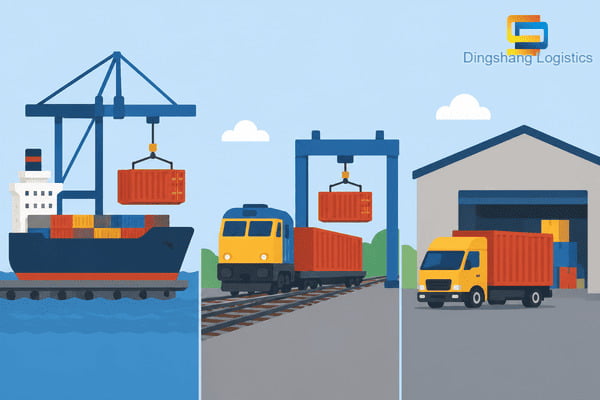
Port-Only Shipping
Port-only shipping may work if the importer has a strong U.S. logistics team. In this model, the freight forwarder may arrange the ocean leg to a U.S. seaport. After that, the importer or another provider handles customs, inland transport, and final delivery.
This option can work for experienced importers, but it requires coordination. If the inland leg is not booked early, the container may sit at the terminal. Storage and demurrage can grow quickly.
Inland Rail Terminal Delivery
A rail-ramp delivery means the container is moved inland to a rail terminal near the Dallas area. This may be useful when the importer has a local trucker or wants to control the last-mile delivery.
However, a rail ramp is not the final warehouse. The container still needs drayage from the terminal to the consignee. The trucker also needs to manage appointment windows, chassis availability, and container return.
Door-to-Door Delivery
Door-to-door delivery is often the simplest option for U.S. importers who want one responsible partner. In this model, the freight forwarder coordinates the shipment from the China supplier or loading port to the Dallas-area delivery address.
Door-to-door can include:
- Supplier pickup in China
- Export customs support
- Ocean freight booking
- U.S. customs clearance coordination
- Inland rail or truck transport
- Final delivery appointment
- Delivery to warehouse or business address
- Optional cargo insurance, depending on the provider
At Dingshang Logistics, I focus on B2B China-to-USA ocean freight, including FCL, LCL, customs clearance coordination, duty handling where applicable, and door-to-door delivery. For door-to-door shipments, Dingshang Logistics also provides free cargo insurance under our service conditions.
Trade Terms Change Responsibility
Trade terms define who is responsible for which part of the shipment.6 I always check this before quoting.
| Trade Term | What It Usually Means for the Importer | Practical Impact |
|---|---|---|
| EXW | Buyer handles pickup from supplier factory | More control, but more China-side work |
| FOB | Supplier delivers cargo to China port | Common and easier for ocean freight quotes |
| CIF | Supplier pays freight to destination port | Importer may still face U.S. local charges |
| DDP | Seller or forwarder handles delivery and duties | Simple for some buyers, but details must be verified |
I pay special attention to CIF shipments. Some importers believe CIF means everything is covered until their warehouse. Usually, it does not. CIF may only cover cost, insurance, and freight to a destination port, while destination charges and inland delivery remain the buyer’s responsibility.
My Practical Recommendation
If you are a mature importer with your own customs broker and U.S. trucking team, port-to-ramp may be enough. If you want predictable landed logistics cost, door-to-door is usually easier to manage.
I do not suggest choosing the service scope based only on price. I suggest choosing it based on:
- How much coordination your team can handle
- How fast you need the cargo
- Whether the warehouse has strict receiving rules
- Whether you already have a reliable customs broker
- Whether you want one party to manage exceptions
- How much risk you can accept at each handover point
Clear responsibility prevents expensive assumptions.
What Information Should I Prepare Before Requesting a Quote to Ship a Container from China to Port of Dallas?
A vague quote request creates a vague quote. I have seen importers send only “40HQ China to Dallas” and expect an accurate price. That leaves too many unknowns. The forwarder has to guess the route, weight, trade terms, documents, and delivery requirements.
Before you request a quote to ship a container from China to Port of Dallas, prepare the supplier address, China loading port, cargo details, container type, ready date, trade terms, customs documents, importer information, and final Dallas-area delivery address. These details help the forwarder quote the full route accurately.
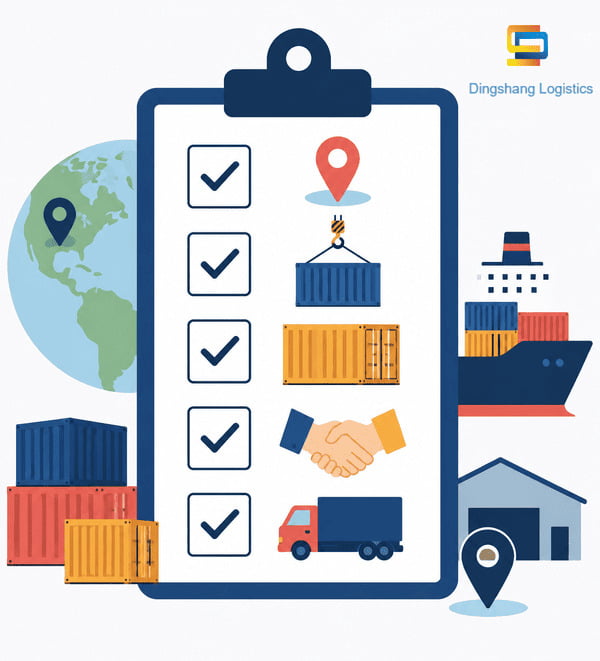
Quote Checklist for Importers
I recommend sending this information in one message:
- Supplier name and address in China
- Nearest loading port, if known
- Trade term: EXW, FOB, CIF, DDP, or other
- Cargo name
- HS code, if available
- Carton or pallet count
- Gross weight
- Total CBM
- Container type: 20GP, 40GP, or 40HQ
- Cargo ready date
- Commercial invoice and packing list
- Importer of record details
- U.S. customs broker, if you have one
- Final Dallas-area address and ZIP code
- Delivery type: warehouse, Amazon-style appointment, business dock, or other
- Special requirements: hazardous cargo, batteries, temperature control, fragile goods, oversized cargo
Why Each Detail Matters
The supplier address tells me whether China pickup is needed. The cargo details tell me whether the shipment fits a standard container and whether any special rules apply. The weight tells me if the route is truck-friendly or if heavy cargo restrictions may apply.
The final delivery address is especially important. “Dallas” is not enough. A warehouse in Dallas, a distribution center in Fort Worth, and a consignee in a nearby city may produce different drayage costs and appointment rules.
Documents I Usually Review
For most commercial shipments, I ask for:
- Commercial invoice
- Packing list
- Bill of lading instructions
- Importer of record information
- HS code or product description
- Power of attorney for customs broker, if needed
- Certificates or compliance documents, if the product requires them
Some products may need extra review. Examples include electronics, batteries, food-related goods, wooden products, textiles, chemicals, medical-related items, and products regulated by U.S. agencies.
A Better Inquiry Message Template
You can copy this structure when contacting a freight forwarder:
I need to ship one 40HQ from my supplier in Ningbo, China to my warehouse in Dallas, TX ZIP XXXXX. The trade term is FOB Ningbo. Cargo is furniture, about 68 CBM and 7,500 kg. Cargo will be ready around June 15. I need ocean freight, U.S. customs clearance coordination, inland transport, and final delivery. Please quote all included charges and list any exclusions.
This message helps me quote faster and with fewer assumptions. It also helps you compare offers fairly because each forwarder is quoting the same service scope.
Frequently Asked Questions
Is there really a Port of Dallas for ocean containers?
Dallas is not a conventional ocean port where container ships arrive directly from China. In most cases, containers enter through a U.S. seaport and then move inland by rail and/or truck to the Dallas area. Importers should quote the full route, not only the ocean leg.
How long does it take to ship a container from China to Dallas?
Transit time varies by China origin port, U.S. entry port, sailing schedule, customs clearance, inland rail or truck capacity, and final delivery requirements. I recommend asking for an estimated range instead of a guaranteed fixed timeline, especially during peak season or port congestion.
Should I choose Houston or Los Angeles for a Dallas shipment?
There is no universal best port. Houston may look attractive because it is in Texas, while Los Angeles/Long Beach may offer frequent sailings and inland rail options. The best route depends on rates, capacity, cargo type, origin port, and Dallas delivery details.
Can I get door-to-door shipping from China to Dallas?
Yes. Door-to-door shipping from China to Dallas can include China pickup, export handling, ocean freight, customs clearance coordination, inland rail or truck transport, and final delivery. You should confirm whether duties, taxes, insurance, and destination charges are included or excluded.
What container size should I use for China to Dallas shipping?
Most importers use 20GP, 40GP, or 40HQ containers. A 20GP often works for heavy cargo, while a 40HQ is common for bulky but lighter goods.7 The best size depends on cargo volume, weight, packaging, loading method, and cost comparison.
Conclusion
To ship a container from China to Port of Dallas, I would not treat Dallas as a direct ocean vessel destination. I would build a full-route plan from the China supplier to the final Dallas-area address, including the U.S. seaport, customs process, inland rail or truck leg, and delivery responsibility. The most useful quote is not always the lowest ocean rate. It is the clearest total logistics solution. If you import from China to the Dallas area, contact Dingshang Logistics with your cargo details, and I can help you compare a practical FCL, LCL, or door-to-door option.
"Supply Chain: Updated Freight Handbook Could Enhance ...", https://www.gao.gov/products/gao-23-106072. U.S. transportation-agency materials describe intermodal freight as movement coordinated across ships, rail, and trucks, supporting the article’s description of seaport entry followed by inland transport to Dallas; the source does not prove the routing of any individual shipment. Evidence role: mechanism; source type: government. Supports: Containerized imports can move through marine port gateways and continue inland through rail and truck intermodal networks.. Scope note: Contextual support for the logistics mechanism, not direct evidence for every China-to-Dallas container route. ↩
"Publication: Logistics Costs and Competitiveness", https://openknowledge.worldbank.org/entities/publication/121bbfe8-e988-51c3-8b96-0e6126c9593d. International trade-logistics guidance from an institution such as the World Bank or UNCTAD treats transport, port handling, customs procedures, and inland movement as distinct components of total logistics cost, supporting the article’s broader cost breakdown; it does not validate any specific quoted charge. Evidence role: general_support; source type: institution. Supports: International freight and trade logistics costs commonly include transport, port handling, customs-related costs, inland movement, and final delivery components.. Scope note: Contextual support for cost categories, not proof of actual pricing on a particular shipment. ↩
"Harmonized Tariff Schedule - United States International ...", https://hts.usitc.gov/. U.S. Customs and Border Protection guidance explains that duties are assessed using tariff classification and customs value, supporting the table’s distinction between government duties and freight costs. Evidence role: definition; source type: government. Supports: U.S. import duties depend on tariff classification, customs value, and related customs factors, and are government charges separate from transportation charges.. ↩
"Detention and Demurrage", https://www.fmc.gov/detention-and-demurrage/. Federal Maritime Commission materials defining demurrage and detention in ocean shipping support the article’s use of demurrage as a charge connected to containers remaining at a terminal beyond allowed time. Evidence role: definition; source type: government. Supports: Demurrage is related to the use of terminal space or container availability when cargo remains beyond allowed time.. ↩
"Review of Maritime Transport 2025: Staying the course in turbulent waters", https://unctad.org/publication/review-maritime-transport-2025. UNCTAD maritime transport analysis links container freight-rate movements to demand conditions, capacity constraints, and disruptions, supporting the article’s statement that rates may rise during peak periods or shortages; it does not forecast rates for a specific lane or date. Evidence role: general_support; source type: institution. Supports: Container freight rates are influenced by demand seasonality, capacity constraints, and market disruptions.. Scope note: General market support, not a route-specific China-to-Dallas rate prediction. ↩
"Incoterms® 2020 - ICC", https://iccwbo.org/business-solutions/incoterms-rules/incoterms-2020/. The International Chamber of Commerce’s Incoterms materials explain that trade terms allocate buyer and seller obligations for delivery, risk, and costs, supporting the article’s statement that trade terms define shipment responsibility. Evidence role: definition; source type: institution. Supports: Incoterms rules define buyer and seller obligations, including delivery, risk, and cost responsibilities in international trade.. ↩
"Shipping Container Size & Dimensions | ONE", https://www.one-line.com/en/dry-containers. Technical references on ISO freight-container dimensions and payload capacities show that 20-foot and 40-foot high-cube containers differ substantially in volume and allowable load, supporting the article’s practical distinction between dense and bulky cargo; the source does not prescribe the best equipment for a specific commodity. Evidence role: mechanism; source type: institution. Supports: Standard containers differ in internal volume and payload capacity, which explains why denser cargo may fit a 20-foot container while bulky cargo may need a 40-foot high-cube container.. Scope note: Contextual technical support based on container specifications, not a rule for all cargo. ↩
Leave a Comment