
How to Ship a Container from China to Port of Atlanta?
When you try to ship a container from China to Port of Atlanta, the first surprise is that Atlanta is not a seaport. Many importers chase a low “ocean rate” and then get blindsided by inland costs. I help clients design the right route, choose the U.S. entry port, and make sure the Atlanta leg is predictable and priced in.
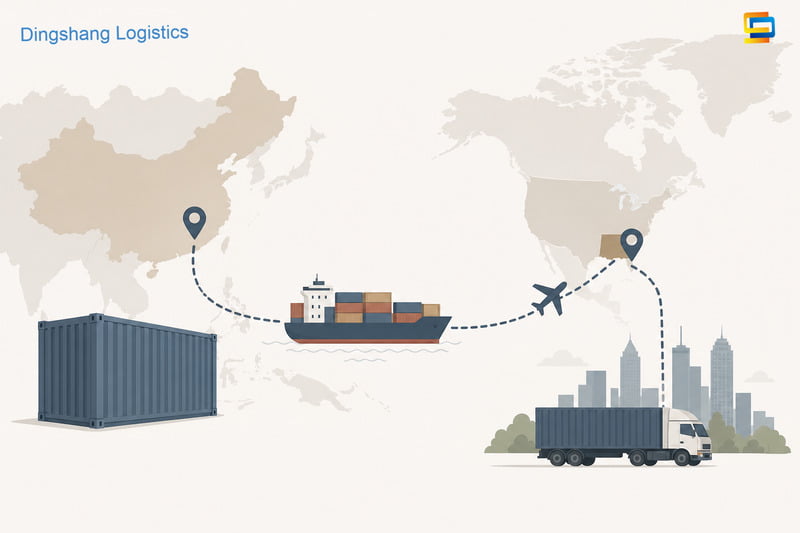
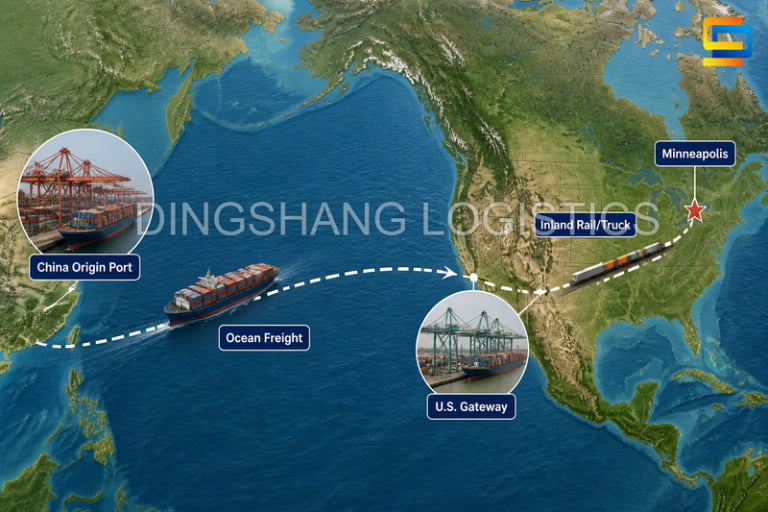
To ship a container from China to Port of Atlanta, you select a U.S. ocean entry port (commonly Savannah or Los Angeles/Long Beach), clear customs, then move the box by rail or truck to Atlanta’s inland terminals or your door. You need an all-in plan that covers ocean, customs, inland, and delivery—not just ocean freight.**To ship a container from China to Port of Atlanta, you select a U.S. ocean entry port (commonly Savannah or Los Angeles/Long Beach), clear customs, then move the box by rail or truck to Atlanta’s inland terminals or your door. You need an all-in plan that covers ocean, customs, inland, and delivery—not just ocean freight.To ship a container from China to Port of Atlanta, you select a U.S. ocean entry port (commonly Savannah or Los Angeles/Long Beach), clear customs, then move the box by rail or truck to Atlanta’s inland terminals or your door. You need an all-in plan that covers ocean, customs, inland, and delivery—not just ocean freight.To ship a container from China to Port of Atlanta, you select a U.S. ocean entry port (commonly Savannah or Los Angeles/Long Beach), clear customs, then move the box by rail or truck to Atlanta’s inland terminals or your door. You need an all-in plan that covers ocean, customs, inland, and delivery—not just ocean freight.**
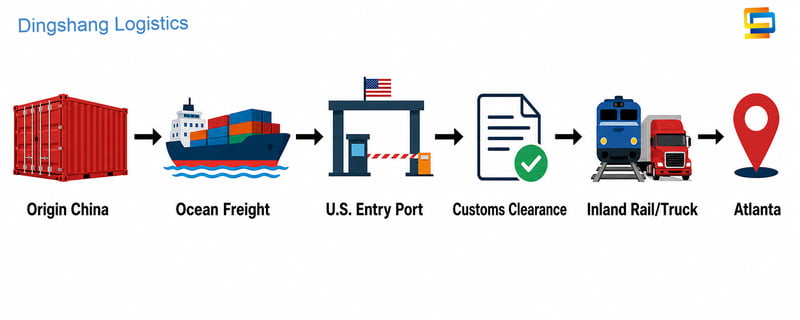
Most inquiries I see start with a port name. The smart ones start with the destination and work backward. Below, I’ll map real route choices, cost components, documents, and the exact data you should prepare so you can avoid delays and surprise fees.
Is there really a “Port of Atlanta” if you want to ship a container from China to Port of Atlanta?
Atlanta being inland creates confusion. Many teams assume vessels can berth there. That leads to quotes that ignore the inland leg. I see this mistake in first-time inquiries every month. Let’s clear up the geography so your plan matches how freight actually moves.
No. Ocean vessels do not call Atlanta. When you ship a container from China to Port of Atlanta, you choose a coastal U.S. entry port (e.g., Savannah, Los Angeles/Long Beach, New York/New Jersey), clear customs there, and then move the container inland by rail or truck to Atlanta terminals (CSX Fairburn or Norfolk Southern Austell) or directly to your warehouse.
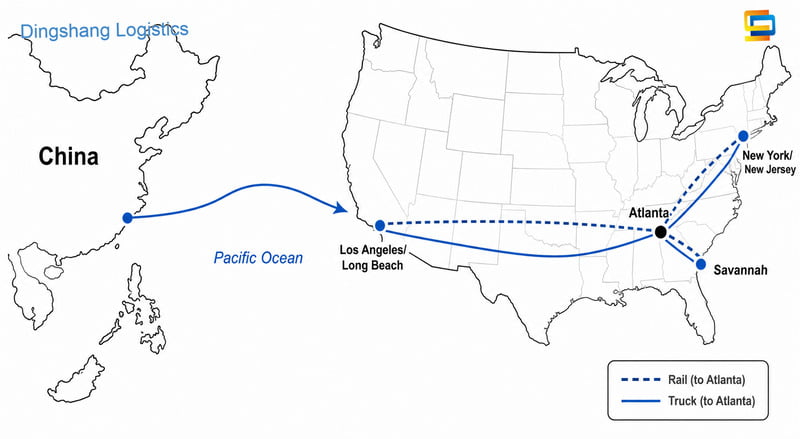
How the Atlanta move actually works
- Atlanta is served by inland intermodal ramps, not a seaport.
- The “port of entry” is where the vessel arrives and where the customs entry is filed.1
- The inland move is either:
- IPI (inland point intermodal): intact FCL on rail to Atlanta, then truck to door.
- Truck dray from a nearer seaport (often Savannah) directly to Atlanta.
- For LCL: devanning at a CFS (consolidation warehouse) at the entry port or in Atlanta, then final truck delivery.
Atlanta’s main intermodal facilities:
- Norfolk Southern Austell (Austell, GA)
- CSX Fairburn (Fairburn, GA)
Distance notes:
- Savannah to Atlanta: about 250–260 miles by truck.
- Los Angeles to Atlanta: roughly 2,100–2,200 miles by rail/truck.
- New York/New Jersey to Atlanta: about 850–900 miles.
Practically, you build a two-part plan: ocean to the entry port plus inland to Atlanta. The “best” solution depends on schedule stability, cost, cargo characteristics, and current congestion. I always ask clients what matters most—speed, cost control, risk, or all of the above—before we lock in a route.
Which U.S. entry port should you pick to ship a container from China to Port of Atlanta?
Picking a port by habit can add weeks and hundreds of miles. I’ve seen shipments creep up in cost because the inland leg was an afterthought. We want a route that matches your buying cycle, not just seasonal rates.
For most Georgia-bound cargo, the top choices are Savannah for a short inland leg, or Los Angeles/Long Beach for fast sailings and strong rail capacity. New York/New Jersey, Charleston, and Houston can work depending on origin, space, and inland rates. The right pick balances total days, inland miles, reliability, and cost.
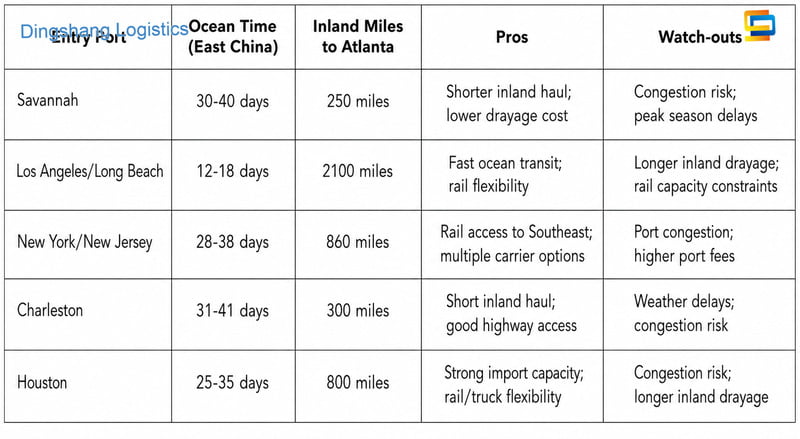
Comparing common entry ports for Atlanta-bound containers
| U.S. Entry Port | Typical Ocean Time From East China (range) | Inland Miles to Atlanta (approx.) | Inland Mode Options | Pros | Watch-outs |
|---|---|---|---|---|---|
| Savannah (GA) | 30–40 days via Panama/Suez (seasonal) | 250 | Truck, limited rail options for FCL | Short inland leg, strong Southeast gateway | Eastbound ocean can be longer than West Coast; congestion varies |
| Los Angeles/Long Beach (CA) | 12–18 days from main China ports | 2,100 | Rail (IPI), long-haul truck | Fast sailings, frequent services, strong rail capacity | Rail dwell spikes in peak; chassis availability |
| New York/New Jersey | 30–40 days via Suez/Panama | 900 | Rail, truck | Alternative when Southeast is congested | Longer inland haul; Northeast congestion risk |
| Charleston (SC) | 30–40 days | 300 | Truck, rail | Often steady operations; close to Atlanta | Fewer direct services than Savannah |
| Houston (TX) | 28–35 days | 800–900 | Rail, truck | Good option for South-Central cargos | Rail routings can be indirect |
Notes:
- Transit ranges shift with season and carrier strings. I never promise fixed days without a live schedule.
- If your suppliers are in South China, consider Ningbo/Shekou sailings that fit the intended U.S. port.
- For time-sensitive SKUs, West Coast + rail can beat East Coast + truck by total days, even with the longer inland distance.
China–Savannah vs. China–Los Angeles/Long Beach: which route is better when you ship a container from China to Port of Atlanta?
Importers often ask me for “the best route” as if one answer works all year. The reality is seasonal. Rates, dwell, chassis supply, and rail performance change. The best route is the best route right now for your cargo and delivery window.
Choose China–Savannah when the priority is a short inland leg, Southeast distribution, and East Coast reliability. Choose China–LA/LB when you need fast sailings, more vessel options, and competitive rail to Atlanta. Compare total landed cost, not just the ocean rate, and factor in dwell and chassis risk.
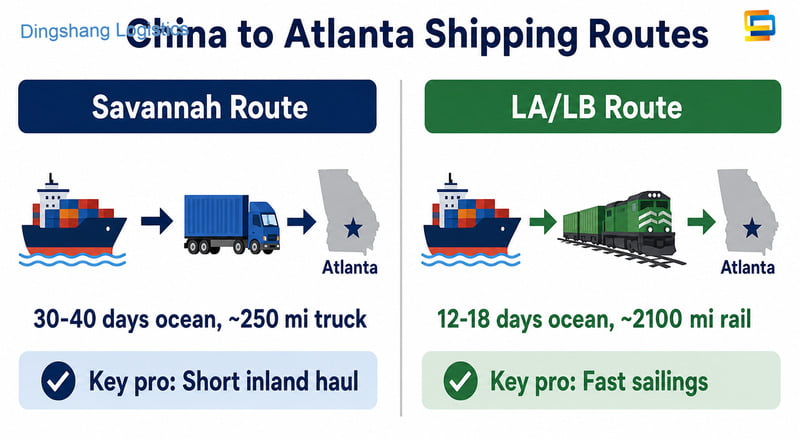
When Savannah wins, and when LA/LB wins
When Savannah makes sense
- You distribute mostly in GA/AL/TN/FL and want to minimize inland miles.
- Peak-season rail congestion on the West Coast threatens your timelines.
- You value drayage predictability: Savannah-to-Atlanta truck can be a next-day move when slots and chassis are available.
- Your cargo is heavy, and short-haul trucking reduces overweight risks and permits.
When Los Angeles/Long Beach makes sense
- You need the fastest ocean leg from Shanghai/Ningbo/Shenzhen.
- You want more weekly sailing options to keep a stable rhythm.
- Intermodal rail schedules are favorable, and total days beat East Coast routing for your sailing week.
- Space is tight on Asia–USEC strings, and you can secure West Coast space more easily.
Practical examples I’ve seen
- A home goods importer shipping 40HQs monthly moved from LA/LB + rail to Savannah + truck after repeated West Coast rail dwell in peak season. Total cost rose slightly, but on-time arrivals increased and stockouts dropped.
- A consumer electronics buyer running promotions chose LA/LB for faster sailings, offsetting higher inland by launching in time. The decision hinged on a specific product launch date, not a long-term formula.
Tip: I often quote both routes in parallel for new lanes, then track actual dwell and delivery performance across two cycles before standardizing.
What should an all-in quote include to ship a container from China to Port of Atlanta?
The biggest risk is accepting a low headline ocean rate and then paying more in destination fees than you saved. I always encourage “landed logistics cost” thinking. We build quotes that show every leg so you can budget and compare apples to apples.
A usable all-in quote should cover origin handling, ocean freight with surcharges, customs brokerage coordination, duties/taxes estimate, terminal and rail fees, chassis and fuel, inland trucking to Atlanta, and likely storage/demurrage windows. Ask for door-to-door or door-to-ramp pricing so nothing is hidden.
The must-have components of a complete quote
Origin (China)
- Factory pickup (if EXW) or local dray to POL
- Export customs clearance and AMS/ISF filing coordination
- Terminal handling at the loading port
- Documentation fees and seal
Ocean leg
- Base ocean freight
- Fuel and environmental surcharges (e.g., BAF, LSS/ETS where applicable)
- Peak season or equipment surcharges
- Carrier documentation fees
U.S. entry + Inland (to Atlanta)
- U.S. terminal handling and doc fees
- IPI rail linehaul to Atlanta ramp (if used)
- Chassis rental and chassis split fees
- Fuel and rail surcharges
- Drayage from ramp (Austell/Fairburn) to your door or cross-dock
- Appointment fees, driver wait, pre-pull, drop-and-pick (if needed)
Customs & compliance
- Customs brokerage fee (we coordinate with your broker)
- Customs bond (continuous vs. single)
- Duties/taxes estimate (based on HS codes; include Section 301 or other tariffs)
- Exam risk buffers (if CBP or FDA exams occur, costs/time vary)
Storage & timing
- Free time windows at port and ramp
- Demurrage (terminal) and detention (equipment) rates and clocks
- Storage at ramp or warehouse if delivery must be delayed
- Delivery appointment or lumper fees (if applicable)
For LCL, add:
- CFS handling and documentation
- Per-CBM origin and destination charges
- Final-mile LTL from the Atlanta CFS to your dock
I like to present this as a single “door-to-door” figure with a line-by-line appendix. That way, your team sees the total and where the money goes. Surprises kill margins; clarity protects them.
What documents and customs steps should you plan when you ship a container from China to Port of Atlanta?
Documentation errors are the most common avoidable delay I encounter. A good routing cannot compensate for misdeclared HS codes or missing data. I work closely with suppliers and brokers to align paperwork before cargo gates in.
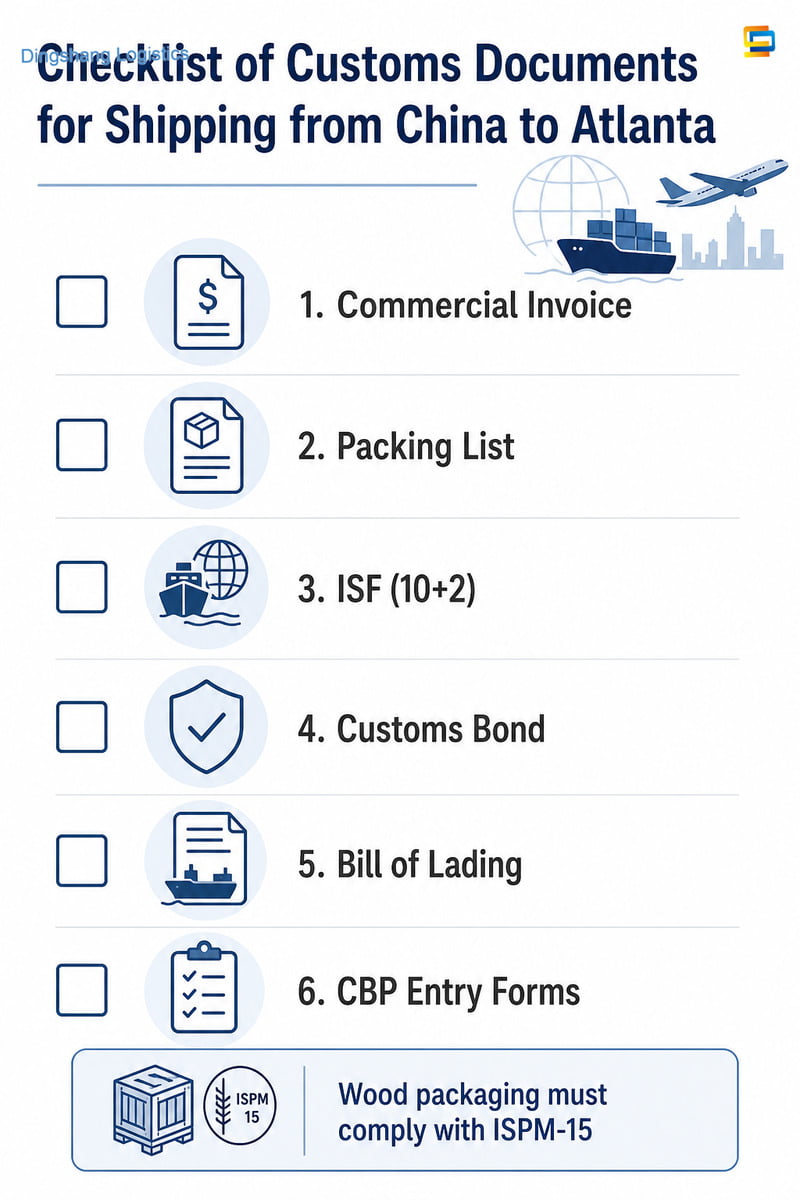
You’ll need a clean Commercial Invoice and Packing List, correct HS codes, the ISF filed before loading, and a customs broker engaged to file the entry at the U.S. entry port. Plan for duties/taxes, possible exams, and ISPM-15 compliance for wood packaging. Coordination prevents holds and storage.
Core compliance checklist
Before loading in China
- Importer Security Filing (ISF 10+2): must be filed prior to vessel loading. Late filings incur penalties.2 We coordinate data exchange with your broker.
- Commercial Invoice: include seller/buyer details, Incoterms, currency, clear product descriptions, country of origin, and HS codes.
- Packing List: piece counts, weights, dimensions, and packaging details.
- Wood packaging: ensure pallets/crates comply with ISPM-15 (heat treated and stamped) if used.
At U.S. entry port
- Customs entry (CBP Form 3461/7501) via your customs broker.
- Customs bond: continuous bond recommended for regular shippers.
- Duties/taxes: calculated from HS code and customs value; Section 301 tariffs may apply for China-origin goods.3
- PGA requirements: If products fall under FDA, EPA, USDA, etc., ensure registrations and filings are ready.
- Exams: If CBP selects your shipment for VACIS/X-ray or MET exam, plan for time and cost impacts.
After arrival and inland move
- For IPI moves, containers often go intact to Atlanta under bond or post-release; your broker guides timing.
- Arrival Notice and freight releases must be aligned to avoid demurrage.
- For LCL, devanning at CFS and local release precede pickup or delivery.
I never promise “guaranteed clearance.” What I do is align the data early, flag HS codes that frequently attract scrutiny, and schedule handoffs so a random exam does not derail your delivery window.
What details should you prepare to get a fast, accurate China-to-Atlanta container quote?
The fastest quotes I produce come from importers who share specifics. Guesswork leads to buffers and risk premiums. A clear data set means sharper routing and cleaner pricing.
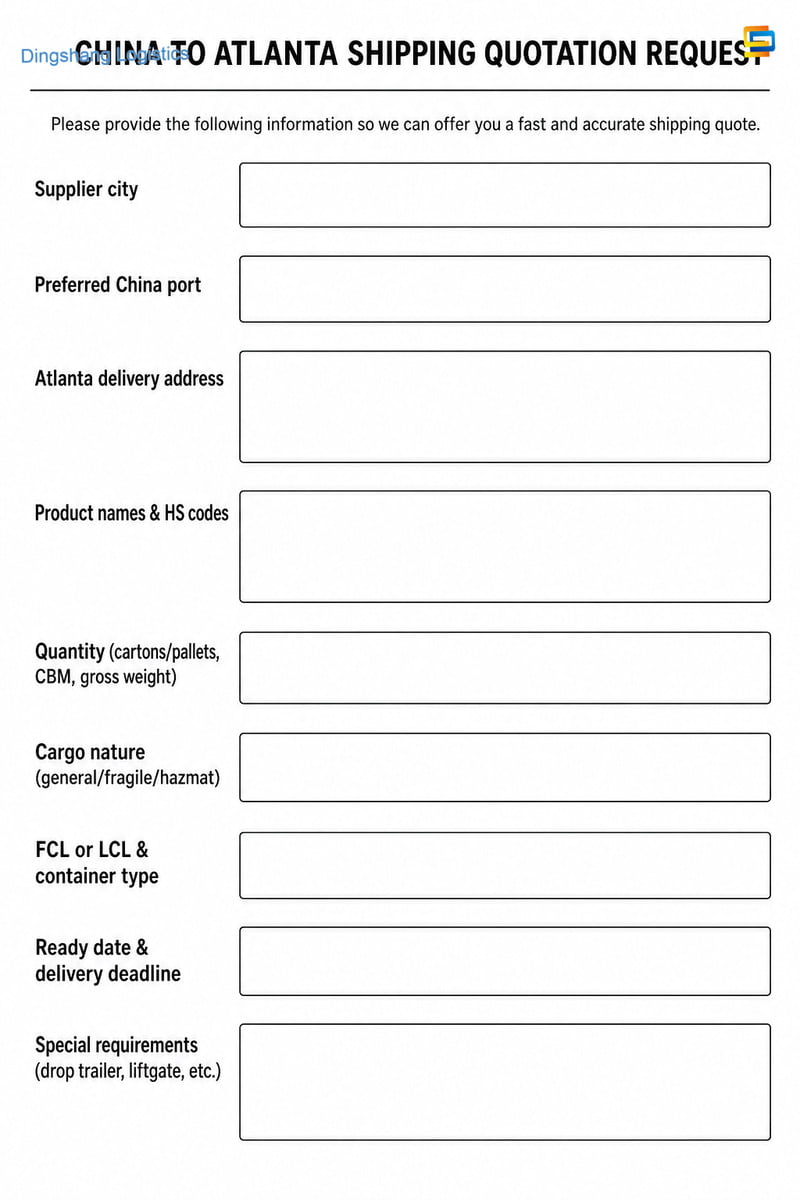
Share supplier city, preferred China port (if any), Atlanta delivery address, product names, HS codes, carton/pallet counts, volume and weight, general vs. special cargo, FCL or LCL choice, and container type (20GP or 40HQ). Include target ready date and delivery deadline.
A practical inquiry template and why it matters
Provide:
- Supplier address and city (e.g., Ningbo, Shenzhen)
- Preferred loading port, if known
- Cargo: product names and HS codes
- Quantity: cartons/pallets, CBM, and gross weight
- Cargo nature: general, fragile, hazmat, temperature-sensitive
- FCL or LCL, and container type (20GP, 40GP, 40HQ)
- Ready date at factory and latest acceptable delivery date
- Delivery address in Atlanta (dock hours, appointment rules)
- Special requirements: drop trailer, live unload, liftgate at transload, inside delivery
- Compliance notes: certificates, PGA, trademarks
Why each matters:
- HS codes drive duties and any PGA filings.
- CBM and weight determine FCL vs. LCL economics and truck weight compliance.
- Ready and delivery dates define viable sailings and inland scheduling.
- Delivery address dictates whether ramp-to-door drayage is feasible within free time.
Weight pointers for U.S. roads:
- 40’ containers typically max around 43,000–44,000 lbs of cargo without overweight permits, depending on chassis and state routing.4
- 20’ containers can handle higher payloads on the ocean, but U.S. road limits may constrain delivery unless permits are arranged.
- For Atlanta deliveries, we confirm state and route limits before we accept heavy loads.
When you share this data upfront, my team can compare Savannah vs. LA/LB options and return an all-in door quote that respects your time window and budget.
FCL or LCL to Atlanta: which is right for your cargo?
I often see LCL chosen for “small” shipments that actually cost more than a light 20’ FCL once destination charges are added. Conversely, FCL chosen too early ties up cash and adds drayage complexity. Let’s decide based on volume, cost, and risk.
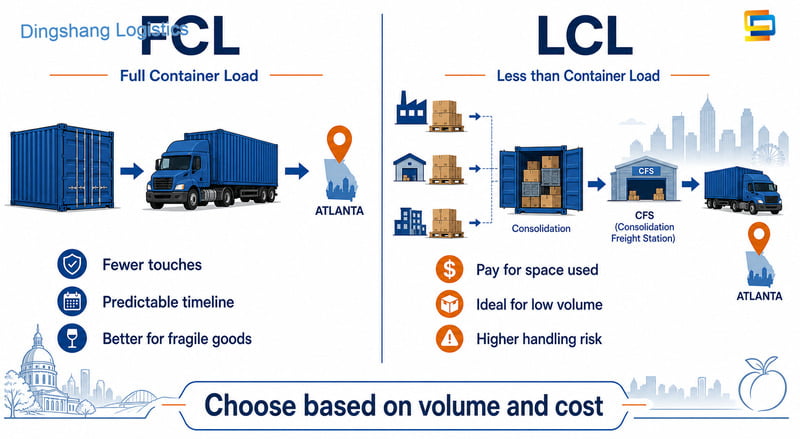
Choose FCL when your volume approaches a 20’ break-even and you want fewer handoffs and damage risk. Choose LCL for small, steady replenishments that do not justify a dedicated box. Always compare total landed costs, not just ocean line items.
Deciding between FCL and LCL for Atlanta deliveries
FCL advantages
- Fewer touches: sealed at origin, unsealed at your dock.
- Predictable timelines; avoids CFS devanning queues.
- Often cheaper than LCL from ~12–15 CBM upward (variable by market).
- Better for fragile or high-value goods.
LCL advantages
- Pay for space used; ideal for low volumes or frequent SKUs.
- No risk of demurrage/detention on a full box.
- Consolidations can deliver to an Atlanta CFS, then local truck to your door.
Key trade-offs
| Factor | FCL | LCL |
|---|---|---|
| Cost at low volume | Higher | Lower |
| Cost at 12–15+ CBM | Often lower | Often higher |
| Handling risk | Lower | Higher (more touches) |
| Flexibility | Lower (wait to fill) | Higher (ship now) |
| Destination fees | Box-based | Per-CBM and per-file |
| Transit variability | Moderate | Higher (CFS cut-offs, devanning) |
Anecdote: A distributor I support switched to monthly FCLs once their LCL volume hit 18–20 CBM. The per-unit landed cost fell ~8–12% depending on the month, and stock damage claims dropped markedly. Conversely, a startup kept LCL to protect cash flow, accepting slightly higher per-unit costs for faster market tests.
The right decision changes as your order cadence scales. I am happy to run both scenarios for your next cycle.
Frequently Asked Questions
Can I ship directly to the Port of Atlanta?
No. Atlanta is not an ocean port. You must route via a coastal U.S. entry port such as Savannah, Los Angeles/Long Beach, New York/New Jersey, Charleston, or Houston, then move the container by rail or truck to Atlanta. We design the best entry port based on your timelines and total landed cost.
How long does it take to get a container from China to Atlanta?
Timings vary by origin, carrier, season, and route. As rough ranges: China to LA/LB is often 12–18 days plus 5–10 days inland rail. China to Savannah is often 30–40 days plus 1–3 days truck to Atlanta. Always plan with live schedules, cutoffs, and potential dwell.
Is rail or truck better from Savannah to Atlanta?
Truck drayage is common and can deliver next day when appointments and chassis are available. Rail options exist but are less common for such a short distance. Your choice depends on volume, yard capacity, and free time windows. We quote both when it makes sense.
Do I need a customs broker in Atlanta?
You need a U.S. customs broker to file the entry at the U.S. entry port, not necessarily in Atlanta. The broker can be anywhere in the U.S. We coordinate with your broker to align ISF, entries, and releases. Clear documentation is essential to avoid storage fees.
Should I use a 20GP or 40HQ for Atlanta deliveries?
Use 40HQ for high-cube volume and better per-unit cost when you can fill it or approach break-even. Use 20GP for heavy, dense cargo or smaller volumes. Always check U.S. road weight limits for Atlanta delivery; many lanes cap practical payloads around 43,000–44,000 lbs in a 40’.
Conclusion
Shipping success hinges on designing the right route, not chasing the lowest ocean rate. To ship a container from China to Port of Atlanta, you must choose the best U.S. entry port, coordinate customs, and price the inland leg to Atlanta. Share your cargo details and timing, and I’ll return a clear, all-in door plan with route options tailored to your priorities. Ready to compare Savannah vs. LA/LB for your next shipment? Send me your specs and I’ll build your best path to Atlanta.
Related Shipping Guides
- How to Ship a Container from China to Port of Chicago
- How to Ship a Container from China to Port of Dallas
- How to Ship a Container from China to Port of Cleveland
- How to Import Products from China to USA Step by Step
- China to USA Container Shipping
"Locate a Port of Entry | U.S. Customs and Border Protection", https://www.cbp.gov/about/contact/ports. U.S. Customs and Border Protection guidance explains that entries are filed for the specific U.S. port of entry at which merchandise arrives and is presented for release. Evidence role: definition; source type: government. Supports: That the customs entry is associated with and filed for the designated U.S. port of entry where merchandise arrives.. Scope note: CBP allows Remote Location Filing; while a broker may file from another location, the entry is still made for the port of entry designated for arrival. ↩
"Import Security Filing (ISF) - When to submit to CBP", https://www.help.cbp.gov/s/article/Article-1868. CBP’s ISF guidance states that importers must submit ISF data no later than 24 hours before cargo is laden on the vessel at the foreign port, and noncompliance may be subject to liquidated damages penalties. Evidence role: mechanism; source type: government. Supports: That CBP requires the ISF to be filed at least 24 hours before vessel lading, with monetary penalties for non-compliance.. ↩
"Section 301 Trade Remedies Frequently Asked Questions", https://www.cbp.gov/trade/programs-administration/entry-summary/section-301-trade-remedies/faqs. Official USTR and CBP notices document the imposition of Section 301 additional duties on specified Chinese-origin goods, assessed on top of the normal duty calculated by HS classification and customs value. Evidence role: mechanism; source type: government. Supports: That U.S. Section 301 measures impose additional duties on certain products of China beyond standard tariff rates.. Scope note: Applicability depends on product tariff lines and any exclusions in effect at the time of entry; importers must verify current scope. ↩
"Compilation of Existing State Truck Size and Weight Limit Laws", https://ops.fhwa.dot.gov/freight/policy/rpt_congress/truck_sw_laws/app_a.htm. FMCSA and related DOT references set the standard federal gross vehicle weight limit at 80,000 lb; subtracting typical tractor, chassis, and 40-foot container tare weights results in practical payloads often in the 43,000–44,000 lb range. Evidence role: general_support; source type: government. Supports: That the federal gross vehicle weight limit is 80,000 pounds on U.S. interstate highways, constraining typical container payloads once tractor, chassis, and container tare weights are accounted for.. Scope note: Actual maximum payload varies with specific equipment tare weights, axle configurations, and state/local tolerances or permits; the figure is a common planning estimate, not a legal cap on cargo weight. ↩
Leave a Comment