
LCL Shipping from China to USA: Rates, Cost & Door-to-Door Delivery
LCL Shipping from China to USA: Quick Cost & Transit Answer
LCL shipping from China to the USA is used when your cargo does not require a full container. Based on real Dingshang Logistics 2026 door-to-door shipment examples, 3.5–10 CBM cargo cost approximately USD 822–3,119, with total lead times of about 25–45 days. Actual cost depends on origin, destination, weight, CFS handling, customs requirements, and inland delivery. There is no universal rate per CBM or fixed LCL-to-FCL break-even point.
LCL, or Less than Container Load, allows commercial cargo to share container space with other shipments instead of using a dedicated container. For U.S. importers, the key is to compare the complete transportation scope—including CFS handling, customs coordination, inland transportation, and final delivery—not just the headline ocean rate per CBM.
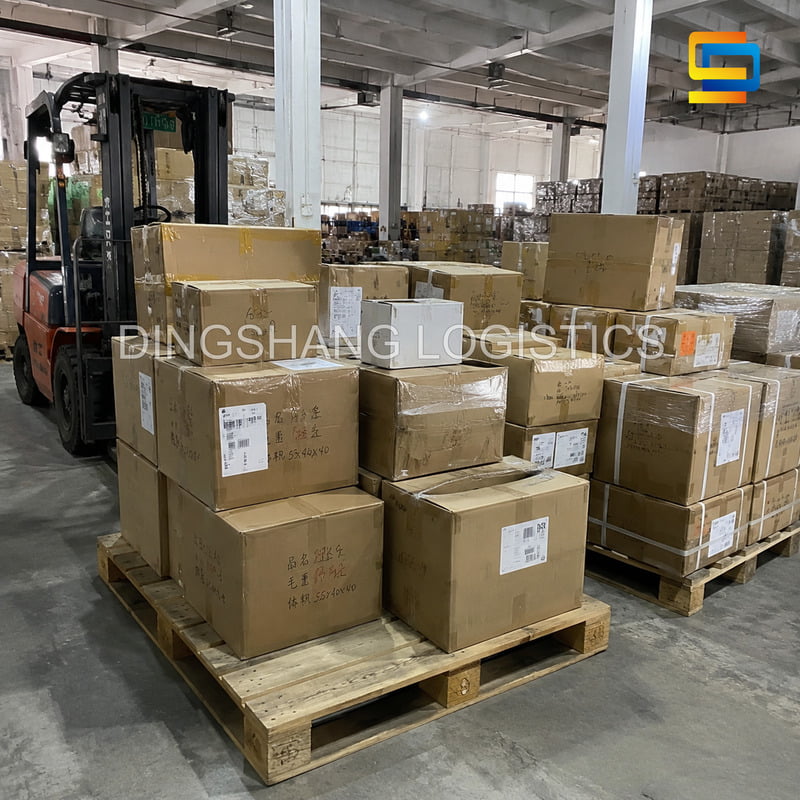
How Much Does LCL Shipping from China to USA Cost?
There is no single LCL shipping rate from China to the USA. Based on Dingshang Logistics' 2026 shipment examples, recent door-delivery costs ranged from USD 822 for a 3.5 CBM shipment to California to USD 3,119 for a 10 CBM shipment to Illinois.
| Origin | U.S. Destination | Volume | Weight | Packages | Service Scope | Total | Total Door-to-Door Lead Time |
|---|---|---|---|---|---|---|---|
| Ningbo | CA 91761 | 3.5 CBM | 470 kg | 25 | Door Delivery | USD 822 | 25–28 days |
| Shenzhen | GA 30401 | 6.5 CBM | 800 kg | 50 | Door Delivery | USD 1,246 | 40–45 days |
| Shanghai | NJ 08060 | 8.7 CBM | 1,200 kg | 80 | Door Delivery | USD 2,094 | 38–45 days |
| Qingdao | IL 60191 | 10 CBM | 2,200 kg | 120 | Door Delivery | USD 3,119 | 35–40 days |
These are real 2026 shipment examples, not market-wide averages or guaranteed booking rates. LCL pricing changes with the shipment date, cargo characteristics, origin, destination, carrier or consolidator, and delivery requirements.
More importantly, these are door-delivery examples, not ocean-freight-only rates. The totals therefore should not be interpreted as a universal LCL ocean rate per CBM.
For example, the 3.5 CBM California shipment and the 10 CBM Illinois shipment have very different final destinations and inland transportation requirements. Dividing each total by CBM may be useful for reviewing that individual shipment, but it does not create a transferable “China-to-USA rate per CBM.”
Need an LCL Quote from China to USA?
Send your packing list, China pickup location, U.S. delivery ZIP code, package count, gross weight, total CBM, package dimensions, and cargo-ready date. With these details, the shipment can be reviewed based on the actual route, weight, volume, and delivery requirements rather than a generic rate per CBM.
If the exact CBM or dimensions are not available yet, send the supplier's packing list.
Is LCL Shipping from China to USA Right for Your Shipment?
LCL is usually worth evaluating when your commercial cargo does not require a full container, but the decision should be based on total delivered cost, weight, handling requirements, and current FCL pricing—not CBM alone.
| Shipment Situation | How to Evaluate LCL |
|---|---|
| Cargo does not require a full container | LCL is usually worth evaluating |
| Around 2–10 CBM of commercial cargo | A common planning range where LCL may be worth evaluating |
| Multiple cartons or pallets | Often suitable if handling requirements are normal |
| Below about 2 CBM | May be uneconomical because of fixed and minimum charges |
| Fragile or non-stackable cargo | Compare LCL handling risk with FCL |
| Heavy cargo | Check W/M pricing and inland delivery carefully |
| Shipment approaching FCL economics | Compare actual all-in LCL cost with a current 20GP quote |
The correct decision is based on the actual all-in quotation, not a universal CBM rule. Cargo around 2–10 CBM is a useful planning range for evaluating LCL, but it does not mean every shipment in that range should use LCL.
How Are LCL Shipping Rates Calculated?
LCL freight is commonly priced using weight or measurement (W/M), but the final amount you pay can include much more than the ocean freight calculation. Cargo volume, gross weight, origin handling, destination CFS charges, customs-clearance service, and final delivery can all affect the total delivered logistics cost.
How do you calculate CBM?
For rectangular cartons:
CBM = Length × Width × Height × Number of Cartons
If dimensions are measured in meters, the result is cubic meters.
For example, if one carton measures:
0.60 m × 0.50 m × 0.40 m
its volume is:
0.60 × 0.50 × 0.40 = 0.12 CBM
If you have 20 identical cartons:
0.12 × 20 = 2.4 CBM
This gives the shipment volume, but it does not by itself determine the final LCL shipping cost.
What does W/M mean in LCL shipping?
W/M means Weight or Measurement. For LCL freight, the chargeable basis may compare cargo weight with cargo measurement under the applicable consolidator tariff or quotation.
A commonly used LCL convention compares 1 cubic meter with 1 metric ton on a revenue-ton basis, with the higher applicable chargeable basis used. Maersk, for example, defines its Weight and Measure Unit for certain LCL arrangements by comparing gross cubic volume with gross weight, using 1 CBM = 1,000 kg.1
That convention should not be treated as a universal tariff rule. Conversion methods, minimum charges, rate structures, and charging rules can vary by consolidator, trade lane, service, and individual quotation.
That is why both gross weight and CBM are required for an accurate LCL quote.
A dense 5 CBM shipment and a lightweight 5 CBM shipment may not produce the same cost structure. Cargo characteristics can also affect handling and final delivery.
Before applying a simple online “price per CBM” to your shipment, confirm the charging basis, minimums, and what the quoted rate actually includes.
What Is Included in an LCL Shipping Quote?
A useful LCL quote should define the transportation scope rather than showing only an ocean rate per CBM. Depending on the service purchased, the quotation may include China pickup, origin CFS handling, export procedures, ocean freight, U.S. destination handling, customs-clearance service, inland transportation, and final delivery.
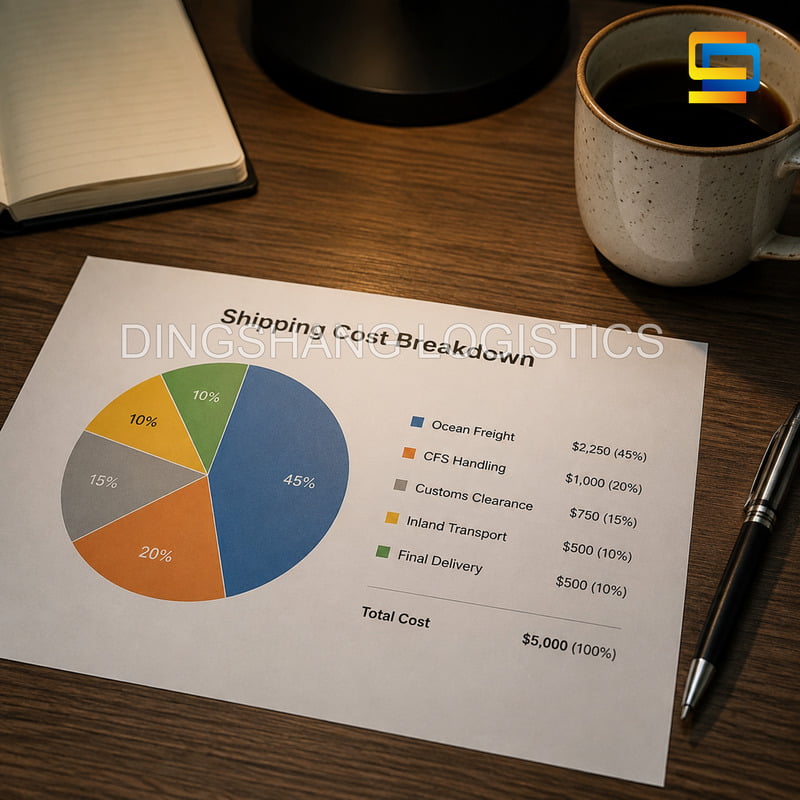
A China-to-USA LCL quotation may include:
| Cost or Service | What You Should Confirm |
|---|---|
| China pickup | Is pickup from the supplier included? |
| Origin CFS handling | Are consolidation and origin handling included? |
| Export procedures | Are China export arrangements included? |
| Ocean freight | What route and sailing window apply? |
| U.S. destination handling | Are destination/CFS charges included? |
| Customs-clearance service | Is customs-clearance coordination included? |
| Import duty | Estimated separately or handled according to the agreed scope? |
| Inland transportation | Is rail or truck transportation required? |
| Final delivery | Is delivery to the exact ZIP code included? |
| Cargo insurance | Included, optional, or separately arranged? |
This distinction matters because:
Ocean freight per CBM ≠ total door-to-door LCL cost.
A low ocean rate can look attractive but may cover only part of the transportation chain.
For a broader explanation of freight quotation components, see what is included in the real all-in shipping cost.
What Are CFS Charges in LCL Shipping?
CFS stands for Container Freight Station. Because multiple LCL shipments share container space, cargo normally has to be received, consolidated, handled, and later separated from other shipments at the appropriate facilities. Maersk describes CFS operations as including cargo consolidation and deconsolidation, with LCL cargo commonly using these facilities.2
A simplified LCL flow looks like this:
Supplier → China CFS → Consolidation → Ocean Freight → U.S. CFS → Deconsolidation → Customs/Release Process → Final Delivery
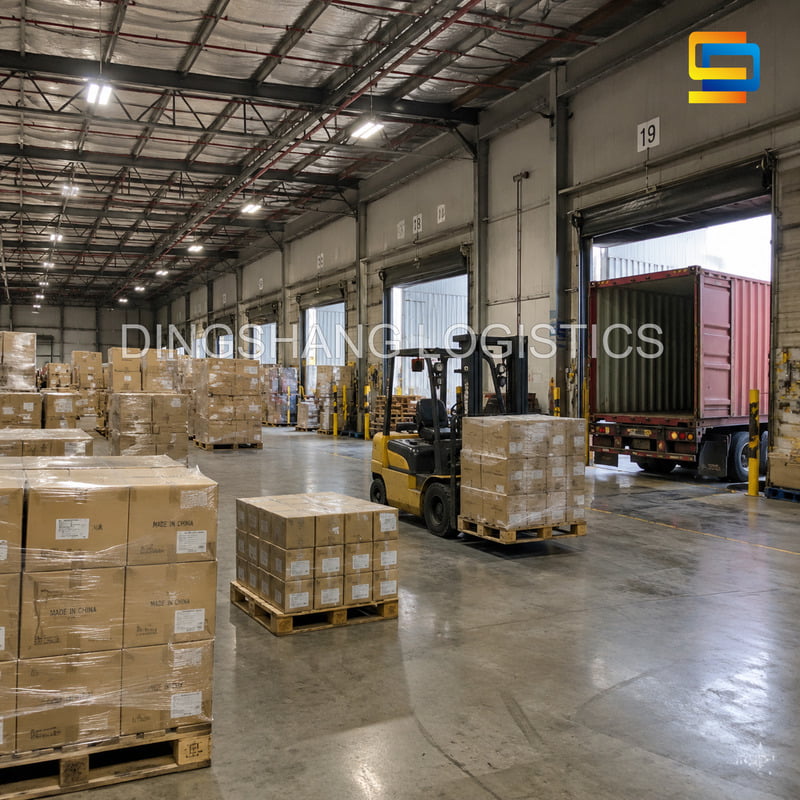
Unlike an FCL shipment, where one shipper uses a dedicated container, LCL cargo normally passes through additional consolidation and deconsolidation stages. Maersk describes LCL cargo as being grouped with other compatible shipments at origin and separated again at destination.2
Depending on the quotation and shipment, CFS-related costs can include handling associated with receiving, consolidation, deconsolidation, or cargo release. The exact terminology and charging structure can vary by consolidator and destination.
CFS handling is one reason an LCL ocean rate should never be compared directly with a complete door-to-door quotation.
The more useful question is:
What is the total delivered logistics cost for getting this cargo from the agreed China origin to the required U.S. destination?
For a broader view of the shipment stages, see how container shipping works from China to the USA.
How Does LCL Door-to-Door Shipping from China to USA Work?
LCL door-to-door shipping connects the agreed China origin with the consignee's final U.S. delivery address. The cargo is consolidated with other shipments for the ocean movement, deconsolidated after arrival, processed through the applicable U.S. customs and release procedures, and then moved to the final destination.
A typical shipment may follow:
Supplier → China CFS → Consolidation → Ocean Freight → U.S. Port/CFS → Deconsolidation → Customs/Release → Inland Transportation → Customer Warehouse
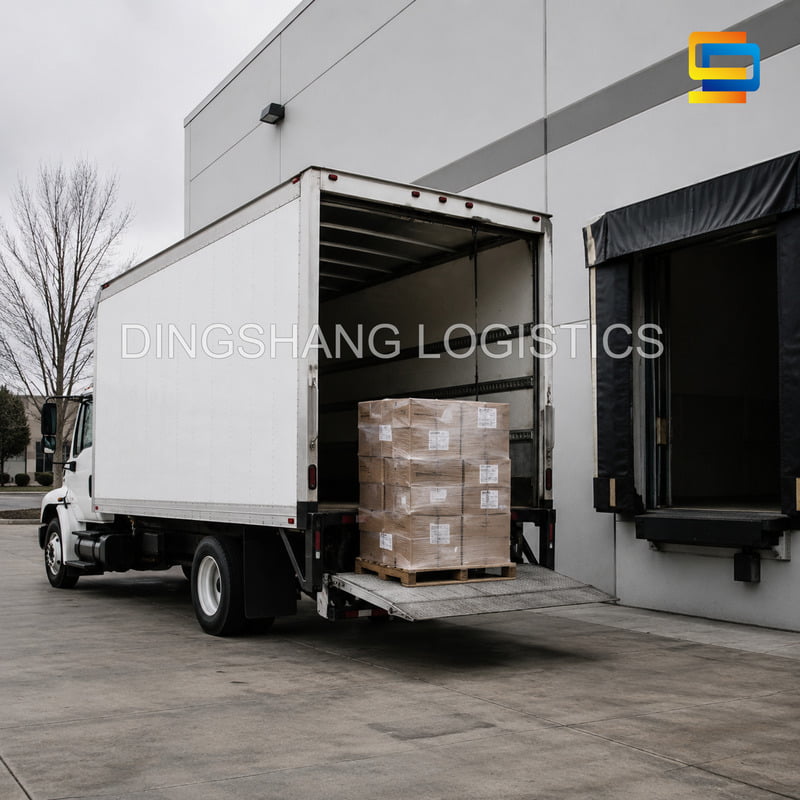
The exact route depends on the China origin, booked service, consolidator, and U.S. destination.
For example, the real shipments in the 2026 data used in this article included:
- Ningbo → CA 91761
- Shenzhen → GA 30401
- Shanghai → NJ 08060
- Qingdao → IL 60191
These destinations involve different ocean and inland transportation requirements, which is one reason their total costs should not be reduced to a single universal per-CBM rate.
Door-to-door does not automatically mean DDP
Door-to-door describes the transportation service scope. It does not automatically mean DDP under Incoterms® rules.
Incoterms® rules define responsibilities, costs, and risks between buyers and sellers in an international sales transaction. DDP is one of those commercial terms; it should not be treated as another name for a freight forwarder's door-delivery service.3
A door-delivery quotation should therefore state how customs clearance, import duty, and final delivery are being handled rather than assuming that “door-to-door” automatically includes every import cost.
How Dingshang Logistics Handles LCL Shipments from China to USA
For qualifying LCL shipments, Dingshang Logistics can coordinate the shipment from the China supplier through consolidation and final U.S. delivery. The exact service scope depends on the agreed quotation, cargo requirements, routing, and final delivery location.
A typical coordination process may include:
- Supplier pickup or delivery to the China consolidation warehouse
- Cargo receiving and measurement
- Package count, gross weight, and CBM confirmation
- China CFS consolidation
- Export arrangements
- Ocean freight to the United States
- U.S. CFS deconsolidation
- Customs-clearance coordination
- Inland rail or truck transportation where applicable
- Final delivery to the customer's U.S. ZIP code
Dingshang Logistics works with China-origin operations and U.S. customs, warehouse, rail, and trucking partners to coordinate qualified door-to-door shipments. The actual routing and transportation mode depend on the shipment; not every LCL shipment uses rail, follows the same route, or has the same customs and delivery scope.
Main China Origins for LCL Shipping to the USA
Common China origins for Dingshang Logistics LCL shipments include Ningbo, Shanghai, Shenzhen, and Qingdao. Factory pickup can also be arranged from other supplier locations depending on the shipment and the suitable consolidation point.
| China Origin | Typical Supplier Area |
|---|---|
| Ningbo | Zhejiang and surrounding East China suppliers |
| Shanghai | Shanghai, Jiangsu, and nearby East China suppliers |
| Shenzhen | Shenzhen, Dongguan, Guangzhou, and Pearl River Delta suppliers |
| Qingdao | Shandong and nearby North China suppliers |
These are planning relationships rather than mandatory routing rules. The most suitable consolidation point depends on the supplier location, cargo volume, shipment schedule, and available LCL service.
LCL Shipping Rates by China–USA Route
LCL shipping costs change significantly by route because the U.S. destination can affect ocean routing, destination handling, inland transportation, and final-mile delivery. The four examples below should be read as complete shipment examples rather than transferable route tariffs.
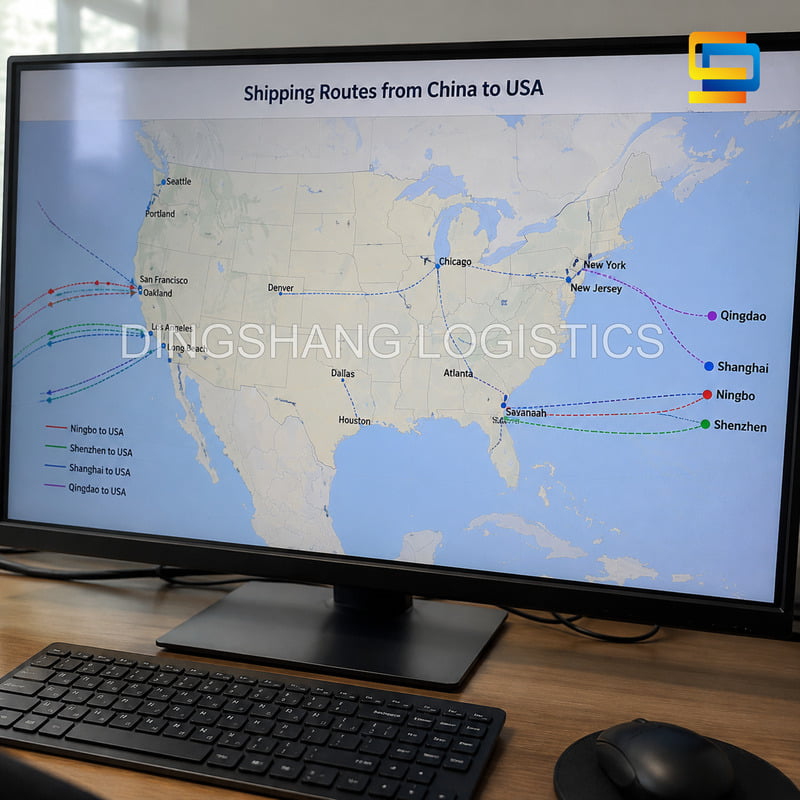
Ningbo to California LCL Shipping
A recent 3.5 CBM, 470 kg, 25-package shipment from Ningbo to CA 91761 was delivered for USD 822, with a total door-to-door lead time of approximately 25–28 days.
This was a door-delivery shipment. The figure should not be interpreted as an ocean-freight-only rate.
Shenzhen to Georgia LCL Shipping
A 6.5 CBM, 800 kg, 50-package shipment from Shenzhen to GA 30401 had a door-delivery cost of USD 1,246, with a total door-to-door lead time of approximately 40–45 days.
The lead time reflects this specific shipment and origin-to-destination movement rather than a guaranteed Shenzhen-to-Georgia transit time.
Shanghai to New Jersey LCL Shipping
A recent 8.7 CBM, 1,200 kg, 80-package shipment from Shanghai to NJ 08060 had a total door-delivery cost of USD 2,094, with a total door-to-door lead time of approximately 38–45 days.
Again, this is a shipment-specific example rather than a universal New York/New Jersey LCL rate or guaranteed lead time.
Qingdao to Illinois LCL Shipping
A 10 CBM, 2,200 kg, 120-package shipment from Qingdao to IL 60191 had a total door-delivery cost of USD 3,119, with a total door-to-door lead time of approximately 35–40 days.
At 2,200 kg, cargo weight is an important part of this example. Two shipments with the same 10 CBM volume but substantially different weights should not automatically be expected to receive the same quotation.
Why Can't You Compare LCL Rates Only by Cost per CBM?
Cost per CBM is useful for understanding part of an LCL quotation, but it is not a reliable way to compare complete door-delivery shipments unless the route, weight, service scope, and other charging conditions are comparable.
Using the real examples above, simply dividing the total door-delivery cost by volume would produce different effective figures for each shipment. That does not mean one route or shipment is automatically expensive or cheap.
The totals reflect different combinations of:
- Cargo volume
- Cargo weight
- China origin
- U.S. destination
- CFS handling
- Inland transportation
- Final-mile delivery
- Shipment timing
For B2B importers, the more useful comparison is usually the total delivered logistics cost for the same service scope.
This is especially important when one quote shows an attractive LCL ocean rate while another includes destination handling and final delivery.
LCL vs. FCL: Which Costs Less?
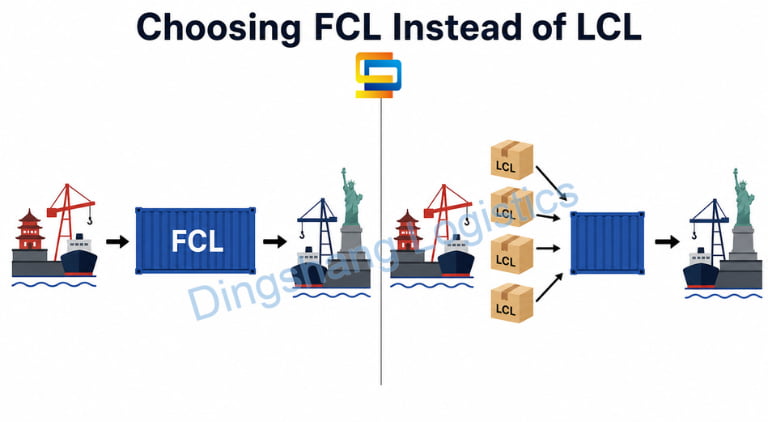
LCL is often suitable when your shipment does not justify a dedicated container, but there is no universal CBM threshold at which FCL automatically becomes cheaper than LCL.
The correct comparison is between the actual all-in LCL cost and the available FCL cost for the same shipment, route, destination, and service scope.
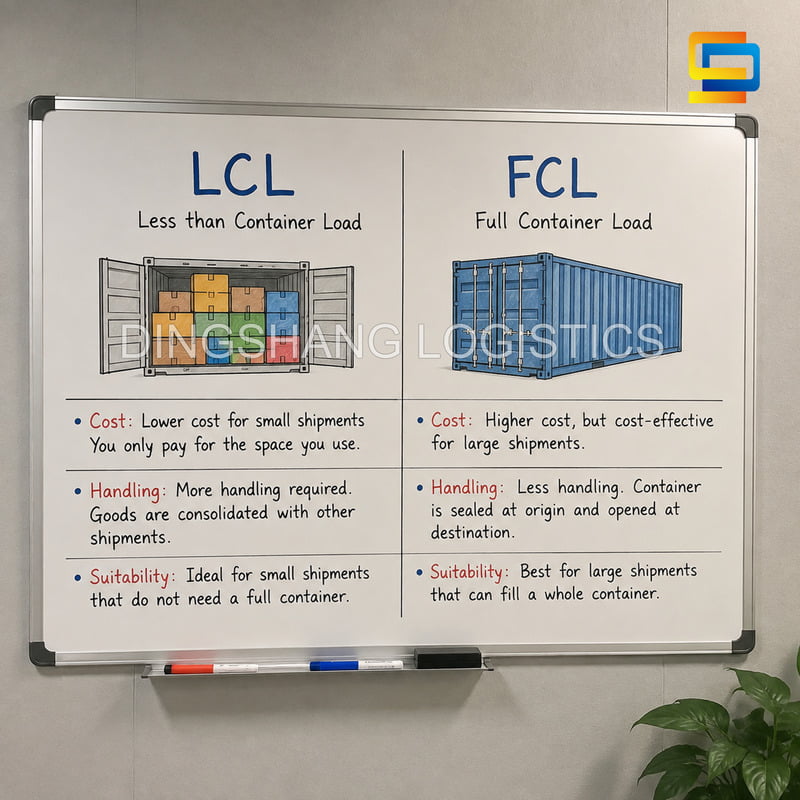
When comparing LCL and FCL, consider:
- Total CBM
- Gross weight
- W/M charging
- Origin handling
- Destination CFS charges
- Inland delivery
- Current 20GP or 40HQ rate
- Cargo stackability
- Handling sensitivity
- Number and type of packages
- Final receiving requirements
For example, an LCL shipment can have a relatively low ocean freight component but higher handling costs because cargo is consolidated and deconsolidated.
FCL can reduce shared-cargo handling, but paying for a dedicated container does not automatically make financial sense for every shipment.
Once an LCL shipment becomes larger, heavier, less stackable, or more handling-sensitive, request a 20GP container quote at the same time and compare both options on the same service scope.
That is why rules such as “always switch to FCL at 15 CBM” are unreliable. The break-even point changes by route, weight, destination charges, current FCL pricing, cargo characteristics, and service requirements.
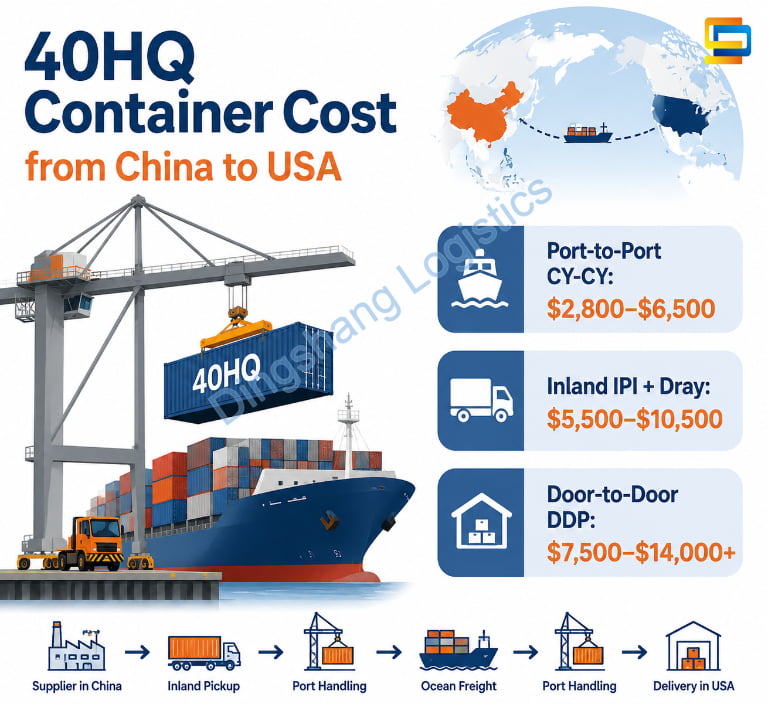
If your shipment is large enough to consider a dedicated container, compare current container shipping rates from China to the USA before making the final LCL-versus-FCL decision.
For a detailed comparison, see when you should choose FCL instead of LCL.
How Long Does LCL Shipping from China to USA Take?
There is no single LCL transit time from China to the USA. Total door-to-door lead time can include origin handling and consolidation, the ocean movement, destination deconsolidation, customs and release processing, inland transportation, and final delivery. In the four 2026 door-delivery examples in this article, total lead times ranged from approximately 25 to 45 days.
The shipment examples were:
| Route | Total Door-to-Door Lead Time |
|---|---|
| Ningbo → CA 91761 | 25–28 days |
| Shenzhen → GA 30401 | 40–45 days |
| Shanghai → NJ 08060 | 38–45 days |
| Qingdao → IL 60191 | 35–40 days |
These are shipment examples, not guaranteed transit times or universal route schedules.
LCL normally involves additional cargo-handling stages because shipments must be consolidated before the shared-container movement and deconsolidated at destination. Sailing schedules, consolidation timing, customs status, inland transportation, and delivery appointments can also affect the final delivery date.
Also remember:
Ocean transit ≠ total door-to-door lead time.
Port arrival ≠ cargo availability ≠ final delivery.
For broader route and timing planning, see the guide to sea freight transit time from China to the USA.
What Can Change Your LCL Shipping Cost?
Even when two shipments have the same CBM, their final LCL costs can be different. For an actual quotation, the China pickup point, U.S. delivery ZIP code, cargo dimensions, volume, and gross weight are among the first details that need to be reviewed.
Important variables include:
- China pickup location
- U.S. destination ZIP code
- Total CBM
- Gross weight
- Package dimensions
- Cargo type and stackability
- Number of packages
- Origin CFS charges
- Destination CFS charges
- Inland transportation
- Delivery requirements
- Sailing date
- Customs requirements
Heavy or unusually shaped cargo deserves particular attention. Volume alone may not represent the full transportation requirement.
Likewise, appointments, special handling, limited-access conditions, or other delivery requirements can affect the final cost where applicable. These requirements should be disclosed when requesting the quote rather than assumed to be part of a standard delivery.
Are Customs Duty and Extra Charges Included in LCL Shipping Rates?
Import duty should not automatically be treated as part of the LCL freight rate. Duty can often be estimated before shipment when the HTS classification, customs value, country of origin, and applicable U.S. tariff measures are known, but the final duty rate and assessment depend on the actual import facts and CBP determination.45
A useful distinction is:
Quoted logistics cost ≠ estimated duty ≠ conditional charge.
Normal quoted logistics charges should reflect the transportation services included within the agreed scope.
Import duty should be identified or estimated separately unless the quotation explicitly states how it will be handled. CBP notes that duty rates are provided through the Harmonized Tariff Schedule and that the correct duty rate ultimately depends on the merchandise and information associated with the import.45
Conditional charges may arise only if a particular event or service occurs. Depending on the shipment, examples can include:
- Customs examination
- Storage caused by delay
- Truck waiting time
- Redelivery
- Special handling
A conditional charge is not automatically a hidden fee. What matters is whether the quote clearly defines the normal service scope, exclusions, and circumstances that may trigger additional costs.
For a broader view of customs and shipment preparation, see how to import products from China to the USA step by step.
Is LCL Shipping Suitable for Small Shipments?
LCL can be useful for commercial shipments that do not require a full container because you use shared container capacity rather than reserving an entire FCL container. However, smaller shipments still need to be evaluated on total cost rather than volume alone.
For a small shipment, minimum or fixed charges, pickup costs, CFS handling, customs-clearance costs, destination charges, and final delivery can represent a large percentage of the total.
In practical B2B planning, very small commercial shipments—especially shipments below approximately 2 CBM—may not always be economical as LCL once these fixed and minimum logistics costs are included. This is not a universal industry minimum or a rule that applies to every trade lane. The result depends on the consolidator, route, cargo, origin, destination, and service requirements.
That means a low headline “rate per CBM” does not necessarily make a very small LCL shipment economical. These shipments should be evaluated separately using the complete quoted logistics cost rather than assuming LCL is automatically the lowest-cost option.
For commercial cargo, the decision should be based on the total delivered logistics cost and shipment requirements, not CBM alone.
What Information Is Needed for an LCL Shipping Quote?
To receive an accurate LCL quote from China to the USA, provide the cargo details needed to calculate volume, weight, origin handling, routing, and final delivery. Package dimensions, gross weight, China pickup location, and the final U.S. ZIP code are particularly important because CBM alone does not describe the full shipment.
Please provide:
- Product name
- HS code, if available
- Material or composition
- China pickup address
- U.S. delivery address or ZIP code
- Number of packages
- Gross weight
- Total CBM
- Package dimensions
- Cargo-ready date
If the exact CBM or package dimensions are not available, a packing list is usually the best starting point.
These details allow the shipment to be evaluated based on its actual volume, weight, route, and delivery requirements rather than a generic online LCL rate.
Frequently Asked Questions
What is LCL shipping?
LCL stands for Less than Container Load. Your cargo shares container space with shipments from other customers instead of using a dedicated container. LCL normally involves consolidation at origin and deconsolidation at destination.2
How much does LCL shipping from China to USA cost?
There is no single fixed LCL rate. In the real 2026 door-delivery shipment examples in this article, a 3.5 CBM shipment from Ningbo to CA 91761 cost USD 822, while a 10 CBM shipment from Qingdao to IL 60191 cost USD 3,119. Route, weight, CFS handling, destination, and delivery scope all affect the final price.
Is LCL shipping charged per CBM?
Volume is an important part of LCL pricing, but LCL may be quoted using weight or measurement (W/M), and a complete door-delivery cost can also include origin handling, destination CFS charges, customs-clearance service, inland transportation, and final delivery. A quoted ocean rate per CBM should not be confused with the total delivered logistics cost.
Is there a minimum CBM for LCL shipping?
There is no universal minimum CBM for LCL shipping. Minimum charging or shipment-acceptance rules vary by consolidator, route, and quotation. In practical B2B planning, shipments below about 2 CBM may be less economical once fixed or minimum handling, clearance, pickup, destination, and delivery costs are included. The approximately 2 CBM figure is a planning consideration, not an industry-wide minimum.
At what CBM should I switch from LCL to FCL?
There is no universal CBM threshold. Compare the actual all-in LCL cost with the available FCL cost for the same route and destination. Gross weight, W/M charging, CFS charges, inland delivery, current container rates, cargo handling, stackability, and service requirements can all change the break-even point.
What are CFS charges in LCL shipping?
CFS charges relate to handling at a Container Freight Station, where LCL cargo may be received, consolidated, deconsolidated, and processed for release. The exact charges and terminology vary by consolidator, destination, and service scope.2
Does LCL door-to-door shipping include customs duty?
Not automatically. Door-to-door describes the transportation service scope, while import duty is a government charge. Customs-clearance service may be included in a freight quotation, but duty should be identified or estimated separately unless the agreed quotation explicitly states how it will be handled.
How long does LCL shipping from China to USA take?
Total lead time depends on the route, consolidation schedule, ocean service, destination handling, customs status, inland transportation, and final delivery. In the four 2026 door-delivery examples in this guide, total door-to-door lead times ranged from approximately 25 to 45 days. These are shipment-specific examples, not guaranteed transit times.
What information do I need for an LCL quote from China to the USA?
You normally need the product name, China pickup location, U.S. ZIP code, package count, gross weight, total CBM, package dimensions, and cargo-ready date. If the exact dimensions or CBM are not available, send the supplier's packing list.
Get an LCL Shipping Quote from China to the USA
For an accurate LCL door-to-door quotation, send:
- Product name
- HS code, if available
- Material
- China pickup address
- U.S. delivery ZIP code
- Number of packages
- Gross weight
- Total CBM
- Package dimensions
- Cargo-ready date
If you do not have all the measurements yet, send the packing list.
With these details, the shipment can be evaluated based on the actual route, weight, volume, and delivery scope rather than a generic rate per CBM.
References
[Maersk — Terms for Less than Container Load (LCL)](https://terms.maersk.com/LCL) ↩
[Maersk — Understanding CFS and CY Logistics in Freight Shipping](https://www.maersk.com/logistics-explained/transportation-and-freight/2024/07/02/cfs-cy-logistics) ↩
[International Trade Administration — Know Your Incoterms](https://www.trade.gov/know-your-incoterms) ↩
[U.S. Customs and Border Protection — How Do I Determine the Duty Rate on My Goods?](https://www.help.cbp.gov/s/article/Article-1344) ↩
[U.S. Customs and Border Protection — Harmonized Tariff Schedule](https://www.cbp.gov/trade/rulings/harmonized-tariff-schedule) ↩
Leave a Comment