
Ship a Container From China to Port of New York?
Shipping to New York looks simple at first. Then rates change, schedules shift, and local fees appear. I see importers lose control fast.
To ship a container from China to the Port of New York, I first confirm the origin port, container size, sailing option, customs plan, and final delivery address. The right choice depends on total landed cost, transit time, carrier reliability, and local trucking capacity.
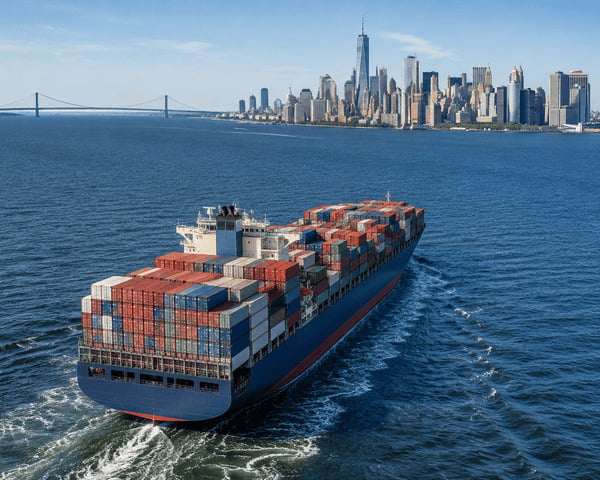
I have handled China to USA ocean freight for 15 years, and I rarely treat New York as only a port-to-port move. I treat it as a full chain. I look at the factory pickup, China port, vessel service, U.S. customs, port pickup, chassis, warehouse needs, and final delivery. If one part is weak, the whole shipment can slow down. So I do not start with only “What is the cheapest rate?” I start with “What risk do we need to control first?”
What Really Determines the Cost to Ship a Container From China to New York?
A cheap number can feel safe. But I have seen that number change after sailing, arrival, exam, storage, or trucking problems.
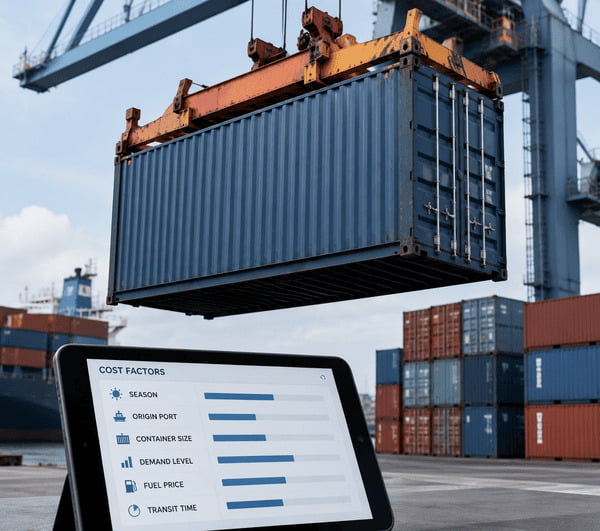
The cost to ship a container from China to New York depends on season, carrier, origin port, container size, routing, customs needs, and delivery service.1 I price the shipment by total scope, not only ocean freight, because the lowest base rate can become expensive after local charges.
I Break the Quote Into Real Cost Parts
A common question I get from first-time importers is, “How much is one 40HQ from China to New York?” I understand the question, but I cannot answer it well with one fixed number. The market moves by week.2 A Shanghai to New York rate can differ from Ningbo, Shenzhen, or Qingdao. A direct all-water service can also price differently from a service with transshipment.3 Peak season can change the space situation fast.4 A carrier with better schedule control may cost more, but it may reduce risk. I ask for cargo ready date, origin city, loading port, container type, final address, and delivery deadline before I quote.
| Cost factor | What I check | Why it changes the final price |
|---|---|---|
| Season | Slack season or peak season | Space and rates change with demand |
| Origin port | Ningbo, Shanghai, Shenzhen, Qingdao | Each port has different carrier options |
| Container size | 20GP or 40HQ | 40HQ is common but not always best |
| Service type | Port-to-port or door-to-door | Door service includes more cost items |
| Carrier choice | Premium or low-cost service | Reliability and space are not the same |
| Final destination | NY/NJ metro or inland city | Trucking and rail costs can be large |
I also check the factory location because inland China trucking can surprise people.5 If the supplier is located near major export ports such as Ningbo, Shanghai, Shenzhen, or Qingdao, cargo can usually be picked up and delivered to the port efficiently. However, factories located inland in China require longer domestic transportation, which may increase pickup and export drayage costs and potentially extend the overall transit time. I also check whether the shipment requires live loading, warehouse loading, or a special pickup appointment. In addition, I include origin pickup fees, terminal gate-in charges when applicable (as some terminals, such as Meishan Port in Ningbo or Zhoushan Port, may involve additional costs), and China export customs clearance in my quotation. These details may seem minor, but they directly affect the total shipping cost. When preparing a quote, I clearly identify which charges are fixed, which may vary with market conditions, and which depend on port operations, so importers can compare quotations on a true like-for-like basis.
How Can I Avoid Hidden Fees When Shipping to New York?
A low quote can create a high bill. I have seen importers choose the cheapest offer and pay more after arrival.
I avoid hidden fees by asking for an all-in quote that lists ocean freight, origin charges, U.S. destination charges, customs entry, duties if needed, chassis, trucking, and possible exception fees. I also separate predictable costs from costs triggered by exams, delays, or storage.
I Compare the First Quote Against the Final Bill
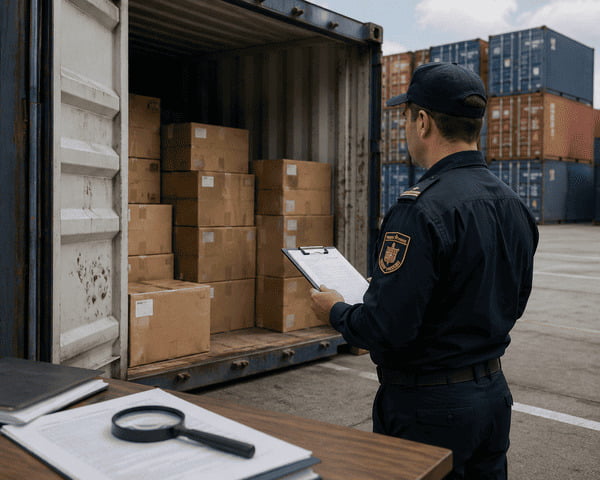
Here is a costly mistake I have seen businesses make when they only focus on the ocean freight rate. They compare two quotes side by side, and they pick the one with the lower ocean freight. But they do not ask if the quote includes destination terminal handling, delivery order, chassis, port congestion fee, customs entry, ISF filing, bond, duties, and door delivery. Then the container arrives at New York, and new charges start to appear. Some fees are real pass-through costs. Some fees were simply not shown at the start. Either way, the importer feels trapped because the cargo is already moving.
| Fee type | Why it happens | How I manage it |
|---|---|---|
| Chassis split | Chassis is not at the same location | I ask the trucker before delivery |
| Demurrage | Container stays too long at terminal | I plan customs and pickup early |
| Detention | Container returns late | I confirm unload time with consignee |
| Customs exam | CBP selects the container | I explain that this is not predictable |
| Port storage | Pickup is delayed after free time | I track arrival and release status |
| Trucking wait time | Driver waits at warehouse | I confirm dock rules and appointment |
I prefer a transparent one-bill quote for door-to-door shipments. That does not mean every possible problem disappears. Customs exam fees and storage caused by exams are hard to predict.6 But the quote should clearly show what is included and what is not included. I also tell importers to read the service scope line by line. “New York” can mean port only. It can mean CFS only. It can mean door delivery in New Jersey, Brooklyn, Long Island, Pennsylvania, or another inland point. Each scope has a different cost. At Dingshang Logistics, I try to make the price simple for the buyer, but I still explain the risk items because a clear quote is better than a pretty quote.
Should I Choose All-Water Service to New York or West Coast Plus Rail?
New York has more than one route from China. The wrong route can save a little money and create bigger timing risk.
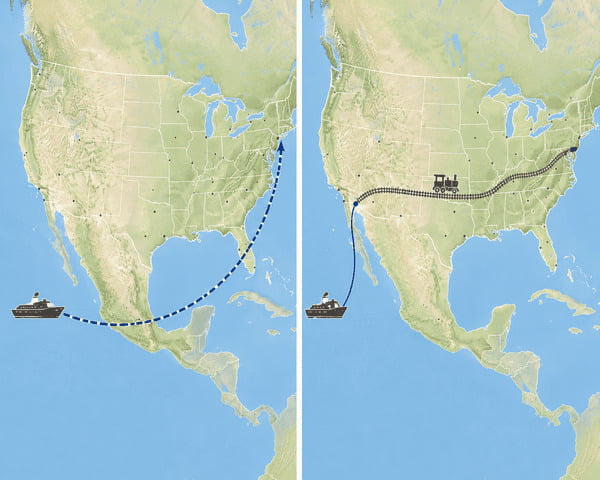
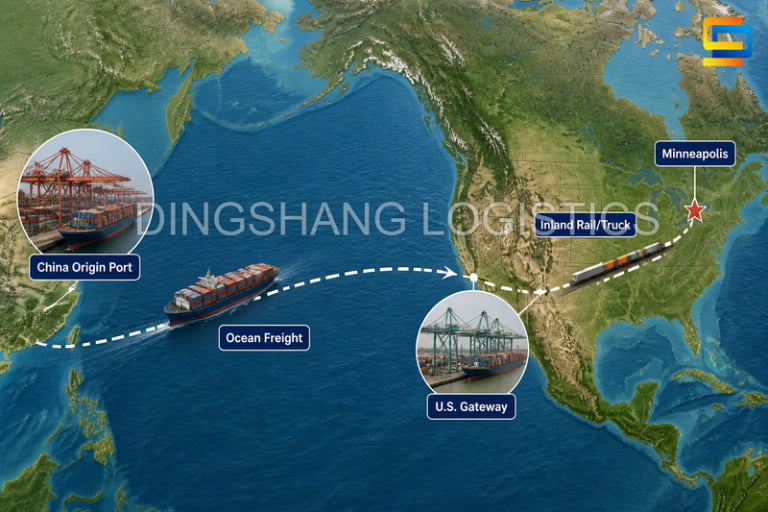
I choose between all-water service to New York and West Coast plus rail by looking at final destination, deadline, cost target, and reliability. All-water is often simpler for New York area delivery. West Coast plus rail can fit some inland moves, but it adds handoff risk.7
I Match the Route to the Real Delivery Point
When a client is shipping to New York, the first thing I ask them is about their final destination because the port is not always the final point. If the warehouse is in New Jersey, Queens, Brooklyn, or nearby Pennsylvania, an all-water service to the Port of New York and New Jersey often makes sense. The container stays on the vessel route and arrives closer to the final receiver. This can reduce rail handoffs.8 It can also make the customs and trucking plan cleaner. But all-water service can take longer than some West Coast routing.9
| Route option | Best fit | Main risk | Main benefit |
|---|---|---|---|
| All-water to NY/NJ | NY/NJ metro and East Coast | Longer ocean transit | Simple port-to-door chain |
| LA/Long Beach plus rail | Some inland U.S. points | Rail delay and handoffs | Faster in some lanes |
| Savannah or Norfolk alternative | Some Southeast or Mid-Atlantic points | Final trucking distance | May avoid NY/NJ congestion |
| Direct premium service | Time-sensitive cargo | Higher rate | Better schedule confidence |
I do not call one route “best” in every case. I have learned that the best route is the one that fits the business risk. If an importer needs stable delivery to a New Jersey warehouse, I may avoid extra rail movement. If the final destination is Chicago, Columbus, or another inland city, I may compare all-water to East Coast plus truck against West Coast IPI. If the cargo has a strict retail delivery window, I give more weight to reliability. If the cargo has a flexible schedule, I may give more weight to cost. I also check whether the sailing has blank sailing risk, port congestion risk, or known rail delays. The route decision is not only about transit days on paper. It is about how many places the container can get stuck.
Why Is the Last Mile After the Port of New York So Important?
Many problems start after the vessel arrives. I have seen smooth ocean shipping turn into delays at customs, terminal pickup, or delivery.
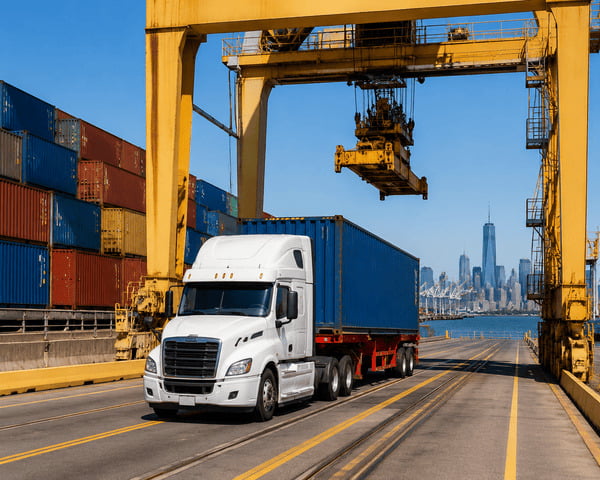
The last mile after the Port of New York is critical because customs release, terminal availability, chassis supply, trucking appointments, and warehouse receiving rules decide when the cargo actually reaches the buyer.10 A strong local network reduces demurrage, detention, and missed delivery windows.
I Treat Port Arrival as the Middle, Not the End
I do not relax just because a vessel has arrived at New York. In many shipments, the most sensitive period starts after arrival. The container needs customs release. The terminal needs to make it available. The trucker needs a valid pickup appointment. The chassis needs to be ready. The receiver needs the dock to be open. If the importer needs a live unload, the warehouse team must unload within the allowed time. If the receiver needs a drop container, the trucker needs equipment and return planning. These small steps decide whether the buyer pays extra charges.
| Last-mile step | What can go wrong | What I check early |
|---|---|---|
| Customs release | Missing data or exam | ISF, entry, invoice, packing list |
| Terminal pickup | No appointment or no availability | Vessel ETA and terminal status |
| Chassis use | Shortage or split location | Trucking plan and chassis source |
| Warehouse delivery | No dock time | Appointment rules and unload method |
| Empty return | Return location changes | Free time and return instruction |
I always want the customs broker, trucker, and importer to work from the same plan. If one party waits for another party, time is lost. New York and New Jersey can be busy, and local drayage is not something I treat as an afterthought.11 A low ocean rate cannot help much if the trucker cannot pull the container before free time ends. I also ask if the consignee can unload fast. If the receiver needs more time, I try to plan for drop delivery when possible. If the cargo needs a warehouse, I check whether transloading is better than direct delivery. For LCL cargo, I also check CFS availability and pickup rules. My goal is simple. I want the importer to get the cargo without surprise storage, surprise waiting time, or avoidable delay.
What Information Should I Prepare Before Asking for a Quote?
Many quote requests are missing key details. I can quote faster and more accurately when the shipment information is clear.
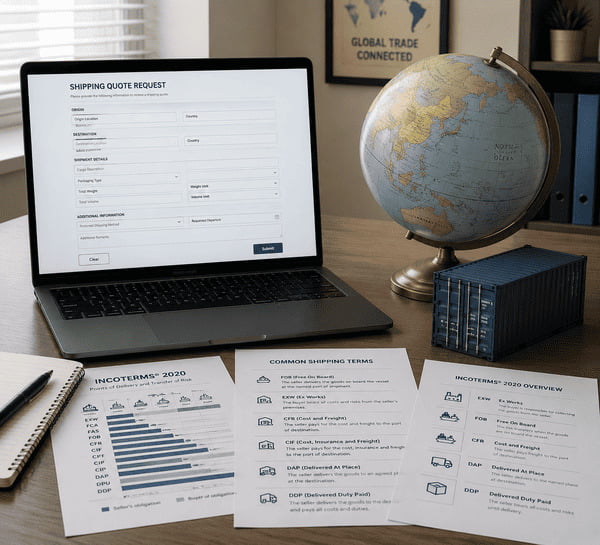
I prepare a good container shipping quote by collecting supplier location, cargo ready date, loading port, container size, cargo details, Incoterms, U.S. delivery address, customs documents, and delivery requirements. Clear information helps me reduce assumptions and avoid later cost changes.
I Ask for Details That Protect the Importer
I know many buyers want a fast number first. I also know that a fast number with too many assumptions can create problems later. So I ask direct questions. Where is the factory? Which port does the supplier usually use? Is the shipment FOB, EXW, or another term?12 Is it a 20GP, 40GP, or 40HQ? What is the cargo weight? Does the cargo need special handling? What is the final delivery address in the United States? Does the warehouse require an appointment? Can the warehouse unload a floor-loaded container? These questions are not paperwork. They protect the importer from bad planning.
| Information I request | Why I need it |
|---|---|
| Supplier city and address | I need to check pickup cost and best port |
| Cargo ready date | I need to match sailing and space |
| Container type | I need to choose the correct equipment |
| Gross weight | I need to avoid overweight trucking issues |
| Incoterms | I need to know who pays origin costs |
| Final delivery address | I need to quote real trucking cost |
| Customs documents | I need to prepare entry and reduce delay |
| Delivery rules | I need to plan live unload, drop, or warehouse |
I also ask about the buyer’s real priority. Some importers care most about stable arrival. Some care most about the lowest possible cost. Some care about avoiding cash flow surprises. Some need one contact who can handle ocean freight, customs, duties, and door delivery. I cannot design the right plan if I do not know the business pressure behind the shipment. In my daily work, I would rather spend ten extra minutes at the start than spend three days fixing a problem after arrival. Good quoting is not only pricing. It is risk control before the container leaves China.
Conclusion
I ship China to New York well when I control total cost, route choice, customs timing, and last-mile delivery before the container moves.
"Fathoming Shipping Costs: An Exploration", https://documents1.worldbank.org/curated/en/099436104042241280/pdf/IDU0c20d2ae90046304ca009ab508217e50747bd.pdf. UNCTAD's Review of Maritime Transport describes container freight rates as shaped by demand, deployed capacity, congestion, route conditions, and surcharges, supporting the article's multi-factor explanation of China-to-New York landed cost; the source is contextual and does not quote a specific China-to-New York rate. Evidence role: general_support; source type: research. Supports: A neutral maritime transport source should support that container shipping costs are influenced by demand, capacity, route structure, port conditions, equipment availability, and ancillary charges.. Scope note: Contextual support only; it supports the cost drivers rather than a lane-specific price. ↩
"SCFI - Shanghai Shipping Exchange", https://en.sse.net.cn/indices/scfinew.jsp. The Shanghai Shipping Exchange publishes the Shanghai Containerized Freight Index as a weekly measure of export container spot freight rates from Shanghai, supporting the statement that container freight markets are monitored on a week-to-week basis; the index does not prove that every individual carrier quotation changes every week. Evidence role: statistic; source type: institution. Supports: An official freight-rate index should show that container spot freight rates are measured and published weekly.. Scope note: The evidence supports weekly market measurement, not a guaranteed weekly change for every booking. ↩
"The impact of rising maritime transport costs on international trade", https://www.sciencedirect.com/science/article/pii/S2590198223002324. Maritime economics literature on liner shipping networks treats direct services and hub-and-spoke transshipment services as distinct network designs with different handling, time, and cost implications, supporting the claim that pricing may differ by service structure; such literature does not determine the exact premium or discount for a given carrier quotation. Evidence role: mechanism; source type: paper. Supports: A maritime economics paper should explain that transshipment affects network design, handling, time, and cost in liner shipping.. Scope note: Contextual support; it establishes why pricing can differ, not the amount of difference. ↩
"Commissioner Dye Releases Final Report for Fact Finding No. 29", https://www.fmc.gov/articles/commissioner-dye-releases-final-report-for-fact-finding-no-29/. Federal Maritime Commission materials on ocean shipping disruption and capacity constraints identify demand surges and limited vessel or equipment capacity as causes of booking difficulty, supporting the article's point that peak season can alter space availability quickly; the source addresses market mechanisms rather than a specific sailing from China to New York. Evidence role: mechanism; source type: government. Supports: A public regulatory or maritime source should explain that seasonal cargo demand can tighten container vessel space and affect bookings.. Scope note: Contextual support; it explains the capacity mechanism but not a particular shipment. ↩
"Improving Logistics Costs for Transportation and Trade Facilitation", https://openknowledge.worldbank.org/entities/publication/64d8f36e-b768-585a-8dd6-1a07d8c67491. World Bank logistics research identifies domestic transport, port access, and inland logistics performance as important contributors to trade cost and transit time, supporting the article's warning that inland China trucking can affect export planning; the source is general and does not evaluate a specific Chinese factory-to-port move. Evidence role: general_support; source type: institution. Supports: An international logistics source should support that inland transport distance, infrastructure, and logistics performance affect export costs and lead times.. Scope note: General support only; it does not quantify trucking cost for a named Chinese origin. ↩
"Cargo Examination | U.S. Customs and Border Protection", https://www.cbp.gov/border-security/ports-entry/cargo-security/examination. U.S. Customs and Border Protection describes import cargo examinations as part of risk-based enforcement and admissibility review, supporting the article's point that exams can delay release and create downstream costs; CBP guidance does not itself set private terminal storage or exam-related service charges. Evidence role: mechanism; source type: government. Supports: A CBP source should explain that cargo may be selected for examination through risk-based targeting and that exams can delay release.. Scope note: Supports the exam and delay mechanism, but not the amount of private storage or exam fees. ↩
"Intermodal Transportation Database", https://www.bts.gov/browse-statistical-products-and-data/statistical-products/intermodal-transportation-database. U.S. Department of Transportation materials on intermodal freight describe container movements as coordinated transfers among ships, trucks, and railroads, supporting the article's statement that West Coast plus rail routing adds handoffs; the source explains structural complexity but does not measure the probability of delay on a specific lane. Evidence role: mechanism; source type: government. Supports: A transportation source should explain that intermodal container moves involve transfers among vessel, truck, and rail and require coordination across modes.. Scope note: Mechanistic support only; it does not quantify added delay risk for a particular shipment. ↩
"THE CHALLENGE OF THE FUTURE - Maritime Administration", https://www.maritime.dot.gov/sites/marad.dot.gov/files/docs/resources/3936/ncnvreport-part2.pdf. Port of New York and New Jersey materials describe direct all-water container services connecting Asia with the port, supporting the statement that an East Coast discharge can avoid some rail transfers for nearby receivers; this does not prove that all-water is always faster or cheaper. Evidence role: mechanism; source type: institution. Supports: A port authority or maritime source should show that all-water Asia services deliver containers directly to East Coast ports, whereas West Coast routing may require inland rail movement.. Scope note: Contextual route support; operational outcomes still depend on the carrier service and final destination. ↩
"Transit Times from Shanghai and North American Routing ...", https://porteconomicsmanagement.org/pemp/contents/part12/port-of-savannah-logistics-cluster/transit-times-shanghai-north-american-routing-options/. U.S. maritime and transportation analyses distinguish all-water services to East Coast ports from West Coast landbridge services and note different transit-time profiles, supporting the article's claim that all-water routing can be slower in some comparisons; actual transit time remains carrier- and schedule-specific. Evidence role: general_support; source type: government. Supports: A transportation or maritime source should support that all-water East Coast routes and West Coast landbridge routes can differ materially in transit time.. Scope note: General route comparison; it does not establish the transit time for a named sailing. ↩
"Truck Information | Port Authority of New York and New Jersey", https://www.panynj.gov/port/en/shipping/truck.html. Federal Maritime Commission demurrage and detention guidance discusses cargo availability, terminal access, and pickup conditions as factors affecting container retrieval and charges, supporting the article's emphasis on post-arrival coordination; the guidance does not address every warehouse-specific receiving rule. Evidence role: mechanism; source type: government. Supports: A regulatory source should support that cargo availability, terminal access, and pickup constraints are central to container delivery timing and demurrage or detention outcomes.. Scope note: Supports port and pickup mechanisms, but only indirectly supports warehouse receiving constraints. ↩
"Facts and Figures Information | Port Authority of New York ...", https://www.panynj.gov/port/en/our-port/facts-and-figures.html. Port Authority of New York and New Jersey annual cargo statistics report multimillion-TEU container volumes for the port, supporting the article's characterization of the gateway as busy and operationally significant; volume statistics alone do not prove that a particular drayage move will be delayed. Evidence role: statistic; source type: institution. Supports: A port authority or transportation statistics source should document the Port of New York and New Jersey's container volumes and role as a major U.S. gateway.. Scope note: Statistical support for port busyness, not direct evidence of delay on an individual shipment. ↩
"Know Your Incoterms", https://www.trade.gov/know-your-incoterms. The International Chamber of Commerce's Incoterms rules define EXW and FOB as trade terms that allocate delivery, cost, and risk responsibilities between seller and buyer, supporting the article's use of Incoterms as a necessary quoting input; the rules define obligations but do not set freight prices. Evidence role: definition; source type: institution. Supports: An authoritative Incoterms source should define EXW and FOB and explain how they allocate seller and buyer responsibilities.. Scope note: Direct support for responsibility allocation, not for any specific quote amount. ↩
Leave a Comment