
LCL Shipping from China to USA: Costs, Process, and Key Considerations
LCL shipping from China to USA can look like an easy way to move a small order, but an attractive ocean rate may hide several origin, destination, and delivery charges. If importers compare only the headline price, the final invoice can be disappointing. I recommend evaluating the full shipping chain before selecting LCL.
LCL shipping from China to USA works by combining cargo from several importers inside one container. A forwarder collects or receives the goods, consolidates them in China, arranges export and ocean transport, and deconsolidates them in the United States. Customs clearance and final delivery can then be added according to the agreed service scope.
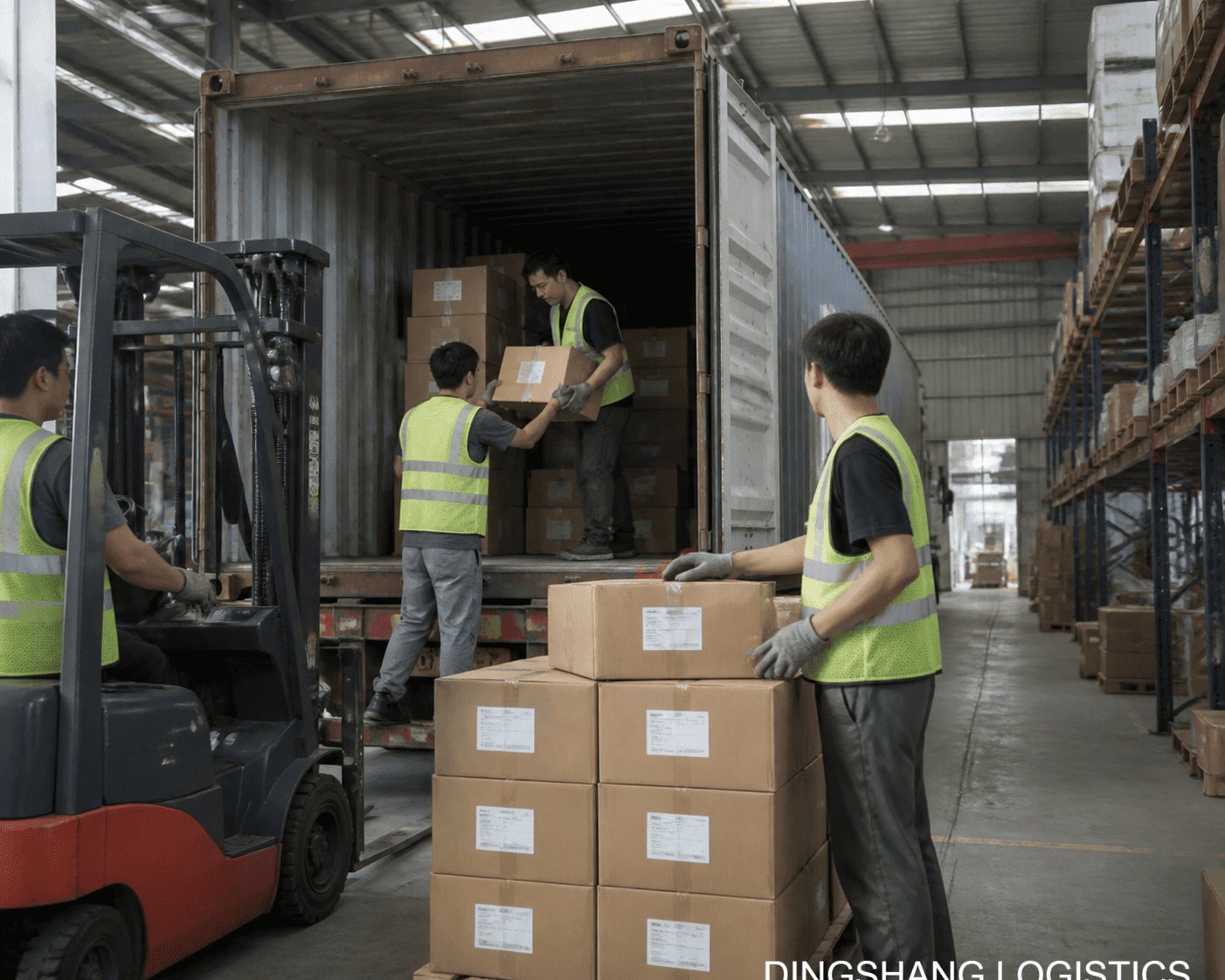
The process sounds simple, but each handoff affects cost, timing, and cargo risk. In the LCL inquiries we handle, I usually start with cargo details and delivery requirements rather than price. That information shows whether LCL is suitable and whether the quotations are genuinely comparable.
How Does LCL Shipping From China to USA Work Step by Step?
Small shipments pass through more handling points than many first-time importers expect. If one party does not clearly define pickup, warehouse handling, customs responsibility, or delivery, delays and unexpected charges can follow. I therefore map the complete route before discussing whether an offer is competitive.
LCL cargo normally moves through seven stages: pickup or delivery to a Chinese warehouse, export consolidation, customs processing, container loading, ocean transport, US deconsolidation, and import clearance. The shipment may then be collected at the designated facility or delivered to the importer’s final address under a door-to-door shipping arrangement.
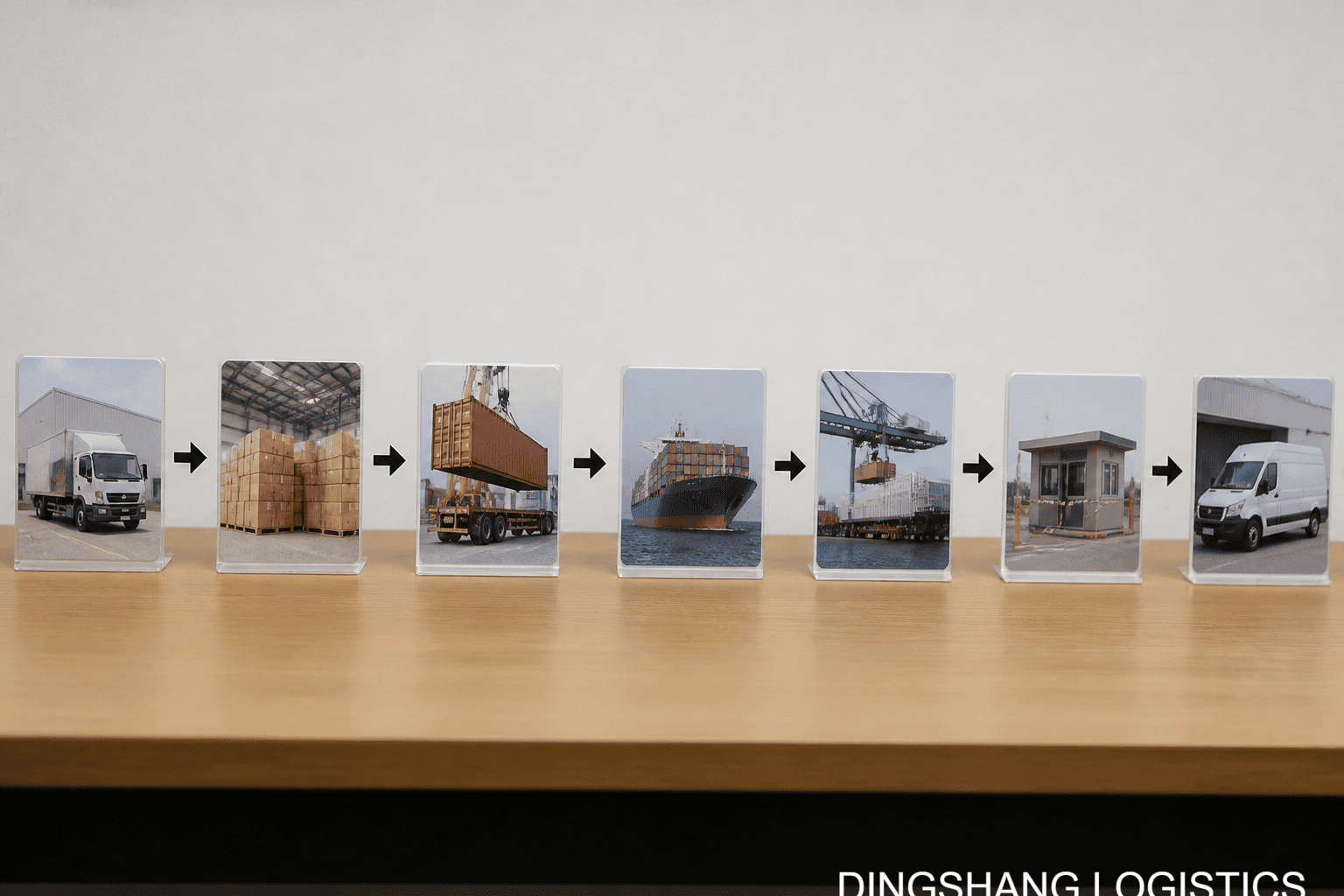
1. Cargo pickup or warehouse delivery in China
The Chinese supplier can deliver the cargo to the consolidator’s warehouse, or the forwarder can arrange pickup from the factory. The correct choice depends on the supplier’s location, cargo volume, pickup access, and agreed Incoterm.
I ask importers to confirm who is responsible for:
- Factory pickup
- Loading at the supplier’s premises
- Export packaging
- Chinese export documentation
- Delivery into the consolidation warehouse
- Export customs declaration
An EXW purchase often requires the buyer’s forwarder to control more origin tasks. An FOB arrangement may place more responsibility on the supplier, although buyers should still verify the exact named port and scope. For a detailed comparison, see FOB vs. EXW: Which Is Better for US Importers?.
2. Consolidation at the origin warehouse
The warehouse receives, measures, weighs, and checks the packages. Workers then combine compatible shipments in a shared container.
This measurement stage matters because many LCL charges are based on chargeable volume or weight. A common freight calculation uses a weight-or-measure basis, often comparing cubic meters with metric weight. However, the exact ratio, minimum billing unit, and tariff depend on the forwarder, route, and charge concerned.
The warehouse may also identify problems such as:
- Weak cartons or damaged pallets
- Incorrect package counts
- Dimensions that differ from the booking
- Missing shipping marks
- Restricted or undeclared commodities
- Cargo that cannot safely share a container
3. Export handling and ocean transport
After consolidation, the container goes through export procedures and is loaded onto the booked vessel. The carrier transports the shared container to the selected US port.
Importers should remember that port-to-port transit is only one part of total lead time. Warehouse receiving, consolidation schedules, documentation, vessel availability, port conditions, and deconsolidation can all affect the final date. See our guide to sea freight transit time from China to the USA for more information.
I avoid promising a fixed transit time without a defined origin, destination, sailing schedule, and delivery scope. A route from Ningbo to Los Angeles has a different operating pattern from a shipment moving through New York and then inland.
4. Deconsolidation and customs clearance in the USA
At the destination, the container moves to an authorized facility for unloading. The operator separates each importer’s cargo and releases it after the required procedures and payments have been completed.
A licensed customs broker may handle the import entry. The importer should verify:
- Importer-of-record requirements
- Product classification
- Declared customs value
- Applicable duties and taxes
- Bond requirements
- Agency-specific permits or inspections
- Documentation required for cargo release
The US Customs and Border Protection (CBP) import guidance provides official information about importing into the United States. For shipment-specific requirements, importers should work with a qualified customs broker.
I can help importers understand the logistics workflow, but product classification and regulatory compliance should be confirmed with a qualified customs broker or other appropriate professional.
5. Collection or final delivery
After release, the importer may collect the cargo or arrange delivery to a commercial address or warehouse. A door-to-door quote should state whether it includes customs brokerage, duties, port or facility charges, appointment fees, liftgate service, limited-access delivery, and other shipment-dependent items.
I treat “door to door” as a scope that must be defined in writing, not as a guarantee that every possible cost is automatically included.
Is LCL Shipping From China to USA Right for Your Small Shipment?
Many buyers ask me whether their order is “small enough” for LCL. That question focuses only on size and can lead to the wrong decision. A compact shipment may still be unsuitable because of its commodity, packaging, density, delivery deadline, destination, or handling sensitivity.
LCL shipping from China to USA is generally worth evaluating when the cargo does not justify a full container and can tolerate consolidation-related handling and schedule variability. Buyers should assess dimensions, gross weight, package count, commodity, route, packaging strength, delivery needs, and total cost before selecting it.
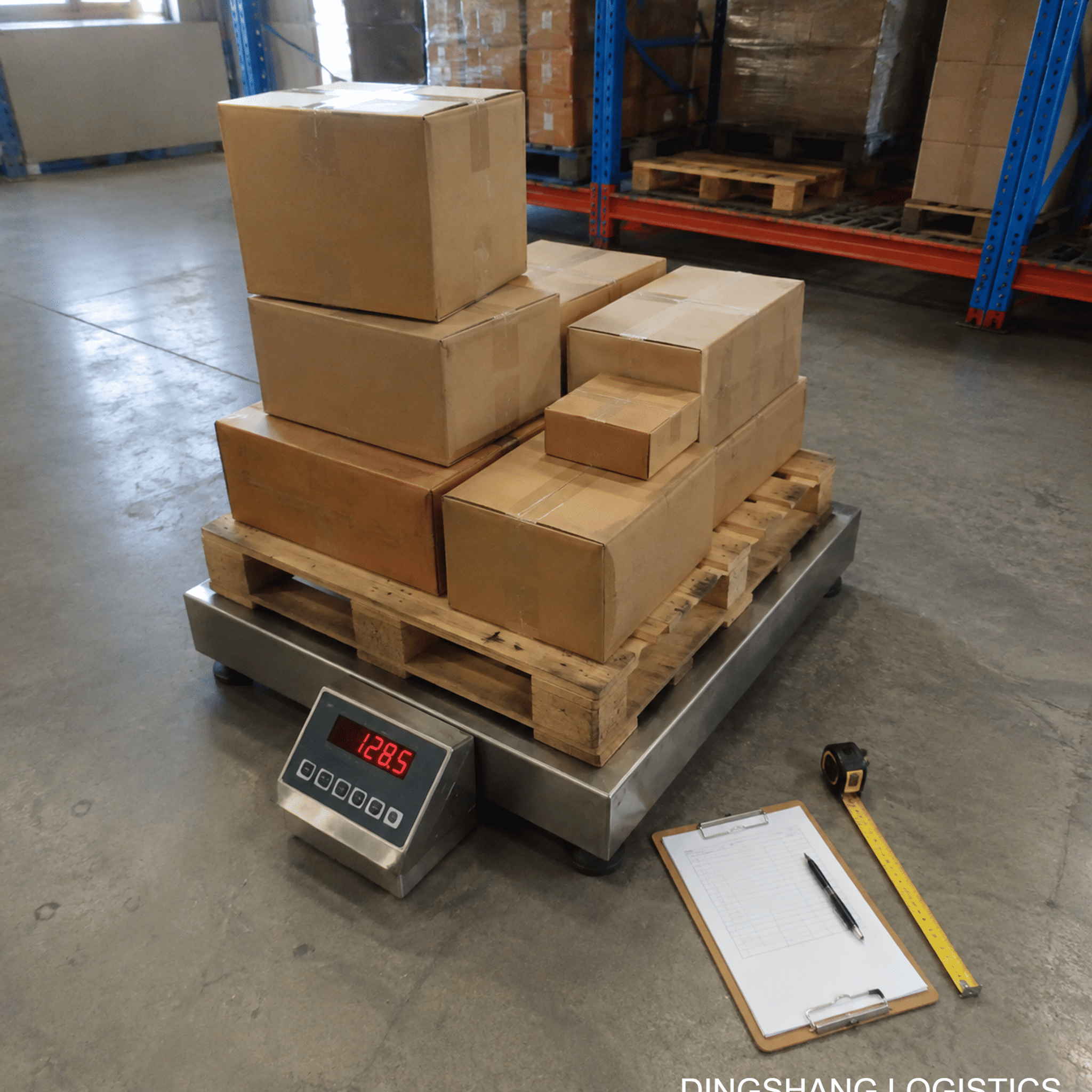
I evaluate more than cubic meters
Complete cargo data allows a forwarder to assess operational suitability and prepare a meaningful quote. I normally ask for:
- Commodity description
- Number and type of packages
- Dimensions of every package
- Gross weight
- Total volume
- Chinese pickup address or loading port
- US port or complete delivery address
- Cargo-ready date
- Purchase Incoterm
- Special handling or regulatory information
Importers should disclose batteries, liquids, powders, chemicals, magnets, branded products, food-contact goods, medical products, and other controlled or sensitive items. A vague description such as “accessories” does not give a forwarder enough information to assess the shipment.
Packaging and handling tolerance matter
LCL cargo usually receives more physical handling than cargo shipped in a dedicated full container. Warehouse teams may move the goods during receiving, consolidation, container loading, unloading, separation, and final dispatch.
Strong export packaging is therefore important. Depending on the product, buyers may consider:
- Double-wall export cartons
- Secure palletization
- Corner and edge protection
- Moisture-resistant wrapping
- Clear shipping marks
- Internal cushioning
- Stackability instructions
- Crating for fragile or high-value equipment
Wood packaging may be subject to specific treatment and marking requirements. Importers should verify current requirements with their supplier, forwarder, and customs professional. The USDA Animal and Plant Health Inspection Service (APHIS) provides official guidance on wood packaging material entering the United States.
When should buyers compare LCL with FCL?
There is no universal volume at which FCL becomes cheaper. The break-even point changes with route pricing, equipment availability, origin charges, destination fees, cargo weight, and inland delivery.
| Decision factor | LCL | FCL |
|---|---|---|
| Container space | Shared with other importers | Dedicated to one shipper |
| Typical handling | More consolidation handoffs | Usually fewer cargo handoffs |
| Pricing basis | Often volume or weight based | Usually container based |
| Schedule control | Depends on consolidation | Tied more directly to container booking |
| Cargo isolation | Lower | Higher |
| Best use case | Smaller compatible shipments | Larger, sensitive, or time-critical loads |
| Cost comparison | Requires all-in charge review | Requires all-in container review |
For a more detailed comparison, see FCL vs. LCL shipping. Dingshang Logistics focuses on 20GP and 40HQ full-container services from China to the USA, including port-to-port and customized ocean-rail door-to-door solutions. If a shipment is approaching practical FCL territory, I can help a buyer compare that option rather than assume LCL remains the better choice.
What Information Is Needed for an Accurate LCL Shipping Quote?
An incomplete request creates an incomplete quotation. If a buyer submits only “three pallets from China to the USA,” the forwarder must make assumptions. Those assumptions can change the chargeable volume, route, pickup cost, destination handling, and final-mile delivery price.
For an accurate LCL quote, buyers should provide the exact commodity, package count, dimensions, gross weight, origin location, destination address, cargo-ready date, Incoterm, and requested service scope. They should also identify sensitive goods and clarify whether they need port service, customs support, or final delivery.
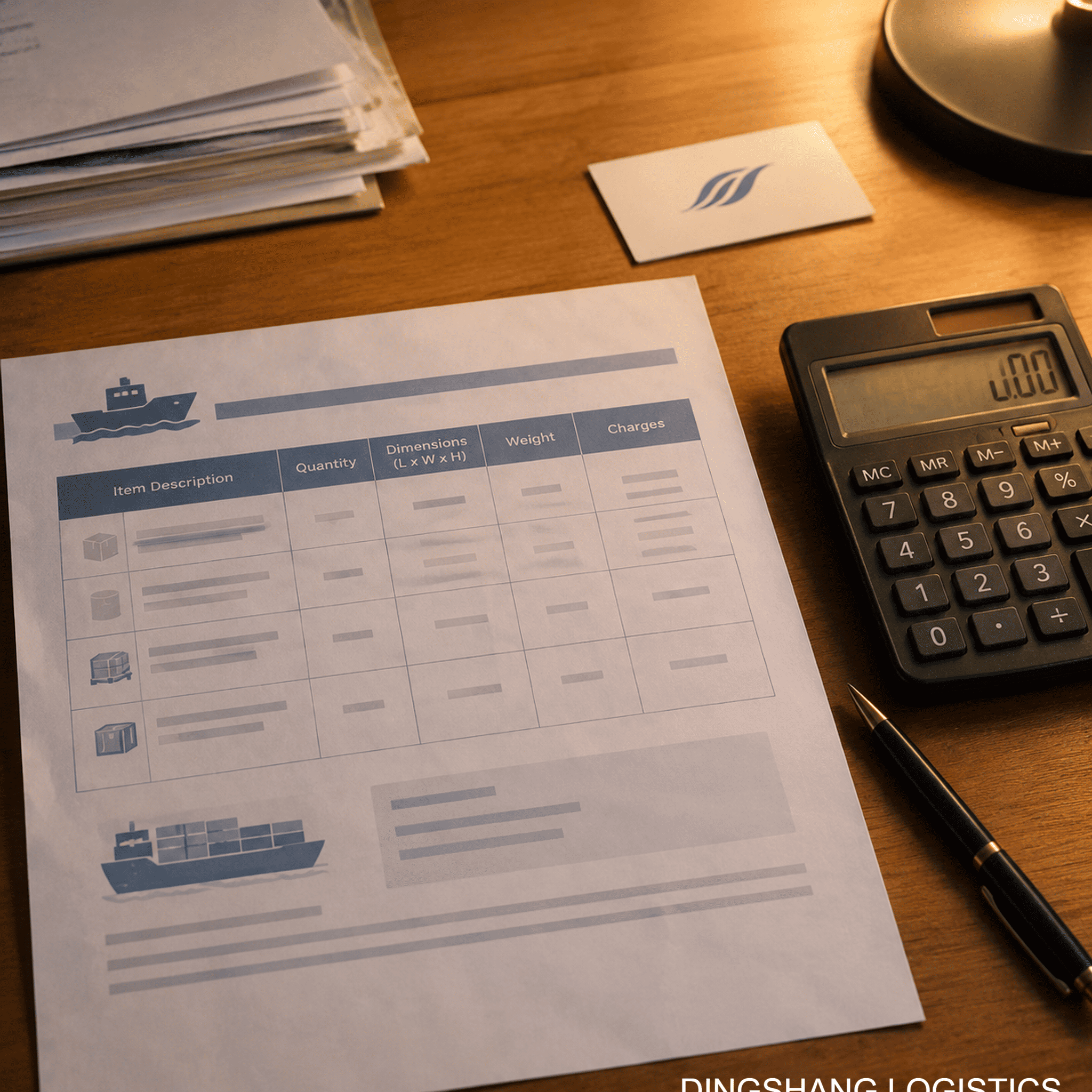
Why package-level dimensions matter
Suppliers sometimes give buyers a total volume without showing how it was calculated. That figure may change after palletization or export packing. A shipment can also occupy more effective space if cartons are irregular, non-stackable, or oversized.
I prefer a packing list that shows:
| Required field | Example format | Why it matters |
|---|---|---|
| Commodity | Metal display stands | Supports routing and compliance review |
| Package count | 8 pallets | Defines handling units |
| Dimensions | 120 × 100 × 110 cm each | Supports volume calculation |
| Gross weight | Weight per pallet and total | Supports chargeable-weight review |
| Origin | Factory address in Ningbo | Defines pickup and origin costs |
| Destination | Full US ZIP code and address type | Defines inland routing |
| Ready date | Confirmed production date | Supports schedule planning |
| Incoterm | EXW Ningbo | Clarifies responsibility |
These fields are illustrative rather than a quotation. Actual requirements can vary by shipment and provider.
The destination must be specific
“Ship to the USA” is not enough. Los Angeles, Houston, New York, Chicago, and a rural final address represent very different routes and cost structures.
The delivery address should include:
- Street address and ZIP code
- Commercial or residential status
- Warehouse, office, construction site, or other location type
- Loading dock or forklift availability
- Appointment requirements
- Liftgate requirements
- Access limitations
- Receiving hours
In the inquiries we handle, final delivery details often reveal costs that were invisible in the initial ocean-rate comparison. A complete destination also allows the forwarder to consider whether a port, rail ramp, warehouse, or trucking route is practical.
The requested scope must be written down
I recommend asking every bidder to quote against the same service scope. For example:
- Factory to US port
- Chinese warehouse to US port
- Port to port
- Factory to US warehouse
- Door to door, excluding duties
- Door to door, with duties shown separately
This discipline prevents an origin-to-port offer from being compared with a more comprehensive door-to-door service. For shipments requiring final delivery, review the available door-to-door shipping service and confirm the exact scope in writing.
Why Is the Lowest LCL Ocean Rate Not Always the Lowest Total Cost?
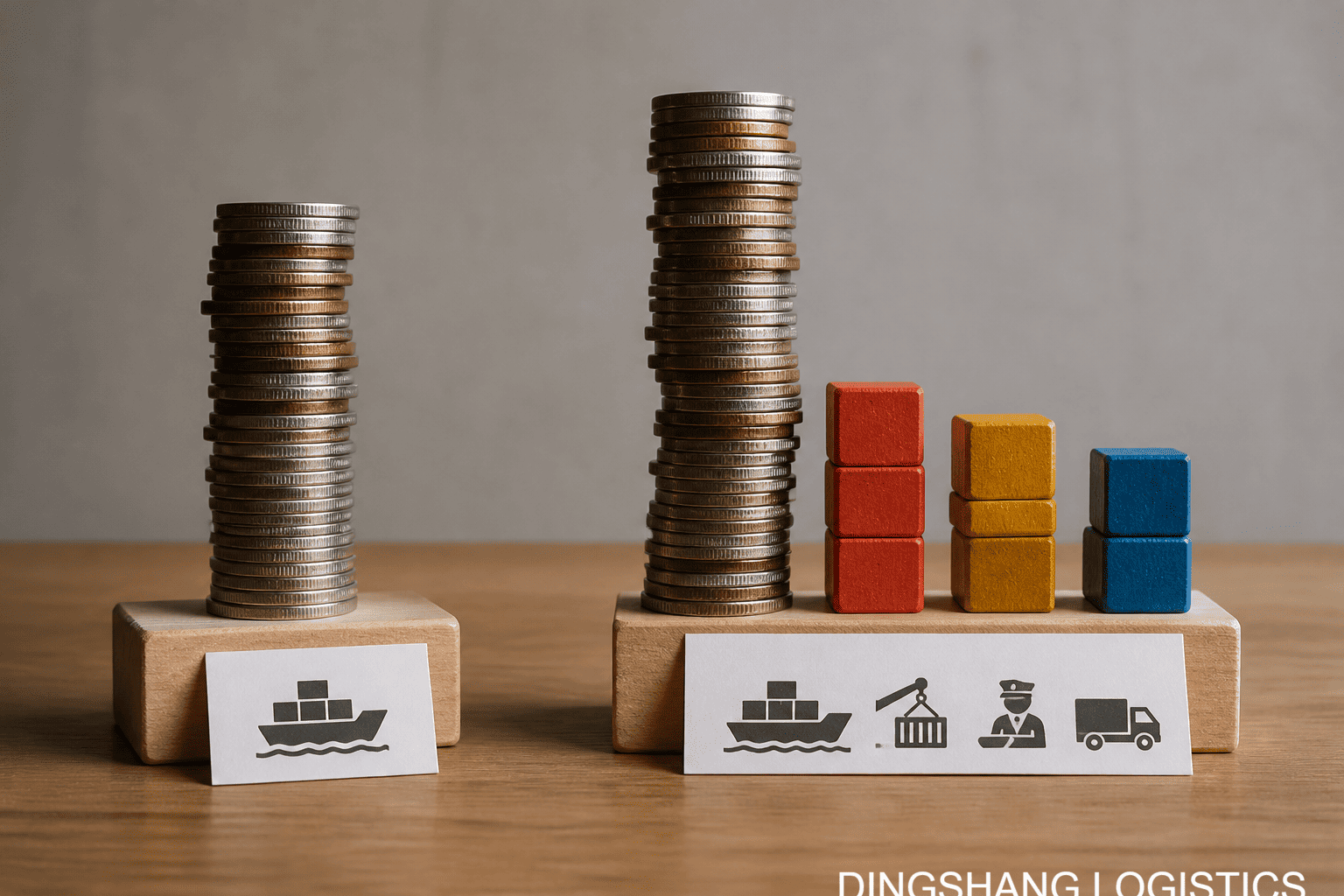
A low headline rate attracts attention, especially when a buyer is importing for the first time. However, ocean freight may represent only one portion of the logistics bill. If the quote excludes local handling, deconsolidation, customs services, or delivery, the apparent saving can disappear.
The lowest ocean rate does not always produce the lowest landed logistics cost because LCL shipments can include origin handling, documentation, consolidation, destination facility charges, customs-related services, and inland transportation. Buyers should compare clearly scoped, end-to-end quotations rather than isolated ocean freight figures.
Common cost categories
The exact charge names and amounts vary, but an LCL cost review may include the following categories:
| Stage | Possible cost categories |
|---|---|
| China origin | Pickup, receiving, measurement, export handling, documentation |
| Ocean transport | Base freight and carrier-related adjustments |
| US destination | Deconsolidation, facility handling, documentation, release |
| Customs | Brokerage, bond, examination-related services |
| Government | Duties, taxes, or agency fees where applicable |
| Inland delivery | Trucking, appointment, liftgate, limited-access service |
| Risk management | Cargo insurance and protective packaging |
Not every shipment will have every charge. Likewise, a quote may bundle several items together. The important point is that the forwarder should state what is included, excluded, estimated, or payable directly to another party.
I compare quotations line by line
I use a simple process when reviewing offers:
- Confirm the same cargo data. Every provider must quote the same dimensions, weight, commodity, and package count.
- Confirm the same route. The origin facility and US destination must match.
- Confirm the same service scope. Port-to-port and door-to-door offers cannot be treated as equivalents.
- Review exclusions. Customs duties, inspections, storage, and special delivery services may remain outside the quote.
- Check validity. Freight conditions can change, so the quotation should show its validity period.
- Review payment and release terms. The importer should know when payment is required and what conditions apply before release.
- Ask about insurance. Carrier liability and cargo insurance are not the same protection.
Dingshang Logistics uses clearly scoped quotations for its full-container services and aims to provide a one-time billing structure without hidden additions within the agreed scope. Shipment-dependent government charges, inspections, storage caused by exceptional events, or customer-requested changes still need to be identified and handled according to the written terms.
For an additional reference on container freight pricing, see What Are You Really Paying to Ship a Container From China? and 20GP Container Cost From China to USA.
What Risks and Timing Issues Should LCL Importers Consider?
Buyers often focus on the vessel departure and arrival dates. However, an LCL shipment depends on warehouse receiving, consolidation, document readiness, customs procedures, and deconsolidation. If a production launch or customer order depends on a narrow date, this variability can become a commercial risk.
LCL importers should allow for consolidation and deconsolidation time, additional cargo handling, customs holds, port congestion, and final-delivery coordination. They should use realistic delivery windows, strong packaging, accurate documents, and suitable insurance rather than treating an estimated ocean schedule as a guaranteed arrival date.

Consolidation can add variability
A shared container must bring together multiple compatible shipments. If cargo misses a warehouse cutoff or documentation is incomplete, it may not join the planned consolidation. Destination separation also takes time after the container arrives.
Importers can reduce avoidable delays by:
- Booking after the factory confirms a realistic ready date
- Sending documents before the relevant cutoff
- Verifying marks and package counts
- Avoiding last-minute cargo-description changes
- Confirming the importer and broker arrangements early
- Keeping the supplier, forwarder, and customs broker aligned
Shared containers create handling considerations
An LCL shipment shares equipment with unrelated cargo. A professional consolidator should follow compatibility and stowage procedures, but buyers should still package their goods for export handling.
Fragile, high-value, unusually shaped, or moisture-sensitive goods may require extra protection. Some products may be better suited to dedicated equipment even when they do not fill an entire container.
Insurance needs a clear review
Cargo insurance can cover specified physical loss or damage under the policy terms. It does not automatically protect against every delay, commercial loss, packaging defect, or customs problem.
I recommend that buyers review:
- Insured value
- Covered route
- Deductible
- Exclusions
- Packaging conditions
- Claims documents
- Time limits for reporting damage
Dingshang Logistics can arrange transport insurance for eligible door-to-door full-container shipments. Buyers should review the actual policy or certificate instead of relying only on a general statement that a shipment is “insured.” For more information, see the available insurance services.
Frequently Asked Questions
Is LCL always cheaper than FCL for a small shipment?
No. LCL may cost less when cargo uses limited space, but origin handling, destination charges, customs services, and delivery can change the result. Buyers should request comparable all-in quotations for LCL and FCL when the shipment is large, dense, sensitive, or close to filling practical container space.
How is LCL freight calculated?
Forwarders often calculate LCL freight using chargeable volume or weight, subject to the applicable tariff and minimum charge. Package dimensions, gross weight, palletization, and non-stackable cargo can affect the result. Buyers should ask the forwarder to explain the measurement rule used in the quotation.
How long does LCL shipping from China to USA take?
There is no reliable universal timeframe. The schedule depends on the Chinese origin, US destination, consolidation cutoff, vessel routing, port conditions, customs clearance, deconsolidation, and final delivery. Buyers should request a shipment-specific estimate and allow contingency time for important inventory.
Does door-to-door LCL shipping include customs duties?
Not automatically. Some quotes exclude duties and taxes, while others may estimate or arrange payment under a defined service model. Buyers should ask whether brokerage, bond, duties, exams, destination handling, and final delivery are included. A qualified customs broker should verify classification and duty treatment.
What documents are commonly needed for an LCL shipment?
Common documents may include a commercial invoice, packing list, bill of lading, and customs entry documents. Certain products can require licenses, certificates, or agency filings. Document requirements depend on the commodity and transaction, so importers should verify them with their forwarder and customs broker. The US Customs and Border Protection import guidance is a useful official starting point.
Conclusion
LCL (Less than Container Load) shipping from China to the US involves consolidating cargo from multiple importers into a single container; however, a smaller shipment volume does not necessarily guarantee a lower total cost. Before selecting a service, it is advisable to comprehensively consider factors such as cargo type, packaging, dimensions, weight, shipping routes, transit time requirements, destination port charges, customs clearance scope, and inland delivery.
Dingshang Logistics specializes in LCL and FCL (Full Container Load) shipping from China to the US, offering port-to-port services as well as customized door-to-door solutions combining sea and rail transport. You are welcome to contact James via www.chinauslogistics.com to obtain and compare clear shipping solutions tailored to your next shipment.


Leave a Comment