
Best Freight Forwarders from China to USA: Five Types Compared
Choosing among freight forwarders from China to the USA can expose importers to incomplete quotations, unexpected destination charges, and unsuitable shipping routes. A low initial rate can quickly become an expensive mistake. I recommend comparing forwarders by shipment fit, route knowledge, quote transparency, and risk control rather than price alone.
The best freight forwarder depends on the importer’s shipment size, route, customs needs, and preferred level of support. Five useful options are large global forwarders, China-based ocean freight specialists, US-based customs and logistics providers, digital freight platforms, and niche FCL route specialists. No single category is best for every shipment.

I have handled China-to-USA ocean freight inquiries, quotations, and shipment communications from our base in Ningbo. In my experience, importers make better decisions when they first identify their operational needs and then compare the total delivered logistics cost, not just the headline ocean rate.
1. Are Large Global Freight Forwarders from China to the USA the Best Choice?
Large global forwarders look like the safest default because they have established networks and recognizable names. However, their size can create higher costs or less flexible communication for smaller importers. I suggest examining whether their network provides practical value for your specific route and shipment volume.
Large global forwarders are often suitable for multinational importers with high shipment volumes, complex supply chains, and operations across several countries. They may provide broad coverage, centralized reporting, and standardized procedures. However, small and mid-sized US importers should compare account support, pricing structure, route expertise, and responsiveness before choosing one.
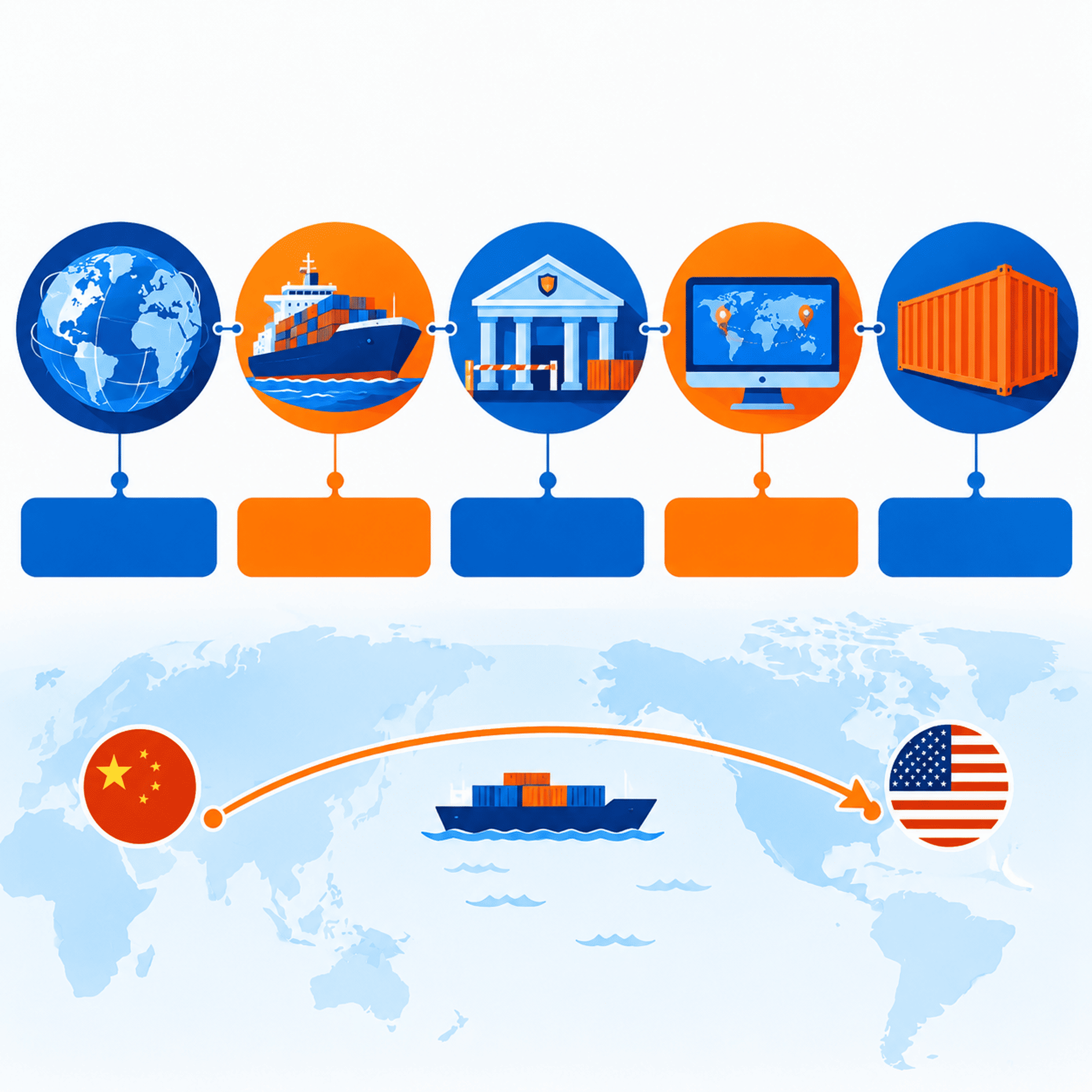
When a global network adds value
A large international forwarder can be a good fit when an importer needs to coordinate shipments from multiple countries. The company may also need a centralized logistics dashboard, uniform internal reporting, or contract rates across several trade lanes.
These providers commonly support:
- Multicountry supply-chain coordination
- High annual shipment volumes
- Purchase-order management
- Warehousing and distribution
- Customs services through affiliated or partner entities
- Centralized shipment visibility
- Formal account-management systems
However, I do not assume that a bigger network automatically produces better service on one trade lane. If a US company mainly imports full containers from Ningbo or Shanghai, a specialist with focused China-to-USA experience may understand the route just as well—or better.
Questions I would ask a global forwarder
I recommend asking direct operational questions instead of relying on brand recognition:
- Who will manage the shipment after booking?
- Will I have a dedicated contact in China and the United States?
- Does the rate include origin and destination local charges?
- Which ocean carriers and service strings are being considered?
- What happens if the container is rolled to a later sailing?
- How are demurrage, detention, and storage handled?
- Does the company regularly manage my exact origin-destination pair?
A large forwarder may have extensive global coverage but limited flexibility for a smaller account. Response time can also depend on office structure, shipment volume, and account priority.
| Evaluation area | Potential advantage | Point to verify |
|---|---|---|
| Network coverage | Offices or partners in many countries | Strength on the specific China-USA route |
| Technology | Centralized tracking and reporting | Actual data accuracy and update frequency |
| Capacity | Access to multiple carriers | Space commitment during peak periods |
| Account support | Formal service processes | Dedicated contact for smaller importers |
| Pricing | Contracted volume rates | Local charges and possible add-ons |
I view large global forwarders as one strong category, not an automatic first-place winner. Their value depends on how much of their global infrastructure an importer will actually use.
2. When Should You Choose a China-Based Ocean Freight Specialist?
US importers sometimes worry that working directly with a China-based forwarder will make communication harder. That concern is reasonable, but dismissing local specialists can remove a useful option. A capable China-based team can coordinate closely with factories and resolve origin issues before they delay a shipment.
A China-based ocean freight specialist is often suitable when an importer needs close supplier coordination, competitive FCL rates, and direct knowledge of ports such as Ningbo, Shanghai, Shenzhen, and Qingdao. Buyers should still verify quote scope, US destination support, business credentials, insurance options, and the forwarder’s operating partners.

Why origin-side coordination matters
Many preventable shipping problems begin before a container reaches the port. The supplier may provide an inaccurate cargo-ready date. The commercial documents may contain inconsistent information. The container-loading plan may not match the actual cargo volume. A customs cutoff or terminal cutoff may also be misunderstood.
From the inquiries I receive, I often see buyers focus first on the vessel departure date. I encourage them to examine the complete origin schedule instead:
- Supplier cargo-ready date
- Empty-container pickup plan
- Factory loading date
- Customs declaration timing
- Documentation cutoff
- Terminal gate-in cutoff
- Estimated vessel departure
- Transshipment details, if applicable
A China-based specialist can communicate within the supplier’s time zone and may work directly with the factory’s shipping staff. That proximity does not guarantee perfect execution, but it can shorten communication loops.
How I would evaluate a China-based specialist
I would ask for a written quotation that identifies:
- Origin port and destination port
- Container type, such as 20GP or 40HQ
- Ocean carrier or proposed carrier options
- Estimated schedule and transit information
- Origin charges
- Basic ocean freight
- Destination charges
- Documentation fees
- Rail or trucking charges, when applicable
- Quote validity
- Free-time terms, if provided
- Exclusions and possible pass-through expenses
I would also verify business registration information and ask who manages the US side. If a forwarder discusses customs brokerage, cargo insurance, or regulated transportation services, I would confirm which qualified provider performs each service. Buyers should treat licenses, certificates, bonds, and insurance documents as materials to verify rather than marketing claims.1
Dingshang Logistics fits within this category. From Ningbo, we focus on FCL ocean freight from China to the United States, including 20GP and 40HQ containers. We support routes from major Chinese ports to primary US ports and selected inland IPI destinations. We position our pricing as competitive and transparent, not universally the cheapest.
3. Are US-Based Customs and Logistics Providers Suitable Freight Forwarders from China to the USA?
A US-based provider can simplify communication after cargo arrives, especially when customs entry and inland transportation require close oversight. However, weak origin coordination can still create delays. I advise importers to determine whether the provider controls the China side directly or relies on an overseas agent.
US-based customs and logistics providers can be a good choice for importers that prioritize customs support, domestic delivery coordination, and communication during US business hours. Buyers should verify the provider’s China origin network, ocean freight experience, customs-broker relationship, pricing scope, and ability to manage factory-to-port activities.
Where a US-based provider can be strong
The arrival side involves several parties and deadlines. Depending on the service scope, the process may include:
- Arrival notice processing
- Import security and customs documentation
- Customs entry by a licensed customs broker
- Duty and tax payment arrangements
- Port or rail-terminal release
- Drayage appointment scheduling
- Container delivery and unloading
- Empty-container return
A US-based logistics provider may communicate efficiently with the importer’s accounting, warehouse, and purchasing teams. The company may also have established relationships with customs brokers, truckers, transload facilities, and regional warehouses.
However, I would not assume that every US logistics company is equally capable of managing China origin operations. Some providers maintain strong offices or exclusive agents in China. Others pass the booking through several intermediaries. Additional layers can make it harder to identify who is responsible when a schedule changes.
Verify customs-related responsibilities
A freight forwarder and a licensed customs broker perform different functions, although one organization may coordinate both through qualified entities. I recommend asking:
- Who will file the customs entry?
- Who will file the Importer Security Filing when required?2
- Who reviews the commercial invoice and packing list?
- Who confirms the Harmonized Tariff Schedule classification?
- Who determines duty exposure?
- Who communicates an examination notice?
- Who pays port, rail, or examination charges initially?
The importer of record remains responsible for critical customs information.3 I do not recommend relying on a freight quote as customs or legal advice. Product classification, admissibility, antidumping or countervailing duties, agency requirements, and valuation questions should be reviewed by a qualified US customs broker or trade professional.
A US-based provider can be highly useful when destination support is the buyer’s main concern. However, importers should make sure that strong destination service is matched by reliable China origin execution.
4. Are Digital Freight Platforms Among the Best Freight Forwarders from China to the USA?
Digital freight platforms promise fast quotations, online booking, and convenient tracking. Those tools can save time, but a smooth interface cannot remove port congestion, customs inspections, or carrier schedule changes. I encourage buyers to assess the actual operating network behind the platform as carefully as its software.
Digital freight platforms are useful for importers who value online quotation tools, document storage, tracking, and standardized workflows. Their suitability depends on human support, quote completeness, route coverage, and the companies that physically handle the shipment. Importers should not treat a fast online price as a guaranteed final logistics cost.
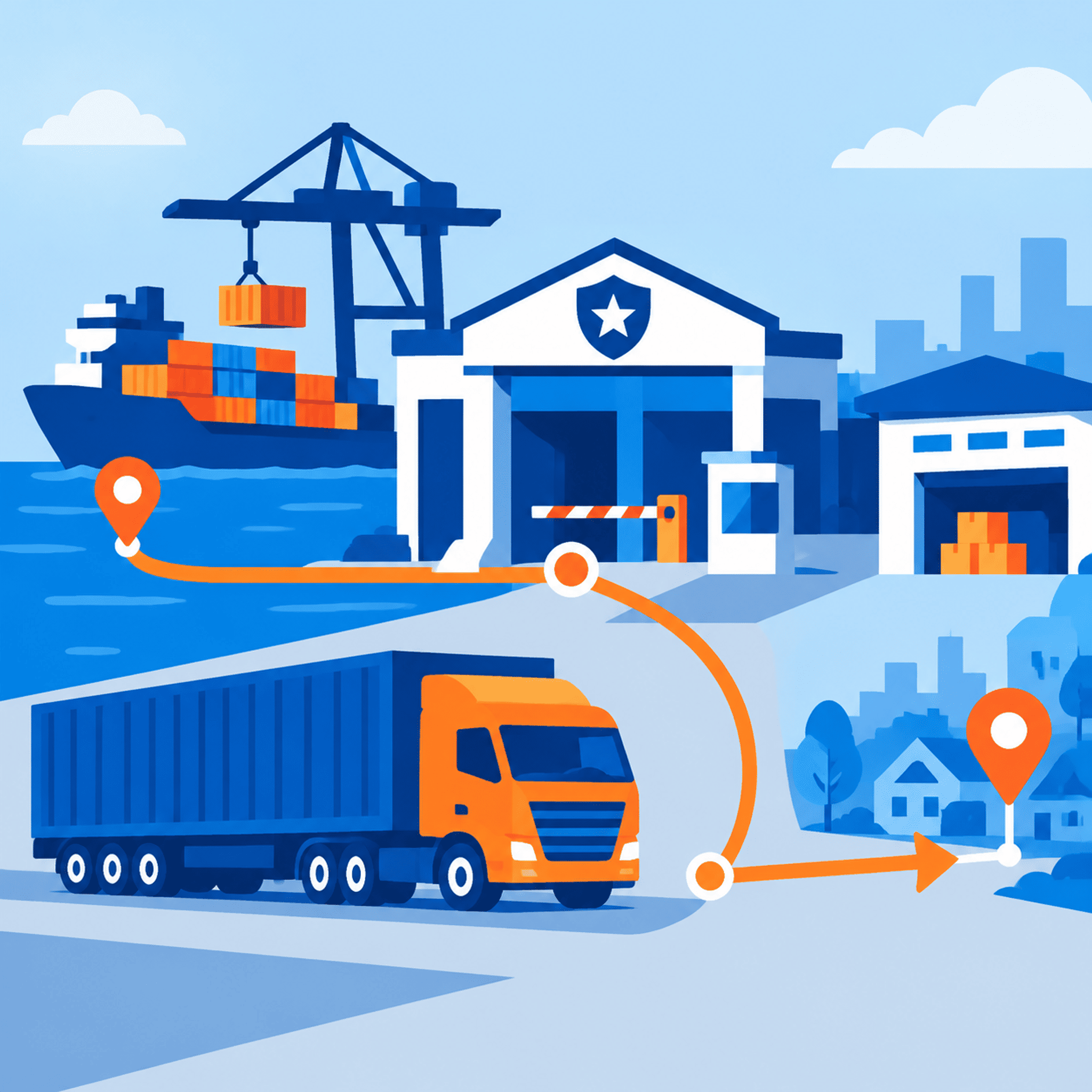
Technology is useful, but execution still matters
A digital platform can make several tasks easier. It may centralize shipping documents, display milestones, and provide automatic status notifications. These features are helpful when an importer manages several shipments at once.
Still, the platform usually depends on ocean carriers, terminals, customs brokers, trucking companies, rail providers, warehouses, and overseas agents. The quality of these relationships affects the shipment more than the appearance of the dashboard.
I would compare platform providers using the following criteria:
| Platform feature | Buyer benefit | Risk to investigate |
|---|---|---|
| Instant quote | Faster initial comparison | Missing local or accessorial charges |
| Online booking | Convenient confirmation | Limited ability to change special instructions |
| Automated tracking | Easier milestone monitoring | Carrier data may be delayed or incomplete |
| Document portal | Central file storage | Human review may still be necessary |
| Online payment | Simplified accounting | Dispute and adjustment procedures |
| Standard support tickets | Traceable communication | Slow escalation during urgent events |
Watch for oversimplified pricing
Instant quotes often depend on standard assumptions. The rate may change when the platform receives the actual cargo details, address, container weight, equipment requirement, or delivery conditions.
A US delivery quote can be especially sensitive to:
- Delivery distance from the port or rail ramp
- Chassis availability and usage
- Fuel surcharges
- Residential or restricted access
- Driver waiting time
- Pre-pull requirements
- Storage
- Container detention
- Warehouse unloading time
- Overweight permits or equipment
I once reviewed an inquiry in which the buyer focused on a low ocean rate while overlooking the destination assumptions. The apparent savings became much less meaningful after local charges were added. That experience reinforced my view that software should improve transparency, not replace careful quote review.
A digital freight platform can be among the best options for a buyer with standardized cargo and predictable routes. Importers with unusual products, tight delivery windows, or complex inland requirements may need more direct human coordination.
5. When Are Niche FCL Route Specialists the Best Freight Forwarders from China to the USA?
Importers with repeat full-container shipments often need route knowledge more than global coverage. A general provider may offer many services but lack depth on a specific lane. I find that a focused FCL specialist can add value when it understands the ports, carrier options, inland rail routes, and destination constraints involved.
A niche FCL route specialist is often best for importers who choose FCL instead of LCL for repeat 20GP or 40HQ shipments between China and the United States. The strongest providers offer route-specific support, clear quotations, dependable communication, and practical carrier options. Buyers should confirm coverage, exclusions, cargo suitability, and destination capabilities before booking.
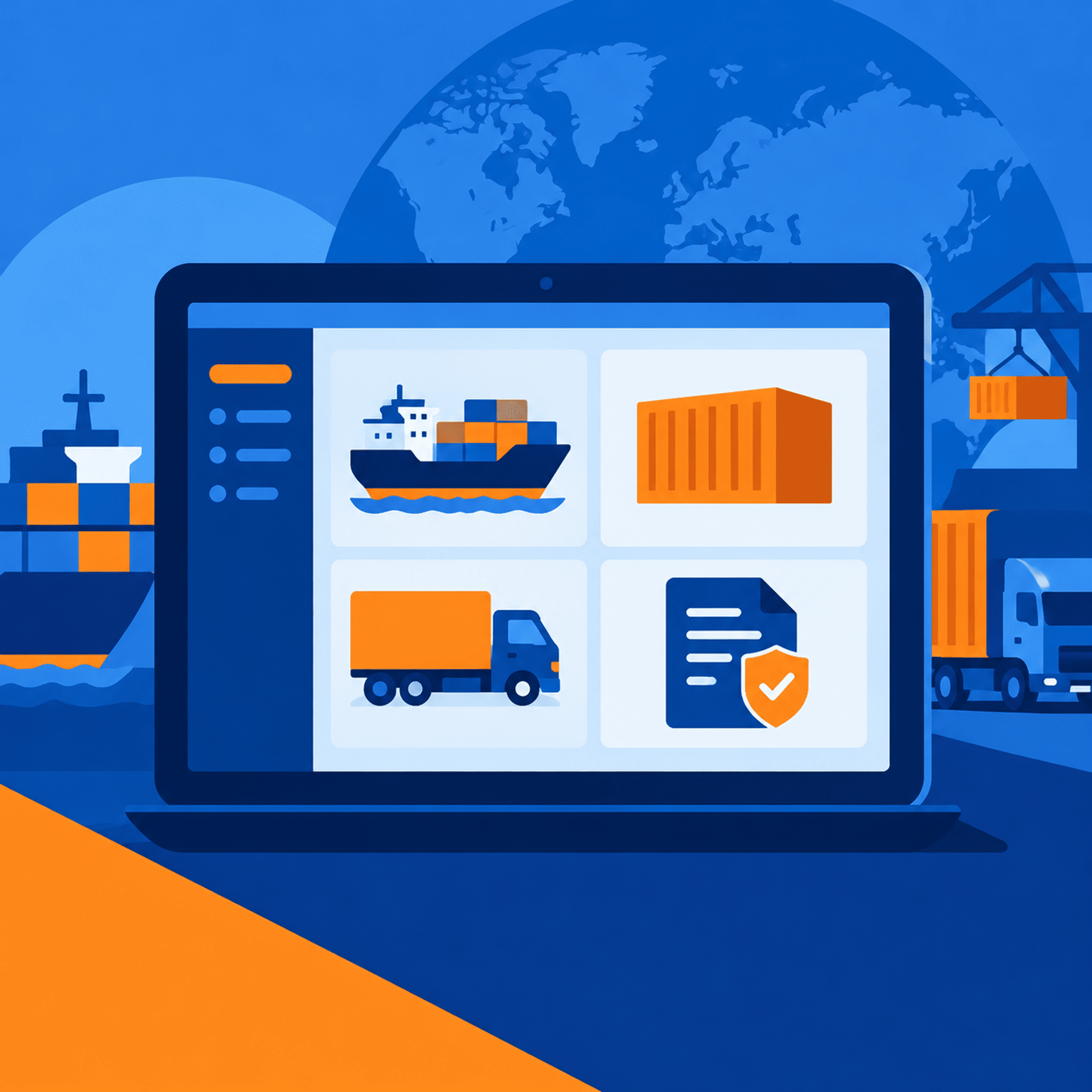
Route fit matters more than service count
A forwarder does not need to offer every form of transportation to be useful. In fact, a narrower scope can make evaluation easier. Dingshang Logistics focuses on China-to-USA ocean freight rather than air freight, express parcels, or unrelated global routes.
Our common Chinese origin ports include:
- Ningbo
- Shanghai
- Shenzhen
- Qingdao
Common US destinations include:
- Los Angeles
- Tacoma
- New York
- Boston
- Miami
- Houston
We can also discuss ocean-rail movements to inland IPI points such as Chicago, Dallas, Memphis, Kansas City, Cleveland, Atlanta, Louisville, Salt Lake City, Detroit, Charlotte, Nashville, St. Louis, and Minneapolis, subject to route availability and shipment requirements.
How I compare routing options
I do not compare routes by transit time alone. I consider several connected factors:
- Origin location: A supplier near Ningbo may not benefit from trucking cargo to Shenzhen for a slightly lower ocean rate.
- Sailing frequency: A lower rate has little value if the sailing does not match the factory’s cargo-ready date.
- Transshipment risk: A direct service can reduce handling points, although availability and cost vary.
- Destination congestion: A port’s current operating conditions can affect the practical delivery schedule.
- Inland destination: An ocean-plus-rail route may be more suitable for Chicago than port discharge followed by long-distance trucking.
- Container availability: Equipment conditions can influence the actual booking plan.
- Total cost: Origin, ocean, destination, rail, trucking, and possible accessorial charges all matter.
What transparent pricing should show
I prefer a written, itemized quotation or a clearly defined all-in scope. Our goal at Dingshang is to provide a clear one-time quote based on the shipment information available. However, no responsible forwarder should conceal genuine variable costs or promise that every possible event is included.
The quote should distinguish between:
- Included charges
- Excluded services
- Charges based on assumptions
- Government duties and taxes
- Customs examination costs
- Demurrage and detention
- Storage caused by delayed pickup or clearance
- Special handling requirements
- Changes requested after booking
Door-to-door shipping can combine ocean freight, customs coordination, duties and taxes, rail or truck transfer, and final delivery. I keep that option concise because its suitability depends on the product, importer status, delivery location, and customs requirements. Importers should obtain professional customs guidance for product-specific decisions.
How Should You Compare Freight Forwarder Quotes?
A freight quotation can look simple while leaving important costs undefined. The cheapest headline rate may exclude charges that another provider includes. I recommend placing every quote into the same comparison format before deciding which freight forwarder from China to the USA offers the best overall value.
Importers should compare freight quotes by matching the route, container type, validity period, origin charges, ocean freight, destination fees, customs scope, inland transportation, and exclusions. A reliable comparison uses the projected total logistics cost under the same assumptions rather than selecting the lowest ocean freight line item.
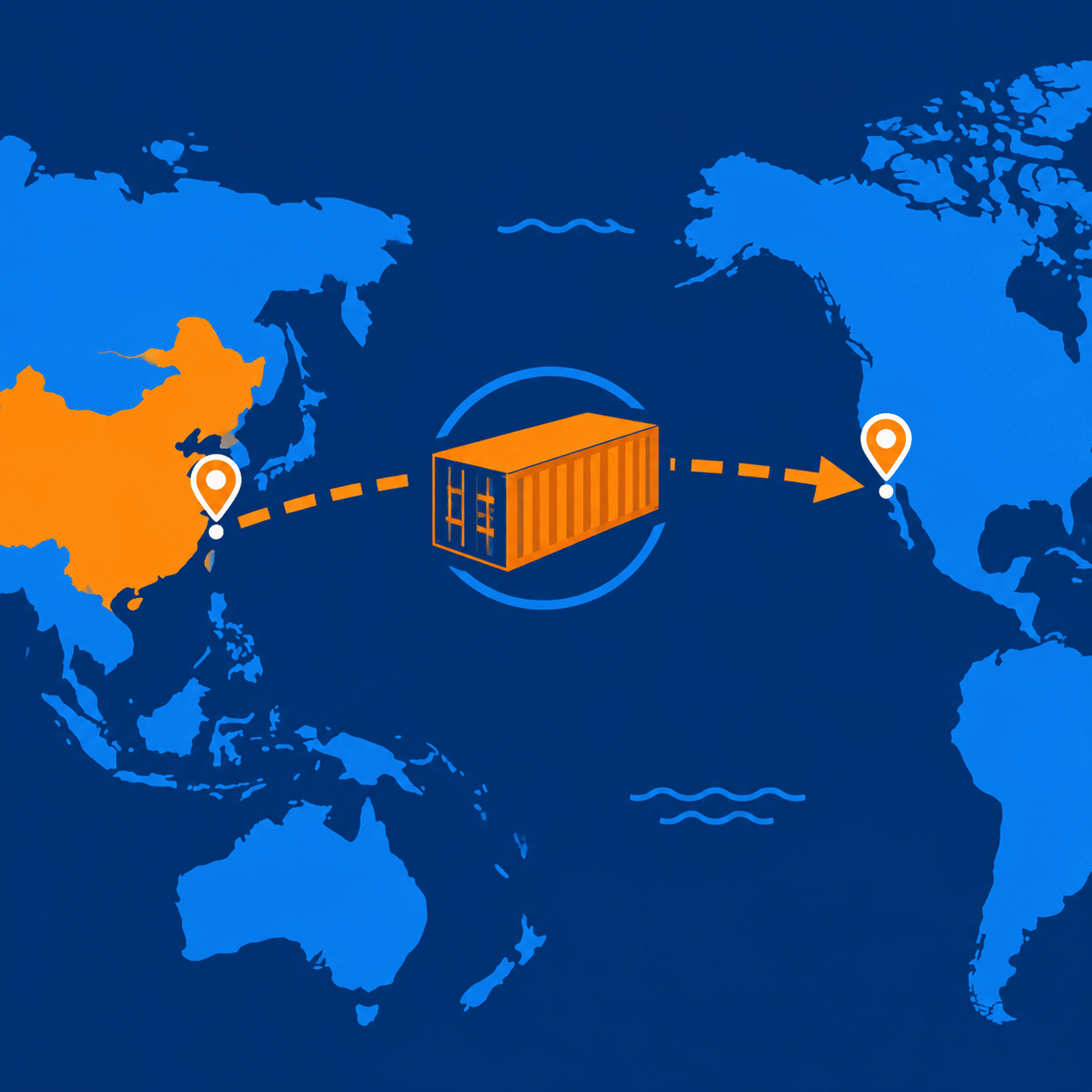
Use a quote comparison checklist
I recommend creating a table for each proposed shipment:
| Quote element | Forwarder A | Forwarder B | Forwarder C |
|---|---|---|---|
| China origin charges | |||
| Ocean freight | |||
| Documentation fees | |||
| US destination charges | |||
| Customs brokerage | |||
| Estimated duties and taxes | |||
| Rail or trucking | |||
| Chassis or fuel charges | |||
| Insurance | |||
| Known exclusions | |||
| Quote validity |
The comparison should also use the same Incoterm. An FOB quotation cannot be compared fairly with an EXW quotation unless the buyer adds factory pickup and export-side costs.4 Likewise, port-to-port and door-to-door prices cover different responsibilities.
Provide accurate shipment information
A forwarder cannot prepare a reliable quote from vague details. I ask buyers to provide:
- Supplier city and pickup address, if needed
- Port of loading preference
- US port or final delivery ZIP code
- Incoterm
- Commodity description
- Container size
- Estimated gross weight
- Cargo-ready date
- Number of containers
- Importer-of-record status
- Special handling or regulatory concerns
Accurate information does not eliminate every variable. It does make later adjustments less likely. I also suggest asking the forwarder to confirm the quotation in writing and explain any abbreviations or assumptions before the booking is approved.
Frequently Asked Questions
How do I choose the best freight forwarder from China to the USA?
I recommend choosing based on route experience, shipment size, quote transparency, communication, destination support, and risk controls. I would request comparable written quotes and verify the provider’s credentials and operating partners. The best choice should match your specific China origin, US destination, container type, and service scope.
Is the cheapest freight forwarder always the best choice?
No. I often see low quotes that exclude destination fees, trucking, rail costs, chassis charges, or other expenses. A cheaper initial rate can produce a higher final bill. I suggest comparing the total expected logistics cost, quote assumptions, schedule quality, communication, and exclusions before booking.
What should a China-to-USA ocean freight quote include?
I expect a clear quote to state the route, container type, ocean freight, origin and destination charges, documentation fees, validity period, and exclusions. When applicable, it should also address customs brokerage, duties, taxes, rail, trucking, insurance, chassis use, and potential accessorial charges.
Should I choose a China-based or US-based freight forwarder?
I would choose according to where the shipment needs the most support. A China-based forwarder may provide closer supplier and origin-port coordination. A US-based provider may offer stronger destination and customs communication. Either can work well if it has reliable partners and clear responsibility on both sides.
Can a freight forwarder handle port-to-port and door-to-door shipping?
Yes, many forwarders can arrange both service types. Port-to-port service generally covers the ocean movement between named ports. Door-to-door service may add pickup, customs coordination, duties and taxes, rail or trucking, and final delivery. I recommend confirming the exact scope and all exclusions in writing.
Conclusion
The best freight forwarders from China to the USA are not defined by one universal ranking. I recommend choosing the provider type that fits your FCL volume, origin port, US destination, communication needs, and tolerance for shipping risk. Transparent quotations and route knowledge usually matter more than the lowest headline price.
If you import 20GP or 40HQ containers from China, I invite you to contact James at Dingshang Logistics through our China-to-USA shipping contact page to discuss a competitive, transparent port-to-port or customized ocean and rail shipping quotation.
References
Federal Maritime Commission, [Licensing and Certification](https://www.fmc.gov/licensing-and-certification/). Official FMC information with a directory link for checking applicable ocean transportation intermediary licensing and registration status. ↩
U.S. Customs and Border Protection, [Import Security Filing (ISF) — When to Submit to CBP](https://www.help.cbp.gov/s/article/Article-1868?language=en_US). ↩
U.S. Customs and Border Protection, [Tips for New Importers and Exporters](https://www.help.cbp.gov/s/article/Article-1894?language=en_US). ↩
International Chamber of Commerce, [Incoterms® Rules](https://iccwbo.org/business-solutions/incoterms-rules/). ↩


Leave a Comment