
Quick Answer
Under Incoterms® 2020, DDP shipping from China to USA makes the seller responsible for delivery to a named U.S. destination, import clearance, duties, applicable taxes, and transport risk until delivery. Goods are normally delivered on the arriving vehicle, ready for unloading. DDP prices vary by product, tariff classification, shipping method, and address; there is no universal per-kilogram rate. In October 2026, formal U.S. entries generally incur a 0.3464% Merchandise Processing Fee, subject to limits. Before booking, confirm who legally acts as importer of record (IOR).
Key Takeaways
- The seller pays; U.S. customs law still applies. DDP allocates costs under a sale contract but does not override federal importer-of-record requirements.
- A low freight rate is not a DDP price. Duties, brokerage, customs bonds, terminal charges, inland trucking, and delivery conditions need to be accounted for.
- There is no universal 2026 DDP rate per kilogram or CBM. Product classification and customs value can change the result even for identical cargo dimensions.
- Insurance and unloading are not automatically included. DDP normally places unloading on the buyer; the rule does not obligate the seller to buy cargo insurance for the buyer.
- Verify the entry, not just the invoice. Ask who will be named as importer of record and how duties will be assessed and paid.
A buyer ordering machinery parts from Ningbo may receive an attractive “DDP Los Angeles warehouse” offer. Before choosing it over an itemized quote, the buyer should ask whose importer number appears on the customs entry, whether additional duties apply, and who bears examination costs. This guide uses current U.S. rules and a clearly labeled budgeting scenario—not invented market rates.
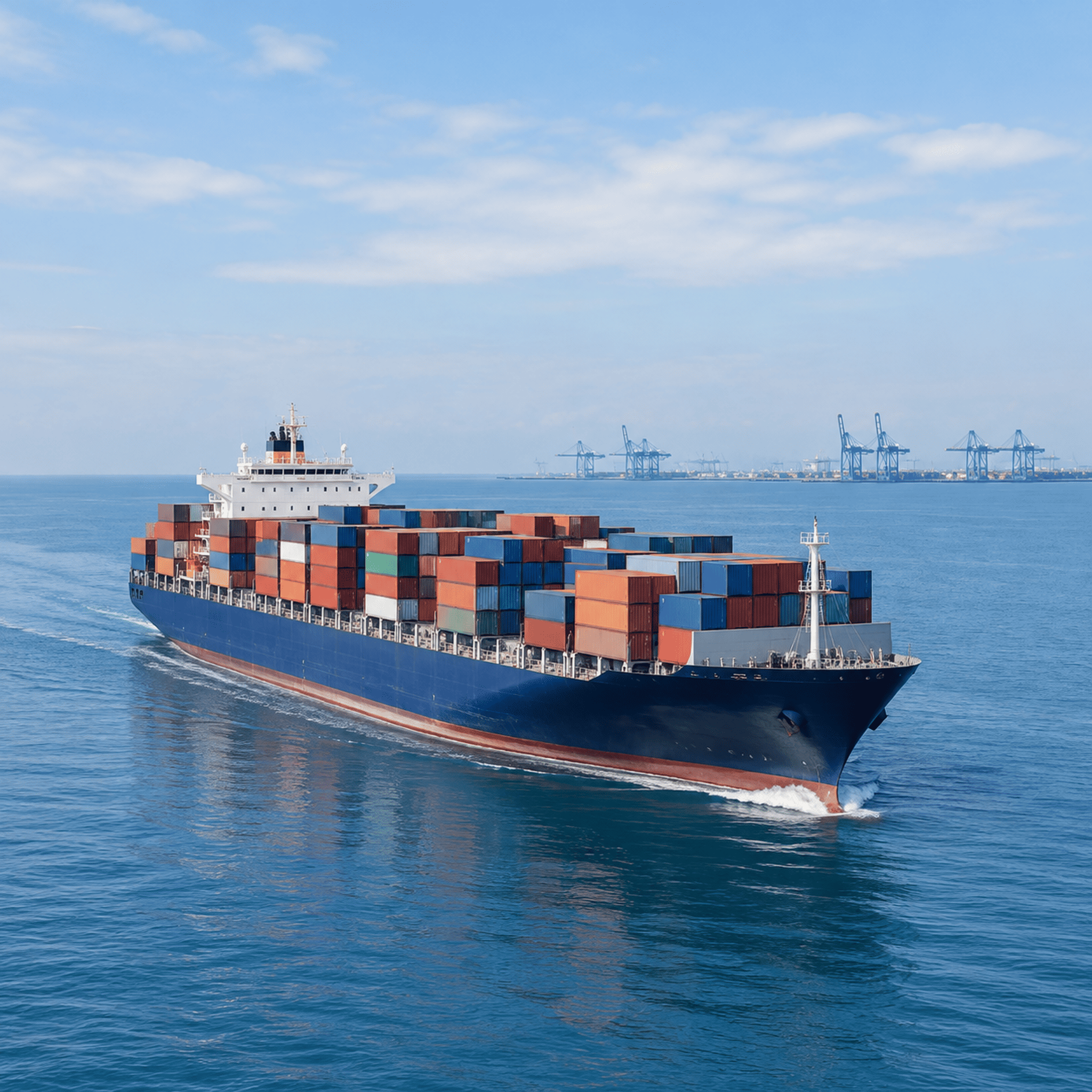
What Does DDP Shipping from China to USA Actually Cover?
DDP means Delivered Duty Paid. Under the ICC's Incoterms® 2020 rules, the seller arranges transport, export and import formalities, pays applicable duties and taxes, and bears transit risk until delivery to the agreed destination. It applies to ocean, air, road, or multimodal shipping.
Name the destination precisely: “DDP [U.S. warehouse address], Incoterms® 2020.” The seller presents goods on the arriving vehicle, ready for unloading. The buyer generally unloads them unless otherwise agreed. DDP does not automatically include cargo insurance.
Door-to-door does not necessarily mean DDP. Door-to-door transport can operate under DAP, with the buyer handling import clearance and duties.
For the official interpretation, consult the ICC's comparison of DAP and DDP under Incoterms® 2020.
DDP vs. DAP vs. FOB: What Changes for the Buyer?
| Term | Main carriage and delivery | U.S. import clearance and duties | Typical risk-transfer point | Best fit |
|---|---|---|---|---|
| DDP | Seller arranges delivery to named U.S. place | Seller's contractual responsibility | At named destination, ready for unloading | Seller can legally arrange import clearance and buyer wants one delivered price |
| DAP | Seller arranges delivery to named U.S. place | Buyer | At named destination, ready for unloading | Buyer wants its own customs broker and importer controls |
| FOB | Seller delivers on board at named China port; buyer arranges main carriage | Buyer | When goods are on board at origin | Established ocean importer wants carrier, customs, and cost control |
FOB is for sea or inland-waterway transport; DDP and DAP work across modes. An invalid import arrangement can erase any DDP price advantage. For a closer look at origin-side responsibilities, see FOB vs. EXW for U.S. importers.
How Much Does DDP Shipping Cost from China to USA in 2026?
There is no single all-in DDP rate for every product from China. Two 800-kg shipments may have different dimensions, tariff classifications, destination charges, and entry requirements.
A credible quote accounts for origin charges, international freight, U.S. entry and duties, terminal handling, and final delivery. Confirm separately who bears inspections, storage, detention, unloading, and warehouse-appointment expenses.
DDP landed cost = merchandise value + origin charges + international freight + U.S. handling and delivery + customs services + duties and government fees + agreed allowances. A bundled sales price still requires accurate supporting customs records.
To compare freight with—but not confuse it for—DDP pricing, see DingShang Logistics' published FCL ocean freight reference rates. Port-pair container prices are not all-inclusive DDP offers. Final prices require a product-specific duty assessment and an identified delivery address.
Why the Product's HTSUS Code Can Change a DDP Quote
U.S. duties depend on HTSUS classification, customs value, origin, and applicable measures. Depending on the goods, Chapter 99, Section 301 or 232, or antidumping/countervailing duties may matter. No tariff percentage covers every Chinese product.
Check the official 2026 Harmonized Tariff Schedule for the expected entry date; Revision 21 was issued October 9, 2026. Confirm classification with a qualified broker.
DDP Sea Freight vs. Air Freight: Which Method Fits Your Cargo?
DDP allocates costs but does not prescribe transport mode. Choose by cargo dimensions, urgency, and total delivered cost.
| DDP shipping method | Typical pricing basis | Where it works well | What to verify before booking |
|---|---|---|---|
| FCL ocean freight | Per 20GP or 40HQ container, plus delivered-duty-paid components | Large or heavy B2B shipments | Container type, terminal/chassis charges, inland delivery, bond and duties |
| LCL ocean freight | Weight/measurement, often CBM or metric-ton equivalent, plus CFS fees | Pallets or cartons that do not fill a container | CFS minimums, deconsolidation, dimensional data, delivery access |
| Air cargo | Chargeable weight, subject to carrier rules | Time-sensitive commercial stock | Volumetric weight, airport handling, broker and final-mile scope |
| International express | Actual or dimensional weight under courier tariff | Samples, small parts, urgent parcels | Whether the courier service actually bills duties to the sender |
LCL often uses weight/measurement (W/M), comparing cubic meters with metric tons, subject to minimum charges. The LCL shipping cost and handling guide explains consolidation and destination CFS considerations in more detail. Air cargo commonly uses 6,000 cm³/kg for dimensional weight: an 80 × 60 × 50 cm carton has a volumetric weight of 40 kg, even if its actual weight is 26 kg. Courier rules vary.
FCL reduces shared-container handling; LCL avoids purchasing a full container's space. Air freight may justify its premium when inventory delays would cost more. Compare total cost against the required delivery date. For urgent commercial cargo, review the air freight service scope before assuming customs and last-mile delivery are included.
How Long Does DDP Shipping from China to USA Take?
DDP lead time ends at the agreed delivery address, not at vessel arrival. Include pickup, export handling, transport, customs release, inland movement, and receiving appointments.
For context, DingShang's China-to-USA ocean transit-time guide describes planning ranges of roughly 14–25 days port-to-port to Southern California and 29–40 days to New York/New Jersey, depending on origin and service. These are ocean planning ranges, not DDP delivery guarantees. U.S. drayage, rail, examinations, and warehouse scheduling can extend the total lead time. Air freight and express are generally faster, but customs release and last-mile delivery still need separate confirmation.
Request cargo-ready, U.S. arrival, and warehouse delivery dates separately.
Who Handles U.S. Customs Under DDP Shipping?
Paying duties does not automatically make a party the importer of record (IOR). Incoterms® allocates contractual obligations, while U.S. customs law governs entry eligibility and legal responsibility.
A qualified foreign seller may act as nonresident IOR with proper registration and bond arrangements. But “DDP” on an invoice does not confer that status on a factory or forwarder. Confirm the proposed IOR's legal identity and broker before shipment.
CBP's updated Form 5106 importer-identity FAQ explains that incomplete or unverifiable importer information can lead to an IOR number being voided. The FAQ was updated October 6, 2026. This makes casual arrangements such as using a third party's importer number without a legitimate role particularly risky. If the buyer is to be named IOR while the seller funds duties, qualified counsel and the customs broker should review the arrangement and any departures from standard DDP obligations.
Customs Valuation, Documents and ISF
Customs value is not automatically the entire DDP invoice amount. Certain documented international freight charges may qualify for exclusion from transaction value, but arbitrary deductions or undervaluation are not acceptable. Supply the broker with accurate invoices, packing lists, origin, product details, and transport documents.
For applicable ocean cargo, key Importer Security Filing (ISF/“10+2”) data generally must be submitted 24 hours before vessel loading. Verify the filer, customs bond, and any FDA, product-safety, forced-labor, or other requirements. DDP waives none of these obligations. See U.S. customs clearance services.
Duties and Fees in October 2026
For ordinary formal entries, the U.S. Merchandise Processing Fee (MPF) is generally 0.3464% of the relevant entered value, with a minimum of $34.58 and a maximum of $670.86 effective October 1, 2026 (FY2027), subject to applicable exemptions. For covered commercial vessel imports, the Harbor Maintenance Fee (HMF) is generally 0.125% of cargo value; it does not apply to air imports. See the official Federal Register's FY2027 customs-user-fee adjustment.
For small parcels, the former $800 duty-free de minimis assumption is outdated. CBP's June 2026 low-value import update confirms suspension of general duty-free treatment. Verify the entry method and any exceptions.
DDP Shipping Cost Example: One 40HQ Container to Los Angeles
Consider a 40HQ of commercial goods delivered to a Los Angeles warehouse at an assumed $25,000 customs value. Every freight or service price below is hypothetical; this is neither a real DingShang shipment nor a live DDP quote. MPF and HMF use published fee formulas.
| Component | Illustrative USD | Explanation |
|---|---|---|
| Merchandise value | $25,000.00 | Assumed customs value; not a freight charge |
| China pickup and origin work | $450.00 | Hypothetical |
| 40HQ ocean freight | $5,200.00 | Hypothetical, not a market quotation |
| U.S. terminal and release charges | $650.00 | Hypothetical; do not add twice if bundled |
| Broker, ISF service and bond | $300.00 | Hypothetical combined service budget |
| Chassis, local trucking and delivery | $850.00 | Hypothetical local delivery |
| Import duties | $3,750.00 | Assumed combined 15% rate for illustration only |
| MPF | $86.60 | $25,000 × 0.3464%; within FY2027 limits |
| HMF | $31.25 | $25,000 × 0.125%, assuming covered ocean entry |
| Seller's risk allowance | $350.00 | Hypothetical contractual pricing allowance, not a customs fee |
| Shipping, customs and delivery subtotal | $11,667.85 | Excludes merchandise purchase price |
| Illustrative landed budget | $36,667.85 | Merchandise plus modeled DDP charges |
The modeled duties alone total $3,750, but 15% is not a verified rate for any particular product. Do not add these line items to an existing bundled DDP quote; doing so can double-count charges.
A seller's DDP sales price may include the merchandise; a forwarder's delivered-freight quote might not. Compare like with like. For separate ocean-freight price components, consult the 40HQ container shipping cost guide; its figures should not be treated as all-inclusive DDP quotes.
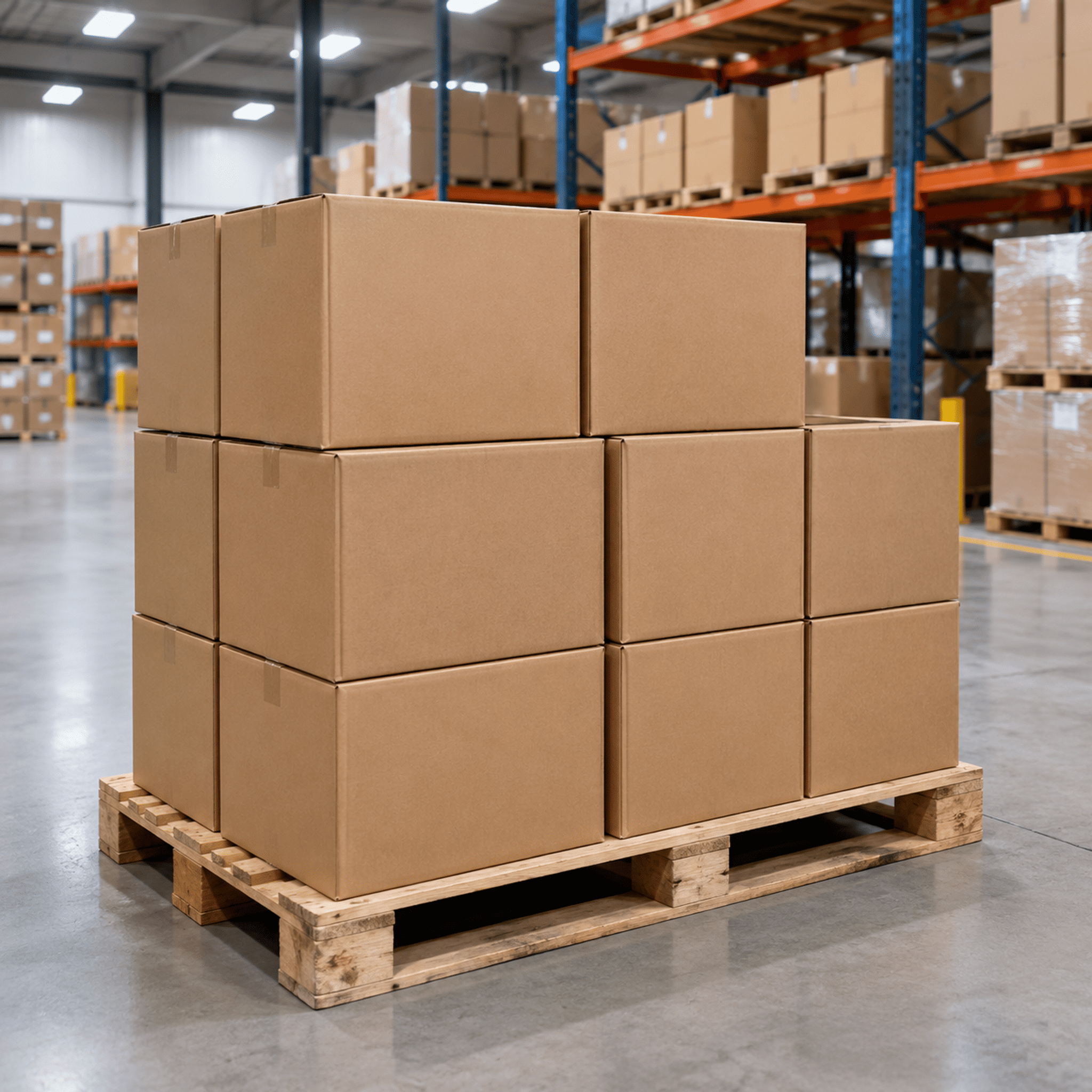
DDP Shipping from China to USA: The Five-Step Process
- Define the goods and destination. Confirm product materials, ten-digit HTSUS classification for entry, origin, value, weight, dimensions, packaging, cargo-ready date, and exact U.S. receiving location. Flag any regulated items early.
- Identify the lawful import arrangement. Agree in writing on who will be IOR, who appoints the customs broker, whose bond applies, who supplies clearance documents, and who pays duties and any additional tariff assessments.
- Request an itemized or auditable DDP offer. Specify “DDP [named destination], Incoterms® 2020,” the transport mode, expected delivery window, unloading requirements, and treatment of examinations and storage.
- Prepare export and U.S. import filings. Ensure the commercial invoice and packing list match the cargo; arrange booking, ocean ISF where applicable, brokerage, entry data, and any product-agency documentation before arrival.
- Confirm release and physical delivery. Track customs release separately from carrier release. Coordinate drayage or inland transport, receiving appointments, seal checks, exceptions noted on the delivery receipt, and any insurance claim documentation.
What Can Go Wrong With DDP Shipping? Five Buyer Risks
- An undisclosed importer of record. The broker uses the buyer's importer number without the buyer understanding the filings. Ask to see the proposed entry structure before authorizing the shipment.
- Incorrect duty classification or undervaluation. A surprisingly cheap DDP offer may depend on an unsupported product description or customs value. Request the proposed classification and supporting invoice, not an assurance that “tax is included.”
- An unbounded tariff-change clause. An order placed before a rate change may be imported afterward. State whether the seller's delivered price is fixed, when repricing is permitted, and who pays any lawful duty adjustment.
- Exceptions that erase the price advantage. Customs exams, storage, remote-area delivery, chassis rental, residential restrictions, and warehouse appointments may be disputed unless the contract allocates these costs and sets notice procedures.
- No clear delivery or cargo-damage remedy. DDP transfers risk at the named destination, but an insurance policy is not automatically supplied. Specify coverage, claims evidence, proof of delivery, and who pays for unloading-related damage. Review available cargo insurance services and the actual policy terms.
A verified IOR, correct customs documents, and written cost exceptions are more useful than an unsupported “taxes paid” claim.
How to Compare DDP Shipping Quotes Before You Buy
Compare quotes for the same cargo, customs assumptions, and destination. A port-to-port ocean rate is not comparable with an all-in DDP price.
| What to request | Why it matters | Warning sign |
|---|---|---|
| Exact destination and Incoterms version | Establishes delivery and risk point | “DDP USA” with no address |
| IOR's legal name and broker/bond plan | Tests whether entry is workable | Unidentified “shared importer” |
| HTSUS number, value and duty assumptions | Makes customs budget auditable | Guaranteed zero duties without product review |
| Included origin, freight and destination costs | Prevents apples-to-oranges comparisons | Only a per-kg ocean rate provided |
| Examination, storage and delivery exceptions | Allocates exceptional events | “No extra charge ever” without written terms |
| Delivery window, unloading and insurance terms | Protects inventory and damage claims | Arrival date confused with warehouse delivery |
DDP can suit buyers whose seller has a compliant import arrangement. DAP may suit established U.S. importers with their own broker, bond, and entry controls. DAP can still provide door-to-door delivery.
The deciding question is whether a seller can deliver these goods lawfully at a documented total cost. For a shipment-specific comparison, submit the product, origin, U.S. ZIP code, shipment size, and ready date through DingShang Logistics' contact page. Ask who will handle the IOR and duties.
FAQs About DDP Shipping from China to USA
1. What is DDP shipping from China to the USA?
DDP is Delivered Duty Paid under Incoterms® 2020. The seller is contractually responsible for getting the goods to the named U.S. destination, handling export and import clearance, and paying applicable duties and taxes. Delivery normally occurs when the goods are available on the arriving vehicle, ready for unloading. U.S. importer-of-record requirements still apply.
2. How much does DDP shipping from China to USA cost per kg?
There is no reliable universal per-kilogram rate. Air and courier services may charge by actual or dimensional weight, ocean LCL commonly uses weight/measurement, and FCL is priced per container. A true DDP price must additionally account for product value, applicable duties, customs services, and U.S. final delivery. Request a shipment-specific quote.
3. Does DDP shipping include U.S. customs duties and taxes?
Under the standard DDP rule, the seller must arrange and pay for applicable import clearance, duties, and taxes. However, the written contract should identify any negotiated deviations, whose name will appear as IOR, and whether unexpected assessments or examinations are addressed. An informal “tax included” offer is not enough.
4. Who is the importer of record for DDP shipments to the USA?
Not necessarily the freight forwarder—and not automatically the seller solely because the sale is labeled DDP. The actual importer must be legally eligible and correctly identified on U.S. customs filings. A foreign seller may qualify in appropriate circumstances, but the proposed importer and bond arrangement must be verified with the customs broker before shipment.
5. How long does DDP shipping from China to USA take?
For ocean freight, allow for origin handling, several weeks of port-to-port transport depending on route, U.S. clearance, and inland delivery. Air freight and express can be faster, but a carrier arrival date is not a guaranteed delivered-duty-paid warehouse date. Ask for the complete door-to-door delivery window.
6. Is DDP or DAP better for shipping from China?
DDP is attractive when a seller can lawfully manage import clearance and offers a transparent delivered price. DAP may be preferable for U.S. importers that want to control their own customs broker, bond, filings, and duty payments while the seller still arranges transportation to the named destination.
7. Can I use DDP shipping for Amazon FBA or a U.S. fulfillment warehouse?
Potentially, but the receiving warehouse is not automatically willing or legally qualified to be importer of record. Confirm the actual IOR, the marketplace's current inbound requirements, pallet/carton labels, appointment rules, unloading, and proof of delivery. Do not designate a warehouse or marketplace as IOR without its authorization and a legally valid basis. For receiving and last-mile logistics context, see U.S. warehouse services.


Leave a Comment