
How to Ship a Container from China to St. Louis?
To ship a container from China to St. Louis, you normally do not book a direct ocean service to St. Louis. Although St. Louis has a major inland port system on the Mississippi River, China-origin containerized imports typically enter the United States through a coastal or Gulf container gateway and then move inland by rail or truck.1
The practical route is usually:
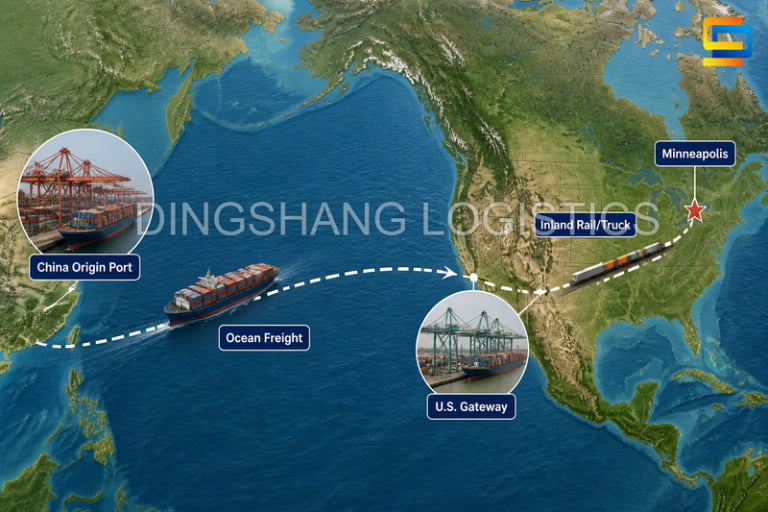
China supplier → China loading port → U.S. gateway port → customs clearance → inland rail or truck → St. Louis-area delivery
The best route depends on your cargo volume, weight, China origin, final delivery ZIP code, cargo-ready date, customs requirements, and whether you need port-to-port or door-to-door service.
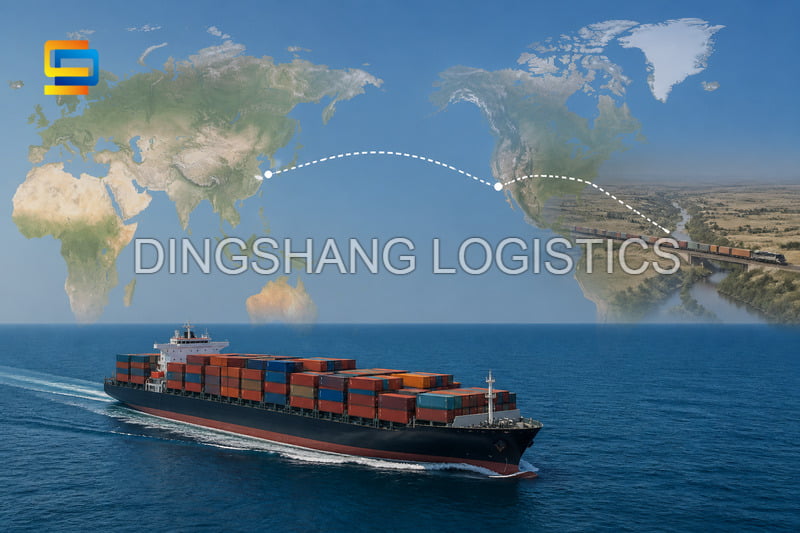
When I quote a St. Louis shipment, I do not compare ocean freight alone. The U.S. gateway, inland transportation, customs, chassis, free time, and final delivery conditions can materially change the total cost.
What Does It Really Mean to Ship a Container from China to St. Louis?
Shipping a container from China to St. Louis normally means combining ocean freight with U.S. inland transportation. The container first arrives at a U.S. gateway port and then continues toward the St. Louis area by rail, truck, or a combination of both.
This distinction matters because a quote that ends at Los Angeles, New York/New Jersey, Savannah, or Houston is not the same as a quote that delivers the cargo to your warehouse in Missouri.
St. Louis Is an Inland Freight Gateway
The Port of Metropolitan St. Louis is an inland port system on the Mississippi River, not a conventional deep-sea container gateway where container vessels from China call directly.1
The St. Louis Port Authority describes the regional port system as the second-largest inland port system in the United States. The region is also served by six Class I railroads and multiple interstate highways.1
For China-origin containerized freight, this means St. Louis should generally be treated as an inland destination rather than the ocean port of entry.
The St. Louis Municipal River Terminal also notes that containerized freight can reach the facility by truck or train.2
That creates an important distinction:
- Port of St. Louis: A real inland Mississippi River port system
- China-to-St. Louis container shipping: Usually ocean freight to a U.S. gateway followed by inland transportation
Understanding this difference helps prevent incomplete freight comparisons.
What Does the Route Look Like?
A typical FCL route may look like:
Ningbo / Shanghai / Shenzhen / Qingdao → U.S. gateway → inland rail or truck → St. Louis-area warehouse
Possible U.S. gateways can include:
- Los Angeles / Long Beach for West Coast entry
- New York / New Jersey for East Coast entry
- Savannah for Southeast routing
- Houston for Gulf routing
- Other gateways depending on carrier service, sailing schedule, inland cost, and current capacity
There is no single gateway that is always best for St. Louis.
A lower ocean rate through Los Angeles, for example, does not automatically mean a lower delivered cost. Inland rail, drayage, chassis, free time, congestion, and final delivery can change the result.
Port-to-Port vs. Door-to-Door
The service scope changes both your cost and your responsibility.
| Service Type | What It Usually Covers | What You May Still Need to Handle |
|---|---|---|
| Port-to-port | China port to U.S. gateway port | Customs, destination charges, inland transport, final delivery |
| Port-to-door | Ocean freight plus inland delivery | Origin pickup, customs/duties, or other charges depending on quote |
| Door-to-door | China pickup, ocean freight, customs coordination, inland transportation, final delivery | Import documentation, duties/taxes where applicable, receiving readiness |
For an importer whose real destination is a St. Louis warehouse, a door-to-door quote can provide better cost visibility because the inland portion is included in the transportation plan.
The important question is not simply:
“What is the ocean freight to the United States?”
It is:
“What will it cost and how will the container reach my final St. Louis delivery address?”
Which Route Is Best from China to St. Louis?
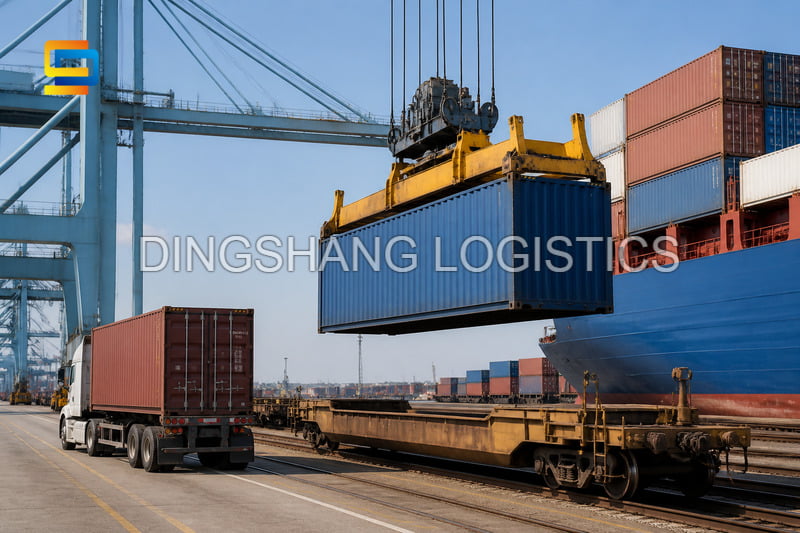
The best China-to-St. Louis route depends on the China loading port, container type, cargo-ready date, final ZIP code, inland capacity, and current carrier schedules. West Coast, East Coast, and Gulf gateways can all be worth comparing.
For an inland destination such as St. Louis, the complete route economics should be compared rather than automatically choosing the lowest ocean freight.
West Coast Entry + Inland Transportation
A West Coast strategy commonly uses Los Angeles or Long Beach as the U.S. gateway.
The structure may look like:
China → Los Angeles/Long Beach → inland rail → regional ramp → truck delivery to St. Louis
This can be attractive when:
- China-to-West Coast ocean service is competitive
- Sailing frequency is good
- Inland rail capacity is available
- You value a relatively short trans-Pacific ocean leg
However, the inland portion matters. Rail timing, ramp availability, chassis, free time, and final drayage should be checked before choosing the route.
East Coast Entry + Inland Transportation
Another strategy is an all-water ocean service to an East Coast gateway such as New York/New Jersey or Savannah, followed by inland transportation.
This means spending more time on the ocean but potentially changing the inland rail or truck profile.
An East Coast route may be worth comparing when:
- West Coast inland conditions are unfavorable
- Carrier pricing makes the all-water option competitive
- The shipment is not extremely time-sensitive
- Rail or truck connections fit your final St. Louis delivery schedule
The lowest-cost option can change by sailing week, so West Coast or East Coast routing should not be assumed to be universally better.
Gulf Entry + Inland Transportation
Houston or another Gulf strategy can also be considered for some St. Louis shipments.
Geographically, St. Louis sits in the central United States, so a Gulf routing may sometimes produce a different balance between ocean freight and inland transportation.
Whether it makes sense depends on:
- Carrier service
- Ocean rate
- Transit time
- Inland truck or rail cost
- Equipment availability
- Final delivery ZIP
- Cargo urgency
This is one reason St. Louis should not be treated like a simple coastal-port shipment.
Why St. Louis Is Different from Many Inland Destinations
St. Louis has a strong multimodal freight position.
According to the City of St. Louis Port Authority, the region combines Mississippi River freight infrastructure with six Class I railroads and interstate highway connections.1
For a China-origin container, however, the Mississippi River port system does not eliminate the need to choose an ocean gateway.
Instead, the real routing question is:
Which combination of ocean gateway + inland rail/truck + final delivery gives you the best balance of cost, transit time, and reliability?
That is the St. Louis-specific decision that should be made before booking.
Should You Use FCL or LCL from China to St. Louis?
FCL is generally more suitable for larger shipments, while LCL can work well for smaller cargo volumes. The decision should be based on total landed logistics cost, not CBM alone.
Before recommending either option, the following should be checked:
- Total CBM
- Gross weight
- Package count
- Package dimensions
- Commodity
- Final ZIP code
- Cargo-ready date
- Receiving conditions
FCL Shipping to St. Louis
With Full Container Load (FCL), your cargo uses a dedicated container.
Common container choices include:
- 20GP
- 40GP
- 40HQ
A 20GP can work well for dense cargo, while a 40HQ is commonly used for larger-volume shipments.
FCL can also reduce consolidation-related handling because the cargo does not need to be combined with multiple LCL shipments inside the same container.
For St. Louis delivery, the inland plan is especially important. The quote should explain what happens after the container reaches the United States and how it gets to the final warehouse.
LCL Shipping to St. Louis
Less than Container Load (LCL) allows smaller shipments to share container space.
The process usually includes:
China pickup → origin CFS → consolidation → ocean freight → U.S. deconsolidation → customs → inland delivery → final address
Because LCL involves additional handling, the destination-side cost structure can be different from FCL.
For LCL, pay particular attention to:
- Chargeable CBM or weight
- Origin CFS handling
- Destination CFS charges
- Deconsolidation
- Inland transportation
- Final delivery
- Palletization
- Delivery appointment
- Handling requirements for fragile cargo
There is no universal CBM number at which FCL automatically becomes cheaper than LCL. The route, weight, destination charges, and final delivery conditions can change the crossover point.
How Much Does It Cost to Ship a Container from China to St. Louis?
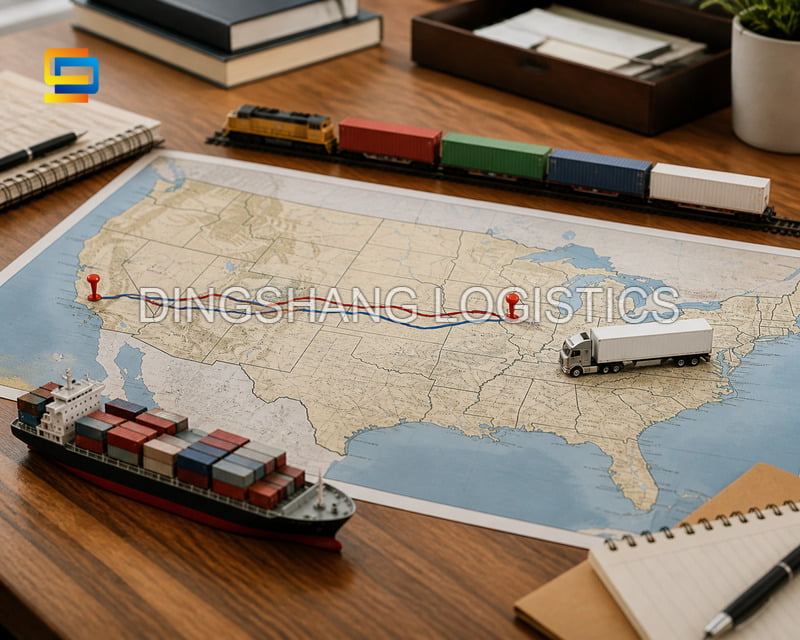
There is no reliable single price for shipping a container from China to St. Louis. The final cost depends on the China origin, loading port, container type, U.S. gateway, inland route, cargo-ready date, commodity, weight, customs requirements, and final delivery ZIP code.
The most important point is that ocean freight is only one part of the St. Louis delivered cost.
Main Cost Components
A complete quote may include:
| Cost Component | What It Covers |
|---|---|
| China pickup | Factory or supplier to loading point |
| Origin charges | Export handling, documentation, local port charges |
| Ocean freight | China port to U.S. gateway |
| U.S. destination charges | Terminal and carrier-related arrival costs |
| Customs clearance | Entry processing and broker services |
| Duty/tax | Government charges based on classification and customs value |
| Inland transportation | Rail and/or trucking toward St. Louis |
| Final drayage | Delivery from inland point to warehouse |
| Chassis | Equipment used to move the container by truck |
| Appointment/waiting | Warehouse or delivery scheduling costs |
| Insurance | Cargo coverage where included |
Import duties depend on tariff classification and customs value, among other factors. U.S. Customs and Border Protection provides guidance on how duty rates are determined.3
This is why two quotes showing different ocean freight rates may still produce the opposite result after inland transportation and destination costs are added.
Costs That Are Often Missed
Before booking, check whether the quotation includes or excludes:
- Destination terminal charges
- Customs clearance
- Customs bond
- Import duties
- ISF filing
- Inland rail
- Final drayage
- Chassis
- Pre-pull
- Storage
- Warehouse waiting
- Delivery appointments
- Demurrage
- Detention
- Customs exams
- Re-delivery
The Federal Maritime Commission has specific rules governing detention and demurrage billing practices.4
A quote with a lower base freight rate can become more expensive if important destination items are excluded.
Why Free Time Matters
Free time is the allowed period before certain storage, demurrage, or detention charges begin.
For an inland shipment, delays can occur at several points:
- U.S. gateway terminal
- Rail transfer
- Inland rail ramp
- Warehouse appointment
- Container unloading
- Empty container return
The FMC provides guidance and regulatory information regarding detention and demurrage practices.45
Saving a few hundred dollars on ocean freight may not help if the routing leaves too little time for pickup, delivery, unloading, and equipment return.
Why Final ZIP Code Matters
“St. Louis” is not enough for an accurate door-delivery quote.
A warehouse in the city, a facility across the river in Illinois, and a distribution center farther into Missouri can have different trucking costs and delivery conditions.
The ZIP code helps determine:
- Drayage distance
- Truck availability
- Appointment requirements
- Potential waiting time
- Equipment needs
- Empty container return planning
For a real door-to-door quotation, always provide the final ZIP code or full delivery address.
What Information Do You Need for an Accurate China-to-St. Louis Quote?
For an accurate quote, provide your supplier location, product information, shipment size and weight, Incoterm, cargo-ready date, and final St. Louis-area delivery ZIP code. For FCL, specify the container type. For LCL, provide package dimensions, total CBM, and gross weight.
The more complete the shipment information is, the less likely the quote will change later.
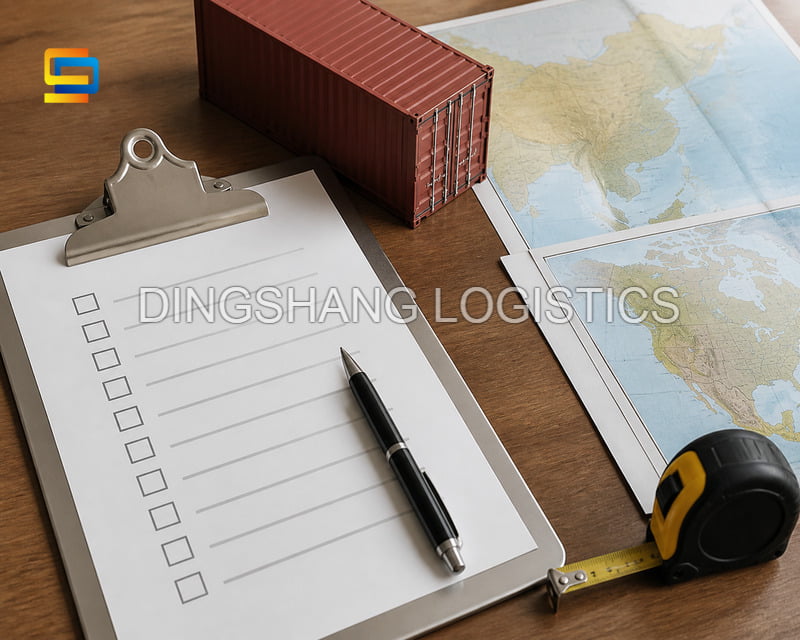
FCL Quote Checklist
For a 20GP or 40HQ shipment, prepare:
- Product name
- HS code, if available
- Product material
- China pickup address or ZIP code
- St. Louis-area delivery address or ZIP code
- Container type: 20GP or 40HQ
- Cargo-ready date
- Trade term: FOB or EXW
- Gross cargo weight
- Any special loading or unloading requirements
LCL Quote Checklist
For LCL, prepare:
- Product name
- HS code, if available
- Product material
- China pickup address or ZIP code
- St. Louis-area delivery address or ZIP code
- Number of packages
- Gross weight
- Total CBM
- Package dimensions
- Cargo-ready date
If you already have a packing list, it can usually provide most of the information needed for the first quotation.
Trade Terms Matter
Your Incoterm affects where responsibility and cost transfer between the buyer and seller.
Under FOB, the seller is responsible for delivering the goods on board the vessel at the named port of shipment, while under EXW, the seller's responsibility is much more limited.6
For your freight quote, this distinction affects whether China-side pickup and export-side services need to be included.
The goal is to make sure everyone understands:
- Who handles China pickup?
- Who handles export procedures?
- Who books ocean freight?
- Who handles U.S. customs?
- Who pays duties?
- Who arranges inland transportation?
- Who delivers to the St. Louis warehouse?
Clear responsibility helps prevent unexpected invoices later.
What Should You Check Before the Container Arrives in St. Louis?
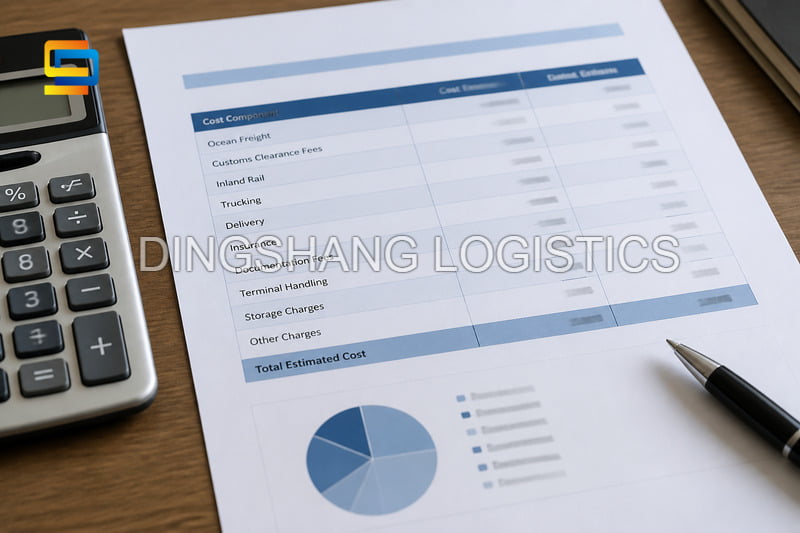
Before arrival, make sure customs documents, delivery appointments, unloading arrangements, free time, and container return plans are confirmed. Inland shipments can become expensive when the container arrives before the warehouse or importer is ready.
Customs Documentation
Common import documents include:
- Commercial invoice
- Packing list
- Bill of lading
- Importer information
- Customs bond information where required
- Product-specific documents where applicable
The importer is responsible for using reasonable care when providing information required for U.S. customs entry, including matters related to classification, value, and other import requirements.7
The Harmonized Tariff Schedule of the United States can be used to research tariff classifications and applicable duty provisions.8
Your customs broker should confirm the actual classification and import requirements for your product.
Importer Security Filing
For ocean imports, Importer Security Filing requirements should also be reviewed before shipment.
CBP requires certain information to be submitted for cargo arriving in the United States by vessel under the Importer Security Filing, commonly called ISF or “10+2.”9
Late or inaccurate filing can create compliance problems, so the required information should be coordinated before the shipment departs China.
Warehouse Receiving Conditions
Before final delivery, confirm:
- Receiving hours
- Appointment requirements
- Loading dock availability
- Forklift availability
- Live unload or drop requirements
- Maximum unloading time
- Contact person
- Weekend restrictions
- Special equipment requirements
For FCL shipments, also confirm how quickly the empty container can be returned.
If the receiver cannot unload the container efficiently, detention or additional trucking charges can become a problem.
Free Time and Container Return
Free time should be reviewed before arrival rather than after charges begin.
For an inland shipment, there can be multiple timing points to manage:
- U.S. gateway availability
- Rail movement
- Inland ramp availability
- Chassis availability
- Final delivery appointment
- Empty container return
The importer, freight forwarder, customs broker, trucker, and warehouse all need to be coordinated.
That coordination can be more valuable than saving a small amount on the initial ocean freight.
How Long Does Shipping from China to St. Louis Take?
China-to-St. Louis transit time depends on the China loading port, U.S. gateway, carrier service, vessel schedule, customs status, inland rail or trucking, and final delivery appointment.
Because St. Louis is an inland destination, you should not compare the shipment only by ocean transit time.
The complete timeline may include:
- China pickup and export preparation
- Origin port handling
- Ocean transit
- U.S. port discharge
- Customs clearance
- Rail or inland truck movement
- Inland ramp handling
- Final drayage
- Warehouse delivery
A route with a shorter ocean transit does not necessarily produce the earliest warehouse delivery.
For example, a West Coast service may reach U.S. soil sooner but still depend on inland rail availability. An all-water or Gulf option may spend longer at sea but create a different inland transportation profile.
For B2B import planning, compare estimated door-to-door transit time, not vessel transit alone.
Can Dingshang Logistics Arrange Door-to-Door Shipping to St. Louis?
Yes. Dingshang Logistics supports B2B FCL and LCL ocean freight from China to U.S. destinations, including inland door delivery to the St. Louis area.
Depending on the shipment, the service can be coordinated from China pickup through ocean freight, U.S. customs clearance, duty handling, inland transportation, and final delivery.
For door-to-door shipments, the quotation can be structured around the complete shipment rather than only the ocean freight portion.
To prepare a quotation, send:
For FCL: supplier location + product + HS code + 20GP/40HQ + gross weight + FOB/EXW + cargo-ready date + St. Louis delivery ZIP.
For LCL: supplier location + product + HS code + package quantity + dimensions + CBM + gross weight + cargo-ready date + St. Louis delivery ZIP.
This allows the practical route and delivered cost to be compared before you book.
Frequently Asked Questions
Is St. Louis a direct ocean container port for shipments from China?
No. St. Louis has an important inland port system on the Mississippi River, but China-origin ocean container vessels do not normally call there as they do at major coastal container gateways. Containerized imports generally reach St. Louis after entering the United States through another gateway and continuing inland by train or truck.12
How does a container get from China to St. Louis?
A typical shipment moves from the supplier to a China loading port, crosses the ocean to a U.S. gateway, clears customs, and then continues inland by rail or truck before final delivery in the St. Louis area.
Should I use the West Coast, East Coast, or Gulf route?
There is no universal best route. The answer depends on the China origin, carrier service, sailing week, ocean freight, inland rail or truck cost, transit time, equipment availability, and final St. Louis ZIP code.
Should I choose FCL or LCL?
FCL is generally better for larger shipments, while LCL can be more economical for smaller cargo. Compare the complete destination and delivery costs rather than using CBM alone.
How much does it cost to ship a 40HQ from China to St. Louis?
The cost changes with the China loading port, cargo-ready date, U.S. gateway, inland route, commodity, weight, and final delivery ZIP code. A current shipment quote is more useful than a generic national average because St. Louis requires an inland transportation component.
Why is a door-to-door quote higher than an ocean freight quote?
A door-to-door quote covers more of the transportation chain. Depending on the agreed scope, it may include China pickup, ocean freight, customs coordination, inland rail or truck, and final delivery. An ocean-only quote can leave significant U.S. costs for the importer to arrange separately.
What documents are needed for U.S. customs clearance?
Common documents include a commercial invoice, packing list, bill of lading, and importer information. Additional documents may be required depending on the commodity. Classification, customs value, duty, and product-specific requirements should be reviewed before shipment.78
What is the biggest risk with inland container delivery?
One of the biggest operational risks is poor coordination between customs release, rail or terminal availability, trucking, warehouse appointments, unloading, and empty container return. Delays can create storage, demurrage, detention, waiting, or re-delivery costs.45
Conclusion
To ship a container from China to St. Louis, treat St. Louis as an inland U.S. destination rather than a direct ocean container gateway.
The real decision is not simply which carrier has the lowest ocean rate. You need to compare the complete route:
China origin → U.S. gateway → customs → inland transportation → final St. Louis delivery
A good shipping plan should clearly show what is included, which route is being used, who handles customs and duties, how the container reaches the final warehouse, and which charges could still occur.
If you need an FCL or LCL quote from China to St. Louis, send your supplier location, product, HS code if available, shipment size/weight, FOB or EXW term, cargo-ready date, and final delivery ZIP code. Dingshang Logistics can then compare the practical route options and prepare a transparent door-to-door shipping plan.
Related Shipping Guides
- How to Ship a Container from China to Port of Chicago
- How to Ship a Container from China to Port of Kansas?
- How to Ship a Container from China to Port of Dallas
- Sea Freight Transit Time from China to USA in 2026: How Long Does It Really Take?
- What Are You Really Paying to Ship a Container From China?
- How Container Shipping Works From China To USA?
References
https://www.stlouis-mo.gov/government/departments/sldc/slpa/port-of-metropolitan-st-louis.cfm ↩
https://www.stlouis-mo.gov/government/departments/sldc/slpa/mrt.cfm ↩
https://www.cbp.gov/trade/programs-administration/determining-duty-rates ↩
https://www.fmc.gov/articles/fmc-publishes-final-rule-on-detention-and-demurrage-billing-practices/ ↩
https://www.fmc.gov/detention-and-demurrage/ ↩
https://www.trade.gov/know-your-incoterms ↩
https://www.cbp.gov/document/publications/reasonable-care ↩
https://hts.usitc.gov/ ↩
https://www.cbp.gov/border-security/ports-entry/cargo-security/importer-security-filing-102 ↩
Leave a Comment