
How to Ship a Container from China to Salt Lake City?
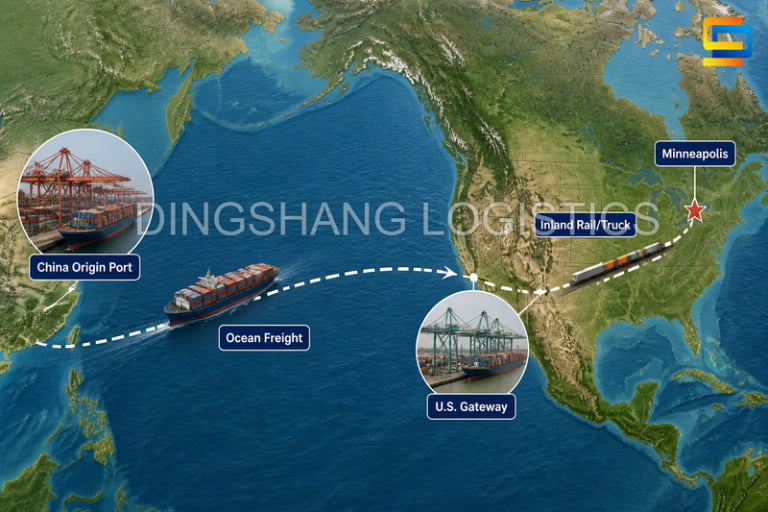
Shipping a container from China to Salt Lake City requires an ocean leg to a U.S. seaport plus inland transportation to Utah. Salt Lake City is an inland destination, so your routing plan needs to cover the U.S. gateway, customs clearance, inland rail or trucking, local drayage, and final delivery to your warehouse.
To ship a container from China to Salt Lake City, you normally move the cargo by ocean freight from a China port to a U.S. gateway, then continue inland by rail or truck. For suitable intermodal routings, a container may move to the Union Pacific Salt Lake City Intermodal Terminal before local drayage to the consignee. The actual route depends on the China origin, carrier service, cargo weight, inland availability, and final delivery ZIP code.1
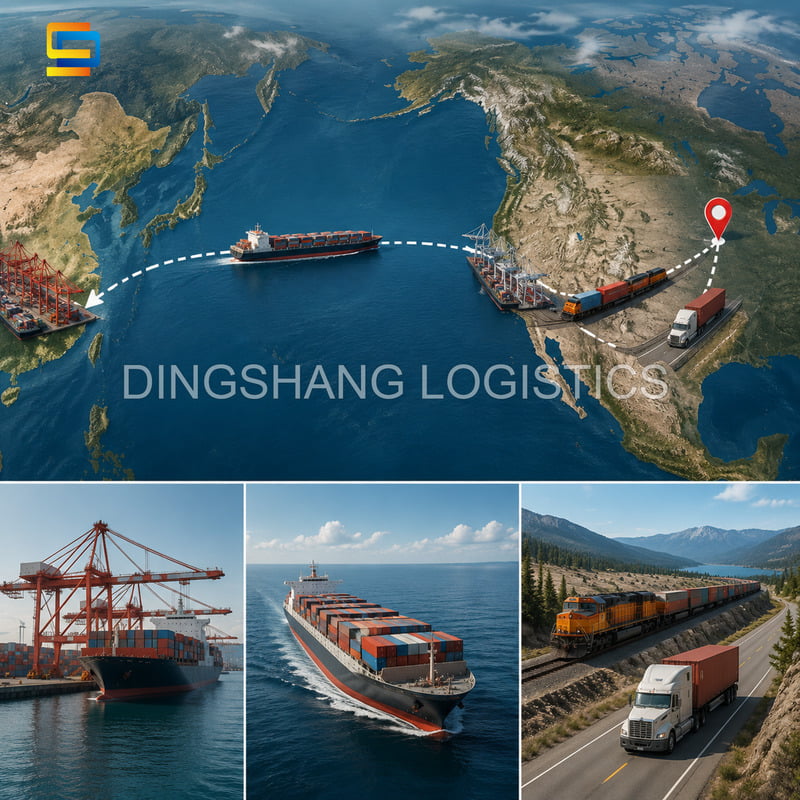
A typical shipment involves these steps:
- Pick up the cargo or deliver it to the export port in China.
- Load and export the container from China.
- Move the container by ocean freight to the booked U.S. gateway.
- Complete U.S. customs clearance and any applicable government-agency requirements.
- Move the container inland by rail or truck.
- Arrange local drayage or final delivery to the Utah consignee.
- Return the empty ocean container when required.
For an importer, the important comparison is not simply Shanghai-to-Los Angeles or Ningbo-to-Long Beach ocean freight. You need to compare the complete route to your Salt Lake City-area delivery point, including inland transportation and final delivery.
If you are new to the process, this guide to how container shipping works from China to the USA explains the main handoffs from origin through final delivery.
What Is the Best Route to Ship a Container from China to Salt Lake City?
For many China-origin shipments, a practical option to evaluate is China port → U.S. West Coast gateway → inland rail or truck → Salt Lake City-area delivery. Los Angeles and Long Beach are important gateways to consider, but the best route should be selected from the actual carrier booking, inland connection, cargo weight, equipment availability, schedule, and total delivered cost.
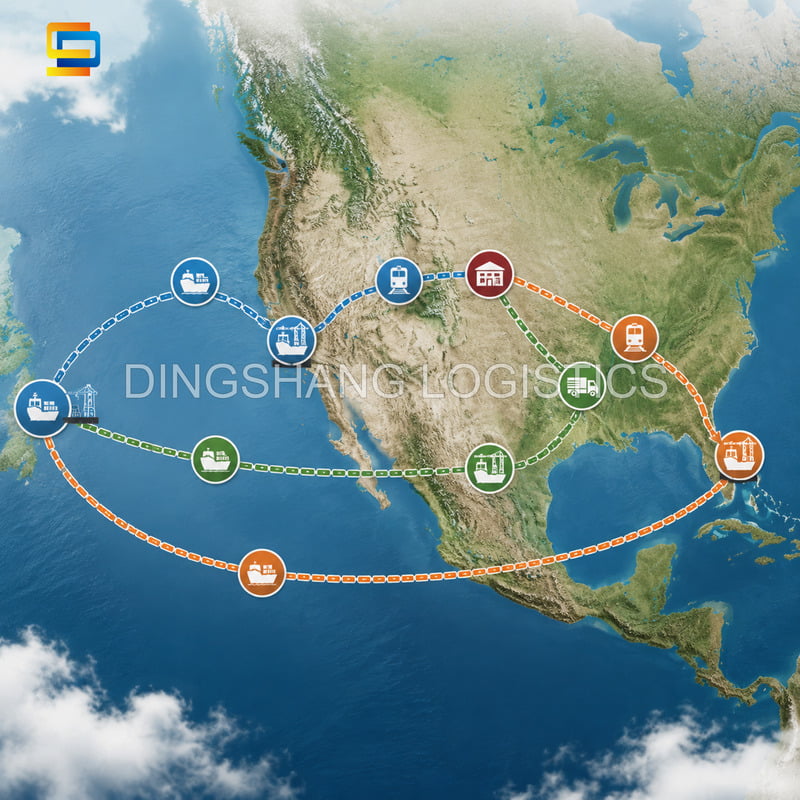
Salt Lake City is not a seaport. The ocean gateway and the final destination are therefore two different points in the transportation chain.
Why Salt Lake City's Intermodal Infrastructure Matters
Salt Lake City has established intermodal rail infrastructure that can support suitable inland container routings. Union Pacific lists its Salt Lake City Intermodal Terminal at 1045 South 5500 West, Salt Lake City, Utah 84104, with container-on-flatcar (COFC) and trailer-on-flatcar (TOFC) capabilities.1
For an importer, this creates an important routing option: some FCL shipments may be planned with an inland rail leg instead of trucking the ocean container the entire distance from a coastal gateway.
However, the existence of the terminal does not establish that every ocean carrier, gateway, booking, or container has through intermodal service to Salt Lake City. Union Pacific directs customers to current schedule information for specific origin-terminal services, so the actual inland routing should be confirmed for the booking.1
Utah also treats freight as a multimodal transportation issue. The Utah Department of Transportation's 2023 Utah Freight Plan addresses highway, railroad, pipeline, air, and water freight and is intended to guide investments affecting freight movement in the state.2
West Coast Gateway vs. Other U.S. Gateways
Los Angeles and Long Beach are logical gateways to evaluate for cargo originating in China because of their transpacific role and western U.S. location. Importers considering Southern California routing can review our guide to shipping a container from China to Los Angeles.
But you should not select the U.S. port from the ocean rate alone.
| Routing Factor | What You Should Check |
|---|---|
| China origin | Which export port fits the supplier location and booking? |
| U.S. gateway | Which gateway is used under the actual carrier service? |
| Inland mode | Is a workable rail connection available, or is trucking more practical? |
| Cargo weight | Can the planned inland equipment and highway movement handle the load? |
| Inland availability | Is the required rail or truck capacity available for the shipment? |
| Final ZIP code | How far is the receiver from the inland terminal or delivery point? |
| Delivery requirements | Does the warehouse require appointments, special access, or unloading arrangements? |
Other U.S. gateways can be quoted when commercially appropriate, but they should be evaluated on the complete ocean-and-inland routing rather than a low ocean rate in isolation.
Practical decision: ask your forwarder to compare the transportation scope through your Utah delivery ZIP code, not just the rate to the first U.S. port.
Should You Use Rail or Truck from the U.S. Port to Salt Lake City?
Rail can be attractive for suitable FCL intermodal shipments to Salt Lake City, while trucking can provide a more direct inland move for some bookings. Neither option is automatically better; the decision depends on the available carrier routing, cargo weight, schedule, equipment, final delivery location, and total cost.
For an intermodal move, the container may discharge at a coastal gateway, transfer to rail under the booked inland service, arrive at the Salt Lake City intermodal terminal, and then move by local drayage to the consignee.
A truck-based routing instead moves the ocean container—or cargo that has been transloaded into domestic equipment—inland by highway.
| Inland Option | Potential Advantage | What to Verify |
|---|---|---|
| Intermodal rail | Can be practical for suitable inland FCL movements | Actual carrier routing, rail connection, terminal destination, and final drayage |
| Long-haul container trucking | More direct on some routings | Truck cost, equipment availability, weight, and empty-return plan |
| Transload + truck | Useful when keeping the ocean container to Utah is impractical | Transload cost, handling risk, trailer capacity, and delivery requirements |
An inland rail ramp is not the same as door delivery. If the transportation ends at the Salt Lake City intermodal terminal, you normally still need local drayage from the terminal to the consignee's warehouse.
That distinction matters when comparing quotes. A rate to an inland terminal and a rate to a warehouse ZIP code do not represent the same service.
How Much Does It Cost to Ship a Container from China to Salt Lake City?
There is no reliable fixed price for shipping a container from China to Salt Lake City. The delivered cost depends on the China origin, container size, current ocean market, U.S. gateway, inland routing, cargo weight, customs requirements, equipment availability, and final delivery conditions.
Instead of relying on an unsupported online rate, compare the individual cost components. Our guide to what you are really paying to ship a container from China provides a broader breakdown of container shipping costs.
What Should Be Included in a Quote?
| Cost Component | What It Covers |
|---|---|
| China origin charges | Pickup, export handling, documentation, and other applicable origin services |
| Ocean freight | Main international ocean transportation |
| U.S. destination charges | Applicable carrier, terminal, documentation, and destination charges |
| Customs clearance | Entry coordination or brokerage when included |
| Duties and taxes | Government charges determined separately from the freight rate |
| Inland transportation | Rail, long-haul truck, or another movement toward Utah |
| Local drayage | Container movement between the inland point and consignee |
| Transloading | Cargo transfer when the ocean container does not continue to final delivery |
| Accessorials | Conditional charges such as waiting, storage, chassis, appointments, or detention |
Ocean freight is not the same as total delivered logistics cost. A port-to-port quote, an inland-ramp quote, and a door-to-door quote have different endpoints and may include very different services.
If one forwarder quotes only the ocean leg and another includes inland transportation and final Salt Lake City delivery, comparing the headline prices will give you the wrong result.
Watch the Cargo Weight Before Choosing the Cheapest Route
Cargo weight deserves particular attention when planning the inland leg.
A 20GP is often considered for dense cargo because weight can become the practical constraint before the container's cubic capacity is fully used. However, the container's technical payload rating does not establish whether the loaded truck configuration can legally move over every highway segment.
Federal Interstate weight rules address gross vehicle weight, axle limits, and axle spacing through the Federal Bridge Formula, while the actual move can also be affected by equipment configuration, state requirements, local restrictions, and the route used.3
For dense cargo such as machinery, metal products, stone, or industrial components, provide the gross cargo weight before the inland routing and quote are confirmed.
What Can Create Extra Charges?
Depending on the shipment, additional costs can arise from:
- terminal or rail storage
- demurrage or detention
- chassis-related charges
- customs exams
- truck waiting time
- missed delivery appointments
- overweight arrangements
- transloading
- additional warehouse handling
- late empty-container return
These charges do not apply uniformly to every shipment. Carrier terms, terminal conditions, service contracts, equipment, and the circumstances of the shipment matter.
The Federal Maritime Commission has rules governing important aspects of demurrage and detention billing. Most provisions of its 2024 final rule remain in effect, although a federal appeals court set aside one section in 2025; importers should therefore review the applicable invoice, current rules, and contractual terms rather than assume a universal free-time period or billing rule.4
How Long Does Shipping from China to Salt Lake City Take?
There is no single reliable transit time for every China-to-Salt-Lake-City container shipment. Total lead time includes origin handling, the ocean voyage, U.S. terminal availability, customs clearance, the inland rail or truck connection, and final warehouse delivery.
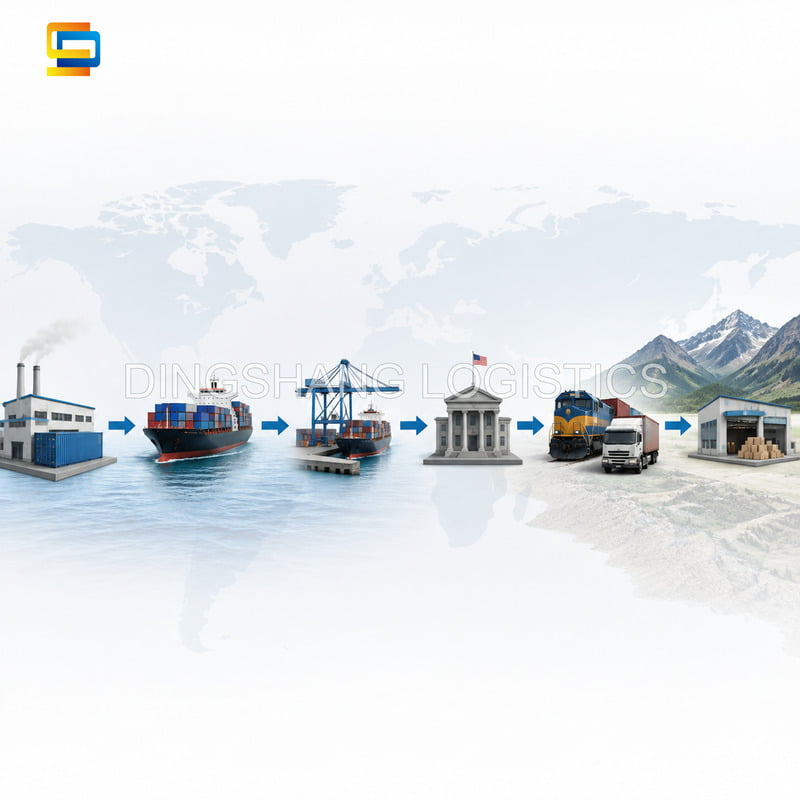
Because vessel schedules and inland connections change, a fixed transit-time promise without a specific booking can be misleading.
| Stage | What Can Affect Timing? |
|---|---|
| China origin | Factory readiness, pickup, documentation, export cutoff |
| Ocean freight | Loading port, carrier, direct or transshipment service, sailing schedule |
| U.S. arrival | Berthing, terminal conditions, container availability |
| Customs | Entry readiness, holds, exams, product-agency requirements |
| Inland movement | Rail connection, terminal availability, or truck capacity |
| Salt Lake City delivery | Drayage availability, appointment, and receiver readiness |
Ocean transit is not the same as total door-to-door lead time. A vessel schedule describes only part of the shipment. Inventory planning should account for the inland and delivery stages as well.
Ask your forwarder for both the current ocean transit and the expected door-to-door lead time for your cargo-ready date and routing.
You can also review the factors affecting sea freight transit time from China to the USA before setting inventory or warehouse deadlines.
What Documents and Customs Steps Are Needed?
For a normal commercial ocean import from China, you should prepare the shipment documents, establish the U.S. customs-entry process, and assign Importer Security Filing (ISF) responsibility before the container is loaded for the United States. Product-specific government requirements should also be checked before shipment when applicable.
For U.S.-bound cargo subject to ISF requirements, CBP generally requires eight of the ten importer data elements no later than 24 hours before the cargo is laden aboard the vessel destined for the United States. The container stuffing location and consolidator information have a later deadline under the ISF rules.5
Core Shipment Information
Typical documents and data include:
| Document or Data | Purpose |
|---|---|
| Commercial invoice | Identifies the parties, merchandise, value, currency, and transaction information |
| Packing list | Provides package count, weights, dimensions, and packing details |
| Bill of lading | Transportation document for the ocean shipment |
| ISF data | Advance security information for applicable ocean imports |
| Customs entry information | Used for U.S. entry and release |
| HTS classification | Used to classify merchandise and determine tariff treatment |
| Product-specific documents | Required when another government agency regulates the merchandise |
CBP advises importers that merchandise may need to comply with requirements administered by agencies such as the FDA, EPA, DOT, CPSC, FTC, or USDA, depending on the product.6
A freight forwarder can coordinate transportation and customs-clearance arrangements, but tariff classification and product compliance should not be treated as guesses.
If this is your first commercial import, review the broader process for importing products from China to the USA step by step.
Incoterms Affect Who Controls Each Part of the Shipment
Incoterms® allocate specified transportation tasks, costs, and risks between the buyer and seller. The International Trade Administration notes that the current Incoterms® 2020 rules include seven terms for any mode of transport and four—including FOB and CIF—for sea and inland-waterway transport.7
For example:
- EXW: The buyer assumes a broad transportation scope from the named place, subject to the contract and applicable export arrangements.
- FOB: For the named port of shipment, the seller performs the responsibilities assigned under FOB through delivery aboard the vessel, while the buyer controls the main carriage and subsequent transportation.
- CIF: The seller contracts and pays for the specified carriage and insurance to the named destination port, but CIF does not by itself mean U.S. customs clearance or Salt Lake City warehouse delivery is included.
- DAP/DDP: These terms extend the seller's responsibilities farther toward destination, but import-clearance and duty responsibilities differ and should be understood before agreeing to the sales contract.
For established U.S. importers buying FOB China, using their own forwarder for the international and inland transportation can provide direct visibility into the U.S. destination side. Whether that arrangement is preferable depends on the commercial agreement and the importer's operating requirements.
How Do You Arrange Door-to-Door Delivery in Salt Lake City?
To quote door-to-door delivery accurately, your forwarder needs the exact Utah delivery address or ZIP code and the warehouse's receiving conditions. “Salt Lake City” alone is not enough to determine the final-mile scope.
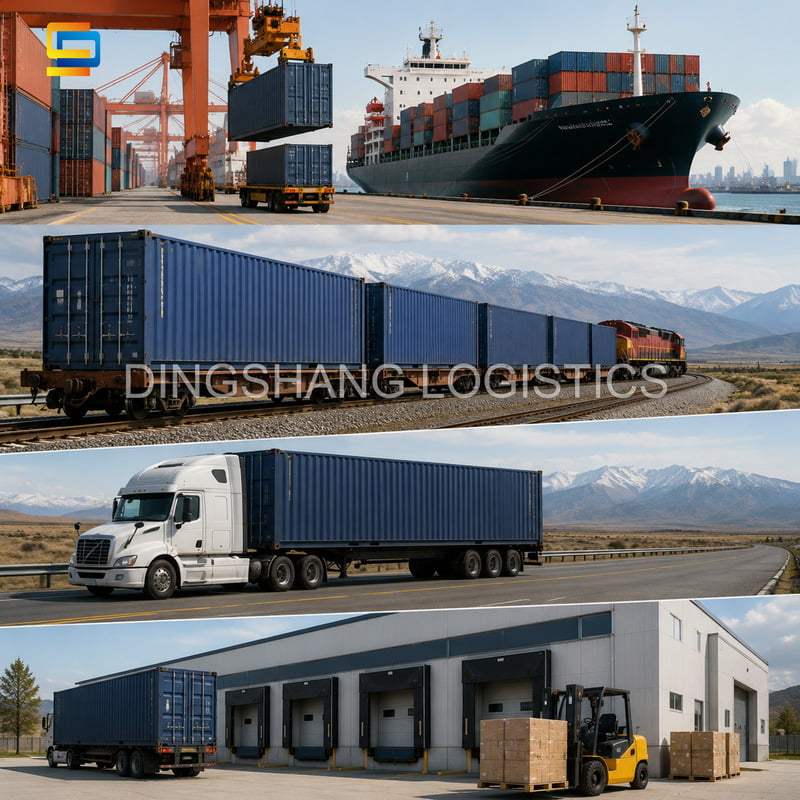
A complete door-delivery plan should determine:
- Where the container enters the United States.
- Whether it continues inland by rail or truck.
- Where the inland transportation terminates.
- Who handles customs clearance.
- Who arranges local drayage.
- Whether the receiver can accept and unload the ocean container.
- How the empty container will be returned when applicable.
Check the Warehouse Before the Container Arrives
The final delivery conditions can materially change the quote and the equipment plan.
Before booking, confirm:
- delivery ZIP code
- commercial or restricted-access location
- receiving hours
- appointment requirements
- dock availability
- ability to unload a floor-loaded container
- forklift or other unloading equipment
- expected unloading time
- container and truck access
- gross cargo weight
- any special delivery restrictions
If the receiver cannot efficiently accept or unload the ocean container, transloading may be worth evaluating. The cargo can be transferred into another truck configuration before final delivery, although that adds handling and cost.
FCL vs. LCL for Salt Lake City
FCL and LCL can both work for Salt Lake City, but the decision should be based on cargo volume, weight, handling sensitivity, schedule, inland routing, and total delivered cost—not shipment size alone.
| Option | Usually Makes Sense When | Salt Lake City Consideration |
|---|---|---|
| 20GP FCL | Dense cargo or a smaller full-container load | Verify weight and inland trucking feasibility |
| 40HQ FCL | Higher-volume, relatively lighter cargo | Evaluate warehouse access and unloading requirements |
| LCL | Cargo does not justify a dedicated container | Requires consolidation/deconsolidation and separate inland delivery planning |
| FCL intermodal | A suitable inland service is available | Confirm the actual routing, Salt Lake City terminal, and final drayage |
| Transload + truck | Keeping the ocean container inland is unsuitable | Adds handling but may solve delivery or equipment constraints |
FCL also does not guarantee that the container will remain unopened from the China factory to the Utah warehouse. U.S. authorities may inspect cargo, and operational circumstances can require additional handling.
How Can You Avoid Delays and Unexpected Charges?
The most effective way to reduce avoidable problems is to define the complete service scope before booking. The quote should identify the China origin, U.S. gateway, inland endpoint, customs responsibility, final delivery point, included services, exclusions, and major conditional charges.
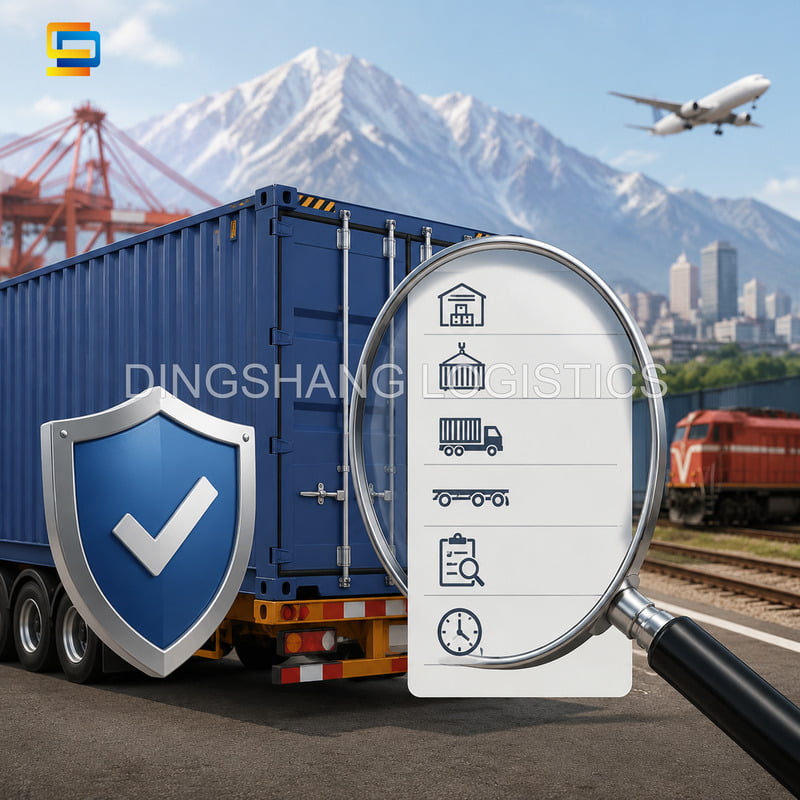
Do Not Confuse an Inland Ramp with Door Delivery
This distinction is particularly important for Salt Lake City.
A quote terminating at the Salt Lake City intermodal terminal is not necessarily a quote to your warehouse. Depending on the service, you may still need:
- terminal pickup
- chassis or appropriate drayage equipment
- local drayage
- delivery appointment
- unloading time
- empty-container return
Ask the forwarder to identify the exact endpoint of the quoted transportation.
Handle the ISF Before Vessel Loading
Do not wait until the vessel has departed to determine ISF responsibility. For standard U.S.-bound ocean cargo subject to ISF, CBP requires the principal eight importer data elements no later than 24 hours before the cargo is laden aboard the vessel destined for the United States.5
Provide shipment information to your filing party early enough to review the seller, buyer, manufacturer or supplier, ship-to party, country of origin, and HTSUS information.
Compare Equal Service Scopes
When evaluating forwarders, compare:
- The same China origin and Incoterm.
- The same container type.
- The same U.S. gateway, or clearly identify routing differences.
- The same inland endpoint.
- The same customs-clearance scope.
- The same Salt Lake City-area delivery ZIP code.
- The same final-delivery service level.
- Included and excluded destination charges.
- Quote validity.
- Conditional accessorial charges.
A lower ocean rate does not necessarily produce a lower delivered cost.
If you are evaluating providers rather than only comparing rates, review how to choose a freight forwarder in China and pay particular attention to whether the provider can clearly explain the inland U.S. portion of the shipment.
What Information Is Needed for a Salt Lake City Shipping Quote?
For an accurate China-to-Salt-Lake-City quote, provide enough information to price both the international movement and the inland Utah delivery. The cargo weight and delivery ZIP code are especially important because this is an inland shipment rather than a port-only move.
For FCL, provide:
- Product name
- HS/HTS code, if available
- Product material
- Supplier or pickup location in China
- Preferred China loading port, if applicable
- 20GP or 40HQ
- Gross cargo weight
- Cargo-ready date
- FOB or EXW terms
- Salt Lake City-area delivery ZIP code
- Customs-clearance requirements
- Warehouse receiving hours
- Appointment requirements
- Special loading or unloading requirements
For LCL, also provide:
- Number of packages
- Dimensions of each package type
- Total CBM
- Total gross weight
With this information, the forwarder can evaluate the ocean gateway, inland transportation, final drayage, and delivery conditions instead of quoting only the international ocean leg.
Frequently Asked Questions
Can a container ship directly from China to Salt Lake City?
No. Salt Lake City is an inland destination, not an ocean seaport. The container must first enter the United States through a seaport and then continue inland by rail or truck. Union Pacific operates an intermodal terminal in Salt Lake City, but a specific through routing must be confirmed for the actual booking.1
Can I ship a container by rail to Salt Lake City?
Potentially, yes. Union Pacific's Salt Lake City Intermodal Terminal has COFC capability, which means it can handle containers in intermodal rail operations.1 That does not guarantee a usable through service from every U.S. gateway or for every ocean-carrier booking, so the routing should be verified before booking.
Is Los Angeles or Long Beach the best gateway for Salt Lake City?
Los Angeles and Long Beach are important gateways to evaluate for China-origin cargo, but there is no universal best port. Compare the actual ocean service, inland connection, cargo weight, equipment availability, schedule, total cost, and final delivery requirements.
How long does China-to-Salt-Lake-City container shipping take?
There is no single reliable transit time for every shipment. Total lead time depends on the China origin, vessel service, U.S. gateway, terminal conditions, customs clearance, inland connection, rail or trucking availability, and final delivery appointment. Ask for the current routing and schedule based on your cargo-ready date.
Is FCL or LCL better for Salt Lake City?
FCL is worth evaluating when your volume, cargo characteristics, handling requirements, or economics justify a dedicated container. LCL can be more practical for smaller shipments but requires consolidation and deconsolidation. Compare total delivered cost, inland transportation, and handling requirements rather than cargo volume alone.
Does an inland Salt Lake City quote include delivery to my warehouse?
Not necessarily. A quote to an inland rail terminal may end at the terminal. A true door-delivery quote should identify the final consignee location and state whether local drayage and other destination services are included.
Are customs duties included in the freight rate?
Do not assume so. Duties and taxes should be treated separately unless the quotation and contractual arrangement explicitly state otherwise. Applicable duty depends on factors including merchandise classification, customs value, origin, and any relevant tariffs or trade remedies.
What is the biggest mistake when comparing Salt Lake City container quotes?
A common mistake is comparing an ocean-only or inland-terminal rate with a complete door-to-door rate. Make sure each quote covers the same China origin, container type, customs scope, inland endpoint, final ZIP code, and delivery requirements.
Get a China-to-Salt-Lake-City Container Quote
A useful quote should be built around the complete shipment rather than a generic ocean rate.
For FCL, send Dingshang Logistics your product name, material, HS/HTS code if available, supplier location, 20GP or 40HQ requirement, gross weight, cargo-ready date, FOB or EXW terms, Utah delivery ZIP code, customs-clearance needs, and any special unloading requirements.
For LCL, send the product information plus package count, dimensions, total CBM, gross weight, pickup location, cargo-ready date, and delivery ZIP code.
With those details, the routing can be evaluated as a complete China-to-Salt-Lake-City shipment—including the ocean gateway, inland transportation, customs coordination, and final delivery requirements—rather than as an ocean rate that leaves the Utah portion unresolved.
References
[Union Pacific — Salt Lake City Intermodal Terminal](https://www.up.com/shipping/intermodal/intmap/slc) ↩
[Utah Department of Transportation — Freight and Rail Planning](https://connect.udot.utah.gov/business/public-entities/planning/) ↩
[Federal Highway Administration — Bridge Formula Weights](https://ops.fhwa.dot.gov/freight/publications/brdg_frm_wghts/bridge_formula_all.pdf) ↩
[Federal Maritime Commission — U.S. Court of Appeals Issues Decision in Case on Demurrage and Detention Billing Practices](https://www.fmc.gov/articles/u-s-court-of-appeals-issues-decision-in-case-on-demurrage-and-detention-billing-practices/) ↩
[U.S. Customs and Border Protection — Import Security Filing (ISF): When to Submit to CBP](https://www.help.cbp.gov/s/article/Article-1868) ↩
[U.S. Customs and Border Protection — Importing: Licenses and Permits](https://www.help.cbp.gov/s/article/Article-1390) ↩
[International Trade Administration — Know Your Incoterms](https://www.trade.gov/know-your-incoterms) ↩
Leave a Comment