
Quick answer: For FCL shipping from Shenzhen to Los Angeles, DingShang's published reference rates are $3,884 for a 20GP container and $4,855 for a 40HQ, with about 15 days of ocean transit after vessel departure on the listed route. These reference rates are updated every Monday on our FCL reference rates page; final pricing depends on shipment details and service scope. Your container may depart from Yantian or Shekou, depending on the booked service. The 15-day estimate is port-to-port ocean time, not factory pickup through U.S. warehouse delivery, which takes longer.
For a useful freight comparison, confirm three things first: which Shenzhen terminal will load your cargo, whether the vessel will discharge at Los Angeles or Long Beach, and whether your quote ends at the port or at your U.S. delivery ZIP code. Those details can change the total logistics cost even when two quotes show similar ocean rates.
How Much Does Shipping from Shenzhen to Los Angeles Cost?
The container size, sailing, and quoted service scope determine the cost. For an initial FCL budget, use a route-specific reference rate rather than an advertised price that does not say what is included.
Shenzhen to Los Angeles and Long Beach FCL reference rates
| Shenzhen origin | U.S. destination port | 20GP reference | 40HQ reference | Listed ocean transit |
|---|---|---|---|---|
| Shenzhen | Los Angeles, CA | $3,884 | $4,855 | 15 days |
| Shenzhen | Long Beach, CA | $3,884 | $4,855 | 15 days |
These are our latest reference rates, updated every Monday on our FCL reference rates page. Final pricing depends on your shipment details and service scope.
The figures are in USD per container for the listed port pairs. The 15-day figure is an estimated ocean transit time after departure, not a commitment that the cargo will reach a California warehouse in 15 days. The reference figures are not a confirmed booking price or an all-in delivered quote.
What else affects the price?
A Shenzhen-to-Los Angeles freight quote can involve several separate charges. Ask the forwarder to show which items are already included, which are excluded, and which would apply only if an event occurs.
| Cost item | What it covers or depends on | What the importer should confirm |
|---|---|---|
| China factory pickup | Trucking from the supplier to the assigned Shenzhen terminal or loading point | Required under the agreed EXW, FCA, or other pickup arrangement? |
| China-side handling and export services | Container positioning, loading, terminal handling, documentation, and export coordination as applicable | Which party pays each charge under the contract and quote? |
| Ocean freight | The booked 20GP or 40HQ movement to the agreed U.S. port | Exact origin terminal, destination port, validity, and carrier terms |
| U.S. destination and customs services | Destination charges and customs-broker services where quoted | Are brokerage, terminal-related items, and any agency fees included? |
| Drayage and final delivery | Trucking from Los Angeles or Long Beach to the receiving address | Destination ZIP, chassis requirements, unloading method, and appointment conditions |
| Conditional charges | Examination, storage, waiting, extra chassis days, or late empty return if applicable | What triggers each charge, and who is responsible? |
| Import duties and taxes | Government charges based on the imported merchandise | Correct HTS classification, customs value, origin, and applicable measures |
Do not compare a port-to-port ocean quote with a port-to-door or door-to-door quote as if they covered the same work. For example, a low ocean rate may leave you responsible for arranging the customs broker, terminal pickup, chassis, trucking to Ontario, and empty-container return. A higher quote that includes those services may result in a lower total delivered logistics cost.
Your supplier's trade term matters, too. Under FOB, the seller's delivery obligation is generally fulfilled when the goods are on board the vessel at the named port, not merely when a truck reaches a consolidation warehouse. EXW generally places more origin arrangements with the buyer, while FCA has a different delivery point and risk-transfer structure. Confirm the named place and written service inclusions rather than assuming a term covers every local charge.
How Long Does Shipping from Shenzhen to Los Angeles Take?
DingShang's route reference lists 15 days from vessel departure to the U.S. destination port. This is a useful starting point for ocean planning, not the time from your supplier's factory to your warehouse. A different carrier rotation, an intermediate port call, a transshipment, or a schedule change can produce a longer voyage.
Yantian International Container Terminals publishes vessel services that include Los Angeles and Long Beach. The service list confirms that West Coast routings are available, but it should not be read as a guaranteed sailing date, fixed transit time, or promise that every departure follows the same itinerary.
Ocean transit is only one part of the delivery timeline
| Milestone | What it means | Why it matters to your receiving schedule |
|---|---|---|
| Cargo ready at factory | Products are packed and available for loading or pickup | Pickup and export preparation cannot be finalized until the cargo details are reliable |
| Terminal and document cutoffs | Deadline for the loaded container and required shipping instructions or documents | Missing a cutoff can move the shipment to a later sailing |
| Vessel departure (ETD) | Start of the quoted ocean transit estimate | The 15-day reference is counted from here |
| Vessel arrival (ETA) | Ship reaches the booked U.S. port | ETA does not mean the container can be picked up |
| Container available and released | Discharge, customs or other government holds, carrier release, and terminal requirements are resolved | Pickup can be coordinated once all relevant conditions are satisfied |
| Warehouse delivery and empty return | Truck reaches the receiving facility, unloading is completed, and equipment is returned | Requires a delivery appointment and a workable empty-return plan |
For inventory planning, request both the estimated U.S. port arrival and the expected warehouse receiving window. A container may arrive on the estimated day yet be unavailable for trucking until it is discharged and released. Local drayage appointments, warehouse operating hours, inspections, and holidays can add further time.
Direct service vs. transshipment
A direct vessel service normally means the container stays on the same vessel until its U.S. discharge port; it does not necessarily mean the ship makes no intermediate port calls. Transshipment means the container is transferred to another vessel during the journey. Before booking, ask for the proposed loading terminal, vessel itinerary, discharge port, and whether a vessel change is expected.
Yantian vs. Shekou: Which Shenzhen Port Should You Use?
There is no universally cheaper or faster Shenzhen terminal for every shipment. Yantian is in eastern Shenzhen, while Shekou is part of the western Shenzhen port area. China Merchants Port's Western Shenzhen terminal network also includes Chiwan and Mawan facilities. The actual terminal matters more than the broad label "Shenzhen" on a quote.
| Decision factor | Yantian | Shekou / western Shenzhen terminals |
|---|---|---|
| Location | Eastern Shenzhen | Western Shenzhen |
| Typical planning consideration | Compare available trans-Pacific services and trucking from your factory | Compare the booked western-terminal service and trucking from your factory |
| Supplier pickup | May fit some eastern Shenzhen or nearby Pearl River Delta origins | May fit some western Shenzhen or nearby Pearl River Delta origins |
| Required confirmation | Assigned terminal, empty-container pickup, CY cutoff, and sailing | Whether the booking uses Shekou, Chiwan, Mawan, or another specified facility; cutoffs and sailing |
| What not to assume | Every Yantian vessel is the fastest | Every western Shenzhen booking has the lowest pickup cost |
Consider a supplier in Longgang and another in Bao'an. Their trucking requirements may differ substantially, but factory street addresses, road access, equipment, traffic, and the assigned container depot still determine the actual movement. Do not select Yantian or Shekou from a city name alone.
A practical port decision follows this order:
- Check the intended U.S. discharge port and required arrival window. Look for an appropriate carrier service, not just the nearest China terminal.
- Confirm the supplier's actual pickup or loading address. Compare trucking, empty positioning, and the time needed to reach the export terminal.
- Verify terminal and document cutoffs. A slightly lower origin charge is not useful if your factory will miss the chosen sailing.
- Compare the complete quoted scope. Include any warehouse collection, export handling, ocean freight, and U.S. delivery rather than comparing only the base sea rate.
Port of Los Angeles vs. Port of Long Beach
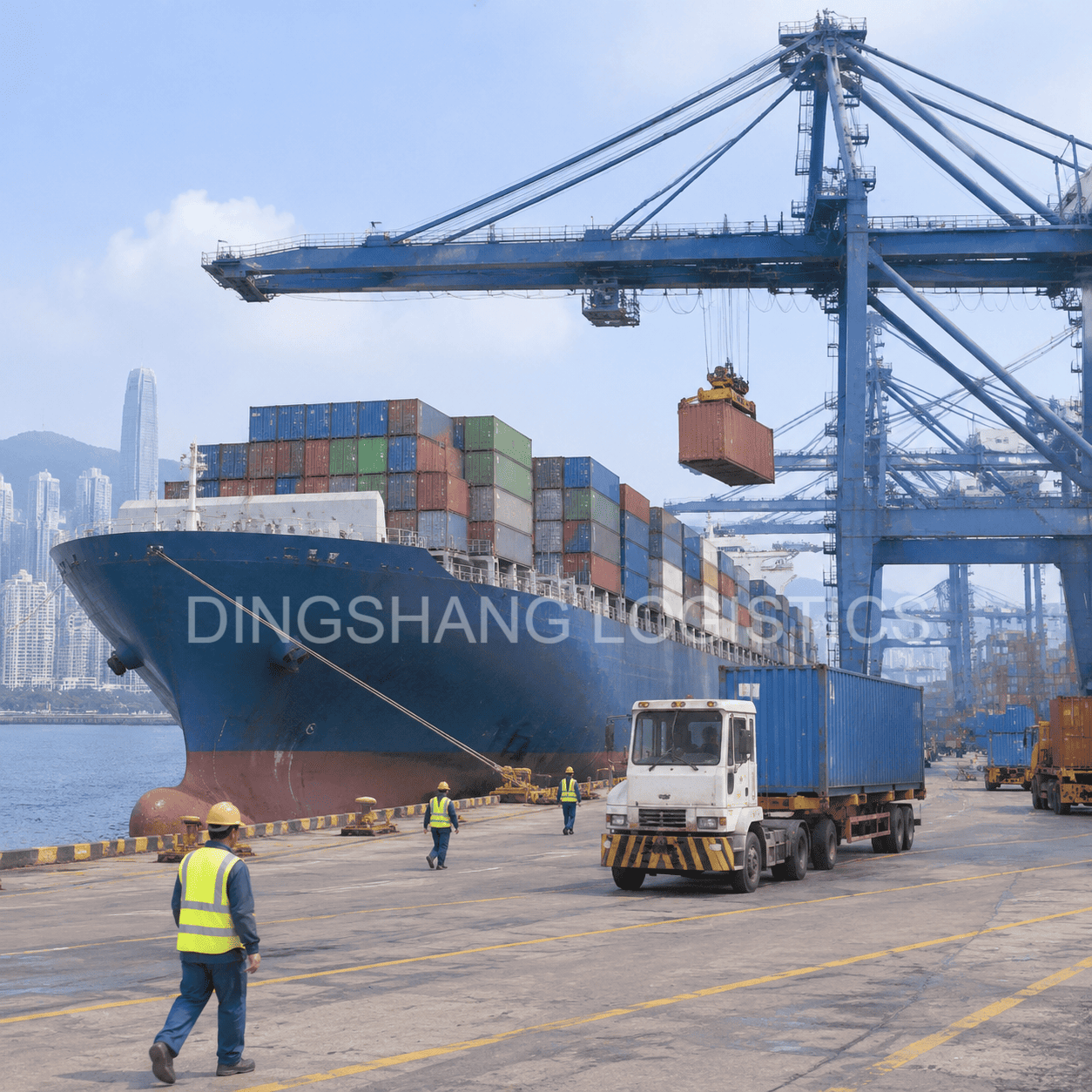
Los Angeles and Long Beach are two neighboring but separate ports. A quote labeled "Los Angeles area" is not enough to tell your trucker where a container will be discharged. The carrier's booking and terminal information determine the actual pickup location and applicable terminal procedures.
The Port of Los Angeles lists its container terminals, including APM Terminals Pacific, Fenix Marine Services, TraPac, and Yusen Terminals. The adjacent Long Beach port has its own terminal operations; for example, Long Beach Container Terminal operates at Pier E. Terminal identification matters for truck appointments, container availability, equipment arrangements, and empty return.
DingShang's published Shenzhen FCL table shows the same reference figures for Los Angeles and Long Beach. That does not mean every sailing, terminal charge, gate condition, or final-mile truck quote will be identical.
If your warehouse is in Commerce, City of Industry, Ontario, or elsewhere in Southern California, provide the actual ZIP code rather than saying only "Los Angeles." A receiving address in the Inland Empire may require a different truck plan from a warehouse near the harbor. The location, container weight, appointment requirements, unloading arrangement, and empty-return instructions all affect the delivered cost.
What happens after the vessel arrives?
For a full container, the normal sequence is discharge -> availability and release -> truck pickup -> warehouse unloading -> empty return. The trucker needs the correct terminal, appointment or gate arrangements, equipment, and release information. The receiver needs people and equipment ready to unload.
Two common unloading arrangements are:
- Live unload: The driver waits while your facility unloads the container. Check the allowed waiting time and whether overtime or waiting charges may apply.
- Drop delivery: The container is left at the receiving location under an agreed arrangement and collected later. Verify parking permission, chassis/equipment terms, and the empty return deadline.
An agreed door-delivery quote does not automatically include unloading labor or unlimited container use. For a closer look at the process, see our door-to-door shipping service.
FCL or LCL from Shenzhen to Los Angeles?
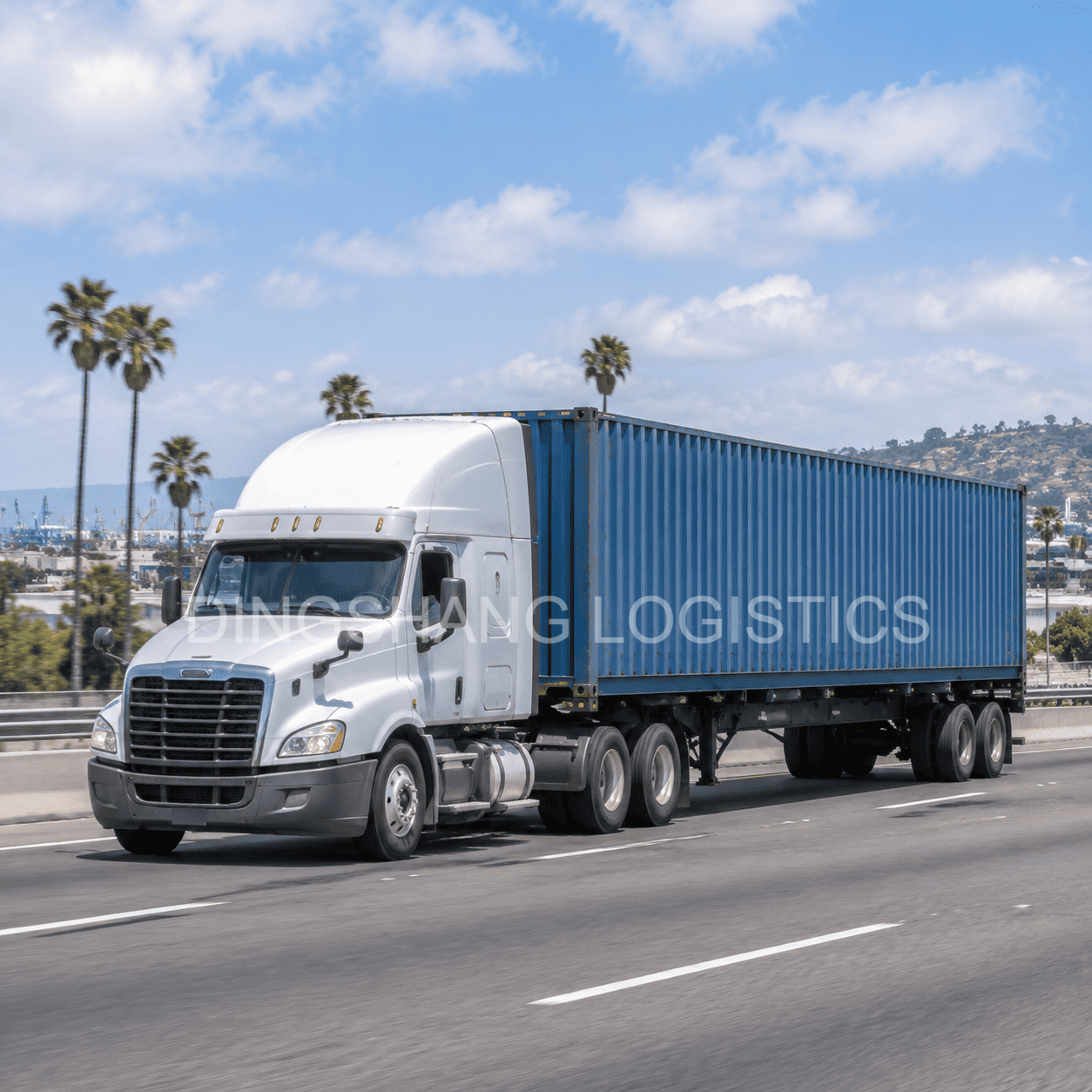
FCL is usually the more direct handling model when your cargo justifies a dedicated 20GP or 40HQ container, but it does not have to be completely full. LCL can suit smaller shipments that do not justify the overall cost of a dedicated container. There is no universal CBM threshold at which one becomes cheaper on every shipment.
| Factor | FCL (20GP / 40HQ) | LCL |
|---|---|---|
| Container use | Dedicated container for the shipment | Shared space with other shippers' cargo |
| Main freight pricing basis | Usually per container | Usually weight/measurement, plus relevant origin and destination charges |
| Handling at destination | Container release, truck delivery, unloading, and empty return | Container deconsolidation at a CFS before individual cargo release |
| Best way to compare | Total cost to the final U.S. ZIP code | Total cost to the same ZIP code, including CFS and delivery charges |
A 20GP may be suitable for compact, heavier cargo, while a 40HQ provides greater usable volume for many lighter or bulky products. Actual cargo dimensions, gross weight, loading pattern, container payload, and California highway weight restrictions must be checked before confirming equipment. The higher cube does not mean the shipment can ignore road weight limits.
If you are uncertain which mode fits, compare a shipment-specific FCL quote with an LCL option, including all required handling and delivery services.
How to Ship from a Shenzhen Factory to Los Angeles
A reliable plan starts before your supplier finishes production. The most useful shipping instructions make every handoff clear.
- Confirm cargo and trade terms. Collect product descriptions, materials, carton or pallet counts, dimensions, gross weight, HS/HTS information if available, cargo-ready date, and the named EXW, FOB, or FCA location. Flag batteries, regulated goods, heavy cargo, and other special handling requirements.
- Choose the Shenzhen loading arrangement. Compare factory loading or warehouse loading, Yantian versus the applicable western Shenzhen terminal, origin trucking, and vessel options. Confirm who arranges the empty container and loading labor.
- Book the ocean movement and finalize cutoffs. Your forwarder can arrange space before all goods are physically ready. Before dispatch, confirm the booking, approved container type, document deadlines, loaded-container CY cutoff, and applicable verified gross mass requirements.
- Prepare export and U.S. import documents. Coordinate commercial invoice, packing list, shipping instructions, bill of lading arrangements, and timely ISF information. Document details must reflect the actual transaction and cargo.
- Track departure and U.S. arrival separately. Use vessel ETD/ETA for the ocean movement, but check discharge, customs and carrier release, terminal availability, and last free day before arranging pickup.
- Deliver and return the equipment. Confirm the actual Los Angeles or Long Beach terminal, drayage appointment, warehouse receiving window, unloading method, and the carrier's empty-return location and deadline.
For shipments from several factories in Guangdong, consider whether collection and container loading should be coordinated at one agreed point. If the orders come from multiple suppliers, see how to combine shipments from multiple Chinese suppliers into one FCL container. A shared container plan does not eliminate the need to preserve each supplier's commercial documentation.
U.S. Customs Clearance and Avoidable Port Charges
For most U.S.-bound containerized ocean cargo, Importer Security Filing (ISF 10+2) must be coordinated before the goods are loaded onto the vessel destined for the United States. Most required importer data elements are generally due at least 24 hours before loading, while the container-stuffing-location and consolidator elements have different timing provisions. Review CBP's ISF filing guidance with your customs broker; do not treat this as a generic "24 hours before vessel departure" rule.
The U.S. customs entry must also reflect the actual HTSUS classification, origin, value, importer, and any applicable product restrictions or trade measures. Import duties and taxes should be evaluated for the specific goods and circumstances, not estimated using a single fixed China-to-USA percentage. A forwarder may coordinate with a licensed customs broker, but arranging transportation does not by itself make the forwarder the importer of record. See CBP's guidance on using customs brokers.
After discharge, three conditions are especially easy to confuse:
- Customs or agency release: Any applicable government hold has been resolved.
- Carrier release: Freight, document, and other release requirements under the ocean carrier's terms are met.
- Terminal availability: The discharged container is actually available for pickup under the terminal's procedures.
A cleared entry does not automatically mean all three conditions have been satisfied. Check the last free day (LFD) and any empty-equipment return deadline with the responsible parties. Demurrage, detention, terminal storage, chassis use, waiting time, and examination costs can arise under different circumstances; they are not universal flat charges on every shipment. The Federal Maritime Commission's current guidance on demurrage and detention billing provides background on applicable invoicing rules.
For more detailed service coordination, see our U.S. customs clearance support. Your customs broker should confirm the current requirements for your specific products.
Frequently Asked Questions
How much does a 20ft container cost from Shenzhen to Los Angeles?
DingShang's published FCL reference table lists $3,884 per 20GP for Shenzhen to Los Angeles. That is a planning reference, not a confirmed booking rate or the total amount for delivery to your U.S. warehouse. Check the FCL reference rates page, updated every Monday, and request a shipment-specific quote.
How much does a 40HQ container cost from Shenzhen to Los Angeles?
The same reference table lists $4,855 per 40HQ for Shenzhen to Los Angeles. Your actual cost depends on the sailing, origin terminal, cargo, available equipment, booking terms, and whether customs coordination and delivery to a U.S. ZIP code are required.
How many days does ocean freight from Shenzhen to Los Angeles take?
The published Shenzhen-to-Los Angeles route reference is 15 days after vessel departure. Some sailings take longer because of their port rotation, operational schedule, or transshipment arrangements. Add time for origin preparation, container availability, customs and carrier release, and local trucking before planning warehouse receipt.
Is Yantian or Shekou better for a Los Angeles shipment?
Neither port is automatically better for every shipment. Compare the available vessel service, your supplier's actual address, container pickup and loading arrangements, cutoffs, and total origin cost. Confirm the named loading terminal on the booking rather than relying only on the word "Shenzhen."
Can my container arrive at Long Beach instead of Los Angeles?
Yes, a booked service may discharge at Long Beach rather than the neighboring Port of Los Angeles. These are separate ports with different terminals and pickup procedures. Confirm the actual U.S. discharge port and terminal before arranging a truck; do not assume you can switch ports after booking without a carrier-approved change.
Does a door-to-door quote include customs duties and unloading?
Not automatically. Door-to-door describes an agreed transportation scope; it is not the same as DDP. Confirm the importer of record, brokerage, duties and taxes, chassis, drayage, warehouse unloading, and any conditional charges in writing.
What should I send for a Shenzhen-to-Los Angeles freight quote?
Send the product description and material, HS/HTS code if known, factory pickup address, trade term and named place, cargo-ready date, package dimensions and gross weight, and final U.S. warehouse ZIP code. For FCL, specify 20GP or 40HQ if known; for LCL, include packages, CBM, and gross weight. Also mention unloading equipment, receiving appointments, and whether you need customs coordination and truck delivery.
Get a Shipping Quote from Shenzhen to Los Angeles
DingShang Logistics coordinates China-to-USA commercial FCL and LCL ocean shipping, including Shenzhen origin arrangements, U.S. import customs-broker coordination, and final inland delivery where requested. For this lane, we can help you compare Yantian versus western Shenzhen loading options, identify the booked Los Angeles or Long Beach discharge port, and clarify what is included in the final logistics quotation.
Request a Shenzhen-to-Los Angeles shipping quote with your cargo details, 20GP/40HQ requirement or LCL volume, factory address, cargo-ready date, agreed trade term, and destination ZIP code. We will review the shipment scope and prepare a quote based on the actual route and delivery requirements.
For broader origin and destination comparisons, see our Shenzhen-to-USA shipping guide and China-to-Los Angeles shipping overview.


Leave a Comment